
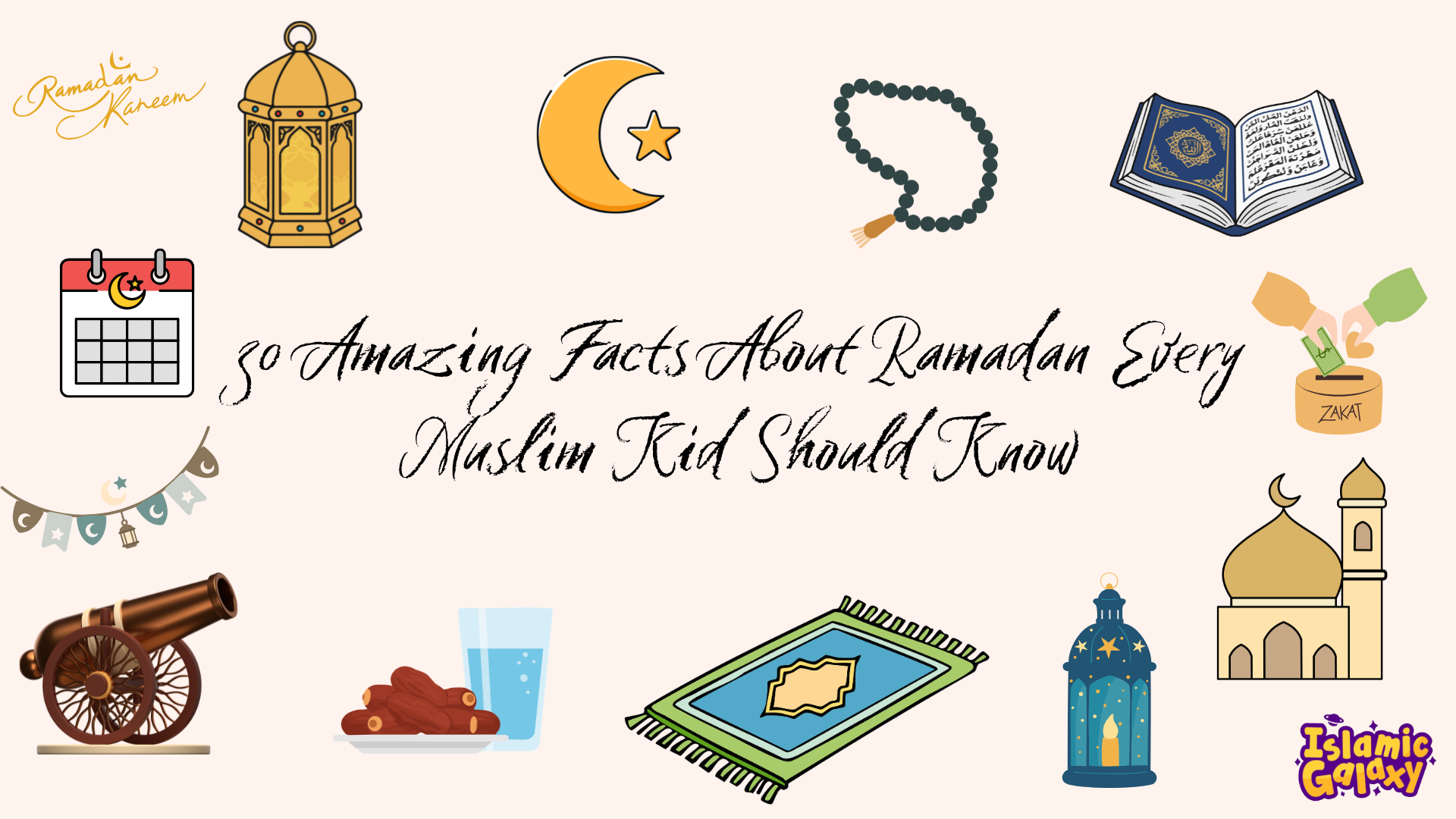
My favorite childhood memories all seem to come back to Ramadan. The way my grandmother's house smelled when she was cooking for Iftar. Staying up way past bedtime for Taraweeh. That incredible feeling when you complete your very first full fast. If you grew up Muslim, you probably know exactly what I mean.
But Ramadan holds so many secrets that even adults don't always know about. I've put together 30 facts that I wish someone had told me when I was younger. Some will make you say "wow," others might make you laugh, and a few will definitely give you something to think about during those long fasting hours.
Ready to become the Ramadan expert in your family? Let's get into it.
Understanding the Basics
1. The Ninth Month Has Special Status
Ramadan sits at number nine in the Islamic calendar. Unlike the calendar hanging in your classroom that follows the sun, ours follows the moon. That's why your non-Muslim friends might ask why Ramadan "moves around" every year. It doesn't move; it's just on a different system altogether.
2. The Word Itself Tells a Story
"Ramadan" comes from Arabic roots meaning scorching heat. Sounds intense, right? But there's beauty in that meaning. Just like extreme heat purifies metals by burning away impurities, this month purifies our hearts and souls. When someone wishes you Ramadan Mubarak, they're hoping all that spiritual cleansing comes your way.
3. Sawm Stands Among the Five Pillars
Fasting has a special Arabic name – Sawm. What makes this significant? It's one of the Five Pillars of Islam, standing right alongside prayer and charity. When you fast, you're not just skipping lunch. You're fulfilling one of the most fundamental duties given to us. At Islamic Galaxy, we've got tons of resources to help kids understand these pillars better.
4. Our Holy Book Arrived During This Month
Here's something that still amazes me. The Quran – every single word of it- began its journey to us during Ramadan. Angel Jibreel brought the first verses to Prophet Muhammad (PBUH) on a night called Laylatul Qadr. Think about that next time you hold a Quran in your hands.
5. Dawn to Dusk Those Are the Rules
From the moment light starts creeping into the sky at Fajr until the sun disappears at Maghrib, nothing passes our lips. No food, no water, no sneaky snacks. Depending on where you live and what time of year it is, that could mean anywhere from about 10 hours to nearly 20. Geography makes a huge difference!
6. That Early Morning Meal Matters More Than You Think
Suhoor happens before dawn, which means waking up when most people are deep asleep. Not exactly thrilling, I know. But Prophet Muhammad (PBUH) specifically encouraged us to eat this meal. He said there's a blessing in it. So when your parents drag you out of bed at 4 AM, remember – there's wisdom behind it. You can explore more prophetic traditions through our video collection and Quranic Galaxy resources.
7. Breaking Fast the Sunnah Way
Iftar might be my favorite word in any language. That moment when you finally get to eat! Following the Prophet's example, we break our fast with dates and water before diving into the main meal. Dates give quick energy to a body that's been waiting all day, and honestly, they never taste better than at Iftar time.
8. Kids Get a Pass (But Can Still Join In)
If you're young and reading this, here's news that might make you smile – fasting isn't required until you reach puberty. But that doesn't mean you're left out! Many kids practice by fasting half days or skipping one meal. Consider it training. You're building up to the real thing, and there's no rush.
9. Some People Have Valid Reasons Not to Fast
Allah never burdens us beyond what we can handle. That's why exemptions exist. Sick people, travelers on long journeys, elderly folks who can't manage it, pregnant women, and nursing mothers – they all get alternatives. They can make up days later or feed someone hungry instead. Our activity pages include ways everyone can participate, regardless of whether they're fasting.
10. The Moon Calls the Shots
Will Ramadan last 29 days or 30? Nobody knows until it happens. Muslims literally look up at the night sky searching for that tiny crescent moon. When they spot it, Ramadan begins. When the next new moon appears, it ends. There's something wonderfully old-school about determining our holiest month by gazing at the heavens.
Diving Into Spiritual Treasures (11-20)
11. A Single Night Worth a Lifetime
Laylatul Qadr blows my mind every single year. One night. Just one. And it carries more weight than 1,000 months of worship. That's over 83 years! It falls somewhere in the last ten nights, probably on an odd night, but nobody knows exactly when. So Muslims stay up worshipping during all those nights just to catch it.
12. Taraweeh Creates Community Magic
After the Isha prayer throughout Ramadan, something special happens at mosques worldwide. People gather for extra prayers called Taraweeh. Standing shoulder to shoulder with your neighbors, listening to beautiful Quran recitation, feeling connected to Muslims everywhere doing the same thing – it hits different. Many mosques complete the entire Quran during these nightly prayers.
13. The Spiritual Atmosphere Shifts
Prophet Muhammad (PBUH) told us something remarkable about Ramadan. The gates of Paradise swing open. The gates of Hellfire close shut. The Devils get chained up. Maybe that explains why doing good feels easier this month? The whole spiritual environment changes in our favor. Check out our games section for fun ways to learn more about these teachings with your siblings.
14. Your Prayers Get Priority Treatment
Dua during Ramadan carries special weight. Allah loves answering us during this blessed time. The moment right before Iftar? Absolutely golden for making dua. You're hungry, you're humble, you've sacrificed all day – and Allah sees all of it. Our detailed guide on the Dua Month of Ramadan shares the best supplications to memorize.
15. Generosity Becomes Contagious
Prophet Muhammad (PBUH) was always generous, but companions noticed something during Ramadan. His giving increased dramatically – like wind that never stops blowing. That's the spirit we try to capture. And remember, charity isn't only about money. Helping someone carry groceries counts. Smiling at a stranger counts. Sharing your toys counts.
16. Many Muslims Pay Zakat Now
Zakat – that's the obligatory charity of 2.5% of your savings – can technically be paid anytime. But loads of Muslims specifically choose Ramadan because rewards multiply. Makes sense when you think about it. If good deeds earn extra credit this month, why not time your biggest charitable act accordingly?
17. Quran Reading Goes Into Overdrive
Muslims around the globe aim to complete the entire Quran during Ramadan. The most popular method splits it into daily portions – one Juz each day for 30 days. By Eid, you've read every single verse. It's a beautiful goal that connects you deeply with Allah's words. Quranic Galaxy offers amazing tools to help young Muslims build this habit.
18. I'tikaf Takes Dedication to Another Level
During the last ten days, some Muslims basically move into the mosque. They eat there, sleep there, pray there, completely cutting off from regular life to focus entirely on worship. It's called I'tikaf, and it takes serious commitment. Most of us just do extra worship at home, but it's inspiring to know some people go all in.
19. Everything Good Earns Bonus Points
Here's the motivation that kept me going as a kid, every single good deed gets multiplied during Ramadan. Helped set the table? Extra rewards. Didn't argue with your brother? Extra rewards. Let someone go ahead of you? You get the idea. It's like a limited-time bonus event, except for real life.
20. Self-Control Becomes Your Superpower
Think about what fasting actually teaches you. If you can say no to food and water – things your body desperately wants – you can say no to pretty much anything harmful. Bad influences? You're stronger than that. Temptation to do wrong? You've got this. Ramadan builds willpower that lasts all year. Visit our About Us page to learn why we're passionate about sharing these lessons.
Facts That Might Surprise You
21. Almost Two Billion People Join In
When you fast during Ramadan, you're not alone. Approximately 1.8 billion Muslims worldwide are doing exactly the same thing. From Indonesia to Canada, from South Africa to Norway, nearly a quarter of all humans on Earth share this experience with you. That's the power of being part of the Ummah.
22. Nordic Muslims Are Champions
Want to know who has it tough? Muslims living in Scandinavian countries during the summer. We're talking fasting hours that stretch to 21 hours or more. The sun barely sets up there! These brothers and sisters deserve serious respect for their dedication. It really puts things in perspective when you think your 14-hour fast is hard.
23. Equator Life Has Its Perks
Now here's the flip side. Countries near the equator, Indonesia, Malaysia, and Singapore, enjoy consistent fasting hours all year round. About 13-14 hours, give or take. Day and night stay pretty equal regardless of the season. Geography matters a lot in this global Ummah of ours!
24. Traditions Vary Beautifully Worldwide
Ramadan looks different depending on where you are. Egyptian streets light up with lanterns called Fanous. In Turkey, drummers march through neighborhoods at Suhoor time to wake everyone up. Some Middle Eastern cities fire cannons to signal Iftar. Indonesia has its own unique customs too. Same month, same purpose, wildly different flavors. You can explore diverse Ramadan traditions through our videos and cultural resources.
25. Moon Watching Connects Us to History
There's something profound about the moon determining our calendar. No fancy technology required. Just humans looking up, searching for that sliver of light, the same way Muslims have done for 1,400 years. In our smartphone age, this connection to something ancient and simple feels pretty special.
26. Ramadan Travels Through the Seasons
Because our lunar calendar runs shorter than the solar one, Ramadan shifts backward about 11 days annually. Over roughly 33 years, it passes through every season. If you're fasting in scorching July heat now, eventually you'll experience easy winter Ramadans. And then summer circles back around again.
27. We're Continuing a 1,400-Year Tradition
The very first Ramadan fast took place in 624 CE. Prophet Muhammad (PBUH) and his companions in Medina started something that billions would continue across centuries. When you fast, you're not just following rules. You're connected to an unbroken chain stretching back over fourteen hundred years. That's incredible when you really sit with it. Contact us if you want to learn more or have questions about Islamic history.
28. Eid ul-Fitr Is the Ultimate Celebration
After a month of fasting comes the party! Eid ul-Fitr means "Festival of Breaking the Fast," and it's basically the best day ever. Special morning prayers, new clothes, amazing food, gifts, and everyone's in a fantastic mood. It's Allah's gift to us for completing Ramadan, and we celebrate it fully.
29. Modern Science Confirms Ancient Wisdom
Researchers have discovered what Muslims have known all along – fasting benefits the body. It promotes something called autophagy, where cells clean out damaged parts. It gives your digestive system a needed break. It might improve brain function and heart health. Allah prescribed something physically good for us while making it spiritually mandatory. Divine wisdom!
30. Nothing Brings People Together Like Ramadan
Ask any Muslim about their fondest Ramadan memories, and they'll probably mention people, not food. Families gathering who rarely see each other. Neighbors sharing plates over the fence. Strangers becoming friends at Taraweeh. Communities are coming alive in ways they don't during other months. That connection? That's the real magic of Ramadan. Explore our Pricing page to see how Islamic Galaxy can help your family make these memories year-round.
Wrapping Up
Thirty facts later, and honestly, we've barely scratched the surface. Ramadan holds layers upon layers of meaning, history, and beauty that could fill entire books. But hopefully, these tidbits gave you something new to appreciate about this blessed month.
What strikes me most when I look at all these facts together? Ramadan isn't just about willpower or rules or going hungry. It's about transformation. It's about connecting – to Allah, to the Quran, to your family, to Muslims worldwide, to generations who came before you. It's about becoming better than you were yesterday.
Whether you're fasting your first full day this year or you've been doing this since before you can remember, you're part of something extraordinary. Nearly two billion people sharing one experience, united by faith, all seeking the same goal – closeness to our Creator.
May this Ramadan bring you and your family every blessing imaginable. May your fasts be easy, your prayers accepted, and your hearts filled with peace. And may the facts you learned today spark curiosity that lasts long after Eid arrives.
Ramadan Mubarak! 🌙
Frequently Asked Questions
At what age should children begin fasting?
Fasting becomes obligatory at puberty, but many families introduce it gradually years earlier. Some kids start with half-days around age seven or eight. Others might skip just one meal. There's no single right approach – it depends entirely on the child's health, maturity, and enthusiasm. The goal is to make fasting positive, not traumatic. Forcing a child before they're ready can backfire badly. Trust your instincts as a parent and watch how your child responds.
My child accidentally ate while fasting. Is the fast ruined?
Not at all! If a child genuinely forgets they're fasting and eats or drinks something, the fast remains completely valid. Prophet Muhammad (PBUH) specifically addressed this – it's considered a blessing from Allah, not a mistake. Just stop eating immediately upon remembering and continue the day normally. No need for guilt or making up for the fast. Allah knows what's in our hearts, and He's infinitely merciful.
How can younger kids participate in Ramadan without fasting?
So many ways! They can wake up for Suhoor with the family, even if they eat breakfast later. They can help prepare Iftar meals – stirring, setting the table, and choosing recipes. Reading the Quran together works wonderfully. Making Ramadan decorations brings excitement. Collecting coins for charity teaches generosity. Attending Taraweeh prayers, even briefly, creates lasting memories. Ramadan offers plenty for everyone, regardless of age or ability to fast.