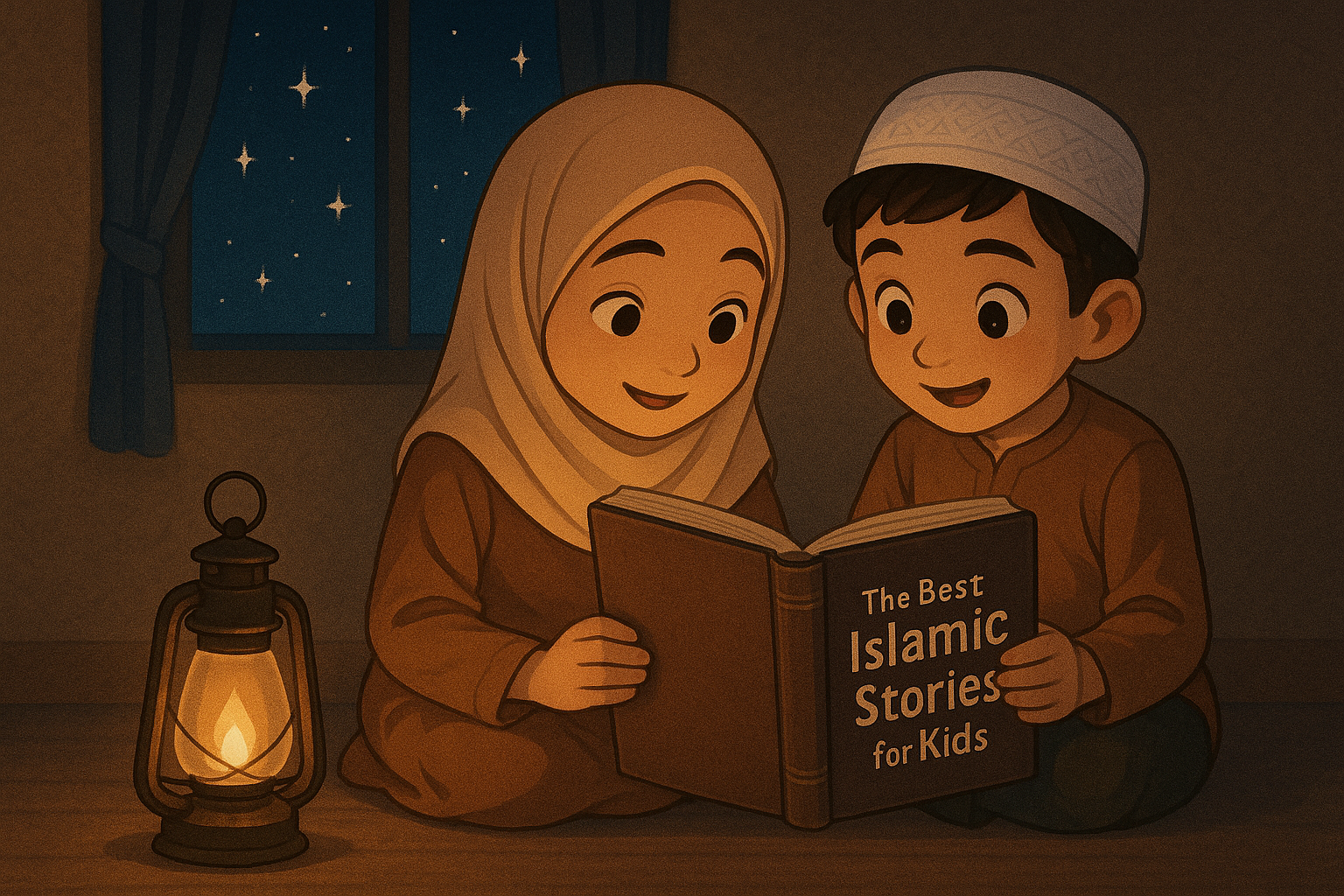


Ever feel like you're just winging it as a parent? You wake up sometimes and think, "Am I getting this right?" Your kid asks you a question about faith, and you nail the answer. The next day, they're rolling their eyes at everything Islamic you suggest. You are worried about what they see on the internet, their friends, and if they really accept the morals that you are trying to give them.
Here's the thing: you're not the only parent losing sleep over this; thousands of years ago, there was a wise man named Luqman. He was dealing with basically the same thing. His world looked nothing like ours.
No TikTok, no peer pressure about designer clothes or dating apps. But he had the same core worry that keeps you up at night. How do I raise a good kid? How do I teach them what matters when the world is constantly pulling them in another direction?
That's where Surah Luqman comes in. Surah Luqman is a part of the Quran in which Luqman gives wise advice to his son about life and values. And honestly? His Islamic parenting wisdom doesn't feel old or out of touch.
The lessons from Surah Luqman are surprisingly practical for today. About gratitude when kids expect everything. About patience when they're frustrated. About character when peer pressure hits hard.
This isn't going to be some boring religious lesson. It's real, applicable Islamic parenting advice that actually works. Let's dig in.
Who Was Luqman In Islam?

So who was Luqman anyway? Before we delve into what he actually taught, let's take a moment to get to know him. Because when you understand who someone is, their advice starts to make way more sense. You start to trust it more.
Luqman's Role in Islamic Tradition
Luqman wasn't a prophet. Let me be straight with you about that right from the jump. a man who lived a good life, made solid choices, and picked up some real wisdom along the way. The kind of wisdom you get from actually paying attention to what matters instead of just sleepwalking through life.
But here's what makes Luqman different. The Quran decided to keep his story. Not just mention it, but actually preserve his words for his son. Like, the Quran had so much it could talk about. So many stories, so much history. But it said, "You know what? We're keeping this conversation between a father and his son." That tells you something, right? It means what he said was that important.
People knew Luqman. They genuinely respected him. Not because he was trying to show off or because he talked a lot because he wasn't fake. What he said he believed and what he actually did were the same thing. No pretending. No double standards.
He walked the walk. And when he talked to his son, it wasn't like some distant parent throwing advice from above. Every day, his child could witness his father being genuine in his actions. He could witness his father through the manner in which he treated people, the way he solved problems, and just by the way he interacted with the world.
That's why the Quran keeps bringing Luqman back up. It's showing us that when a parent is real and consistent, it actually matters. Your kids notice. It stays with them in ways that speeches and lectures never will. There's something powerful about a parent who practices what they preach. Kids feel that.
Now here's what gets me about Luqman's whole situation. He lived in a totally different time and place. No phones, no social media, no internet drama. You'd think his problems would be completely different from ours. But the stuff that kept him up at night with his son? It's basically the same stuff keeping us up at night right now. He wanted his son to have real faith in Allah.
To actually respect people and treat them right. To make good decisions when nobody was looking. To not get trapped in this endless cycle of wanting more and more stuff. To not care so much about what everyone else thought.
That's the real magic of Luqman's parenting advice. It's not some parenting trend that'll be forgotten in a year or two. It's not about tricks or bribes or making your kid feel guilty. It's about building something real inside them. Something that actually holds up over time. And because people haven't really changed that much since Luqman's days, his teachings just work. They are still effective today as they were back then.
Would you like your child to discover more wisdom and strength from the Qur'an? Our story library is full of authentic characters who lived their faith and demonstrated to their children what it actually looks like.
Why Does Luqman's Advice Still Matter in 2025?
You know those where you just feel like you're not cut out for this parent thing. Your child is intently staring at his phone, and you are not able to reach him. They only seem to be concerned about what their friends think and disregard everything you are trying to teach them. You wonder if any of this Islam stuff is actually landing or if they're just humoring you. And you're lying there at 2 AM thinking, "Am I completely screwing this up?"
Luqman was in the same place. Different world, same panic. He wasn't staring at his kid's phone usage stats, but he was sweating it. What if his son just starts following everyone else? What if he forgets Allah? What if he just wants money and status and doesn't care about doing the right thing? That fear was real for him, too.
And here's what trips me out. The stuff on the surface looks totally different. You're dealing with algorithms and group chats and TikTok drama. Luqman didn't have any of that. But if you strip all that away? The actual problem is identical. Your kid still gets peer-pressured. Mine too. Your kid still wants things they can't have. Luqman's kid did. Your kid still questions if any of this matters. So did his. They still care too much about whether the popular kids like them.
So, if people say Luqman's advice is outdated? They are not getting the point. His words are even more important now than before because everything is going so fast, everything is changing, and you need something firm to hold onto, something that's actually stood the test of time because it works. Not because it sounds nice, but because it actually helps you raise a kid who knows who they are and what they believe in.
The Five Core Lessons from Surah Luqman for Raising Righteous Children

Luqman didn't just sit his son down and give a long speech. He taught him through different conversations about different things. Five core lessons that build on each other and create a foundation for raising a kid who's got real character and real faith.
Lesson 1: Tawheed (Monotheism): Teaching Children About Allah's Oneness
The very first thing Luqman told his son was this: don't associate partners with Allah. That's the foundation. Well, I understand that it may sound like the story is about the worship of idols or statues, and yeah, that was the problem at that time.
But it is so much bigger than that. It is about guiding your child to grasp an essential thing: Allah is their true source of everything. Strength, comfort, guidance, peace. All of it.
Imagine it like this. When your child comes to you crying or scared, they are coming to you for help. And that is wonderful, that's what parents are for. But Luqman was teaching his son something deeper. Yeah, come to your parents. But remember that Allah is there too. When you are alone and scared, you are not really alone. When things break, Allah is still there. When everyone disappoints you, Allah won't.
That's what teaching children tawheed really means in 2025. It's not some heavy theological thing. It's about building a relationship between your child and Allah that's personal and real. You can nurture your kids' faith in fun ways that will make them commit and want to learn even more with our activities.
Ages 4 to 6: Keep It Simple.
Tell them stories. They absolutely love stories. Stories about the prophets and how they believed in Allah and trusted Him. Show them that you pray. Let them see you turn to Allah when you're worried or stressed. Don't hide that vulnerability
When you're in the car and you say out loud, "I'm stressed about this interview, but I'm gonna trust Allah," your four-year-old is learning something they can't learn any other way. Kids pick up on it. They notice. More than you think
Ages 7 to 9: Building Understanding
They can understand consequences now. They can see how making the right choice, even when nobody's watching, actually matters because Allah is watching
This is where you can have real conversations. Ask them questions like: why do you think we don't lie even when we could get away with it? Let them think. Don't just tell them.
They're starting to figure out their own relationship with Allah now. Support that without forcing it. Use real-life moments to teach. When they do something right that nobody saw, point it out.
Ages 10 to 12: Deepening Faith
They're thinking for themselves more. They're questioning things. And that's completely okay. This is where you have deeper talks about choice, conscience, and what faith actually means to them personally. Not what it means to you. What it means to them.
That's teaching children about Allah. That's building their faith. Not by lecturing them or making them memorize stuff, but by helping them actually experience Allah's presence in their lives.
The thing is, when your kid has a real relationship with Allah, everything else falls into place more easily. They make better choices because they know Allah is watching. Trusting Allah has a reason, they become more patient with disappointment. Being conscious of the fact that the only One who really matters is Allah, they feel less need to impress people.
Want to bring Tawheed to life for your child in a way that actually sticks? Our Islamic stories and animated videos make these lessons feel real and immediate. Watch your child discover what it means to trust Allah through characters and stories they absolutely love.
Lesson 2: Gratitude & Humility: Raising Children Who Appreciate What They Have
Luqman straight up told his son, "Be grateful to Me and to your parents." That's from Surah Luqman, and he wasn't just being nice about it. He was teaching him a vital lesson. Gratitude is not just a thank-you for a gift given to you. It even goes far beyond that. It's the thing that stops arrogance from creeping in. It is the main thing that keeps people from always being on the lookout for the next thing and never being satisfied with what they have.
Think about your own kid for a second. You buy them something they've been begging for. They're excited for like five minutes. A week later? Gone. Completely forgotten. And now they're asking for the next thing. Meanwhile, you're thinking, "What am I even doing here?" It's maddening.
Luqman got that. He believed that children who learn to be grateful will become adults who don't need everything to be happy. They become happy with what they already have.
Here's what actually works:
Say thank you out loud in front of your kids. Not like you're performing. Just real moments. "I'm so grateful for this water," or "Look how kind your friend was—I'm proud of you for noticing that." They hear you doing it, and it becomes normal.
Let them watch you mess up and say sorry. That's humility in action. Way more powerful than pretending you never make mistakes.
Put them to work. Let them help make dinner, help with groceries, and understand what goes into just having a home. When they see the effort, entitlement dies pretty quickly.
And do one simple thing together. At dinner or before bed, just ask: "What are you grateful for today?" Nothing fancy. Just real. Our games let kids actually experience why gratitude matters through scenarios that hit home for them—not lecturing, but showing them.
Explore IslamicGalaxy's collection of Qur'anic lessons and interactive games that turn Tawheed into something they actually want to learn about.
Lesson 3: Patience & Forbearance: Instilling Sabr in Young Hearts
Luqman taught his son about sabr. Now sabr isn't just sitting around waiting for stuff like a bump on a log. It's not about being a pushover either. True sabr is the courage to be calm when everything is falling apart. It's the strength to keep going when you're tired and want to give up. It's even more, it's being certain in your heart that the difficult thing you are going through is only temporary.
Look, kids today are wired differently. They want something, and they need it like right now. You tell them no, and you'd think you just ruined their entire world. They lose it. Completely lose it. And you know why? Because they've never had to actually wait for anything. They've never had to push through something hard and come out the other side.
That's where sabr comes in. Teaching sabr is basically teaching your kid that they're way stronger than they think. That they can get disappointed and not fall apart. That they can be mad and frustrated, but still keep going. That patience? That's actually the bravest thing.
Here's something most people don't say out loud. Teaching sabr is hard because you gotta admit that waiting for good things is just how life works. And kids don't wanna hear that when they want it now.
Don't tell them sabr means living it. Your work isn't going well, it's disappointing you, and you want to throw it away. But your kid watches you take a breath and keep trying. "Okay, this isn't happening the way I want, but I'm not quitting.
I'm gonna be patient with myself and figure it out." That right there is worth more than any lecture. Our games actually put your kid through scenarios where sticking with something hard pays off. Where patience isn't boring, it's actually the thing that changes the game.
Lesson 4: Speak Kindly and Avoid Pride: The Power of Your Words and Your Walk
Luqman told his son something that doesn't sound revolutionary until you really think about it. Lower your voice. Walk humbly. Don't strut around like you're better than everyone else. That's not just about being polite. That's about understanding that arrogance destroys everything it touches.
Here's what's wild. Kids pick up the tone you use before they hear the actual words. You can be saying something nice, but if your voice is mean? They feel it. Your kid can tell the difference between genuine kindness and fake niceness from a mile away.
The real stuff:
Help them to speak gently even when they are upset. Give them the example of disagreement without being rude. Let them see you being good to people who don't deserve it. Be humble, not like you're better.
When do they see you doing that? That's teaching good manners in Islam. That's showing humility in Islam through your actual actions, not your words.
Your kid won't remember the lectures. They'll remember how you carried yourself. They'll remember the tone of your voice when you correct them. They'll remember kindness.
Watch our animated Qur'an stories that show your child what it actually looks like to speak kindly and walk with real humility—the Islamic way that sticks with them.
Lesson 5: Moral Integrity & Righteousness: Character Development Through the Quran.
Okay, this is the real stuff. This is what it all comes down to. Everything Luqman was teaching his son? It was pointing to one thing. Character. That's it.
And I don't mean like, never messing up. Never doing anything wrong. That's not real, and you know it. I'm talking about character. The thing that makes you a good person is even when nobody's keeping score.
Look, Luqman knew something that most of us are still figuring out. You're not raising a perfect kid. You're raising a human. A human who's gonna mess up. Who's gonna lie sometimes? Who's gonna be selfish? Your job isn't to stop that from happening. Your job is to raise a kid who, when they mess up, actually feels bad about it. Who admits it? Who tries to do better.
That's what real character is. It's telling the truth even when you could totally get away with a lie. It's being kind to somebody who's being unkind to you. It's not running your mouth about how great you are or what you have.
It's saying sorry and actually meaning it, not like you're just saying words. It's doing the right thing even when literally nobody else is doing it. It's being a good person when nobody's watching, and you're not gonna get praised for it.
Here's the truth that nobody wants to admit. Character doesn't come from a lesson or a talk. It comes from real life. From actual moments. From choices. From watching what happens when you choose right and when you choose wrong.
How this actually works:
Tell your kid stories. Not like fairy tales. Stories about real people who had real character. People in your family. People they know. Prophets. But not the "they were always perfect" version. Tell them about the people who messed up, felt awful, and actually changed. That's the story that matters.
When your kid does something good, don't just say "Nice job." Look deeper. "You know what I noticed? You could've cheated on that test, and I would never have known. But you didn't. You chose to be honest even though nobody was watching. That's character right there. That's the kind of person I know you are." That lands so much differently than just saying they did well.
Ask them the hard questions. Sit with them in the messy stuff. "Your best friend wants you to lie to your parents so you can both sneak out. What are you actually gonna do?" Don't tell them the answer. Actually listen to what they say. Let them think it through. Let them struggle with it. That's where the real learning happens.
Then be honest about your own mess. Mess up around your kid. Let them see it. And when you do, actually apologize. Not like you're trying to smooth it over. For real. "I was wrong. I yelled, and I shouldn't have. I'm sorry. I'm trying to be better at this." Your kid sees that? That teaches them more than anything else. It shows them that character isn't about being perfect. It's about messing up and trying again.
And when they choose hard over easy? When they could've lied and they didn't? When everyone was being mean, and they were kind? When everybody was going one direction, and they went the other way? See it. Say it out loud. "I saw that. That took guts. I'm proud of you for that." Actually celebrate it like you mean it.
Here's what's tough to say out loud. You can't force your kid to have character. You can't make them good. All you can do is show them what it looks like. Give them room to try. Give them room to fail. Give them room to figure out who they actually want to be.
And honestly? This is a forever thing. You don't finish building character. You're doing it your whole life. Right now. Your kid's not just hearing what you say about character. They're watching how you actually live. How you treat people when you're frustrated. What do you do when you think nobody's looking? How you handle your own mess-ups. That's the real teacher.
Our games actually put your kid in real situations where they have to make real character choices. They're not just picking an answer. They're living it. They're seeing what happens when you do the right thing even though it's hard. And that sticks way differently than any lesson.
Activities for Kids to Learn from Surah Luqman

Here's the thing. You can talk about Luqman's lessons all day long, but your kid's not gonna really get it until they actually do something with it. That's where it all clicks. So here's some stuff that's actually doable. Nothing complicated. Nothing that requires you to be some super organized parent who has everything planned out.
Bedtime Quran Stories: Pick a story about Luqman or a prophet and tell it at bedtime. Don't make it stiff or boring. Just tell it like you're actually talking to your kid. Keep it real, keep it fun. Your kid falls asleep with that lesson in their head instead of random stuff running through their brain.
Gratitude Journal: I know it sounds like something from a Pinterest board, but it's seriously just a notebook. Once a week, you both write down one thing you're grateful for. That's literally it. Then you read them out loud to each other. Watch what happens. Your kid starts noticing stuff they're grateful for during the week just because they know they're gonna write it down.
One Verse Per Week: Don't try to teach the whole surah at once. Pick one verse. Talk about it. In the car, at dinner, whenever. Don't make it feel like a lesson. Just a real conversation. "Hey, what do you think this means?" and then actually listen to what they say.
Draw Luqman's Advice Tree: Get some paper. Your kid draws a tree. On each branch, they write or draw one of Luqman's teachings. It takes like an hour max. When they're done, they can literally see all the lessons connected. It's visual, it's creative, and it actually sticks with them.
Islamic Games & Songs: Play around with it. Make up songs about the lessons, and play games that go with what they're learning. Your kid remembers stuff way better when they're actually having fun instead of sitting through another lecture.
Turn your child's screen time into time. Our interactive Islamic games actually bring Surah Luqman's lessons to life in a way that makes your kid want to come back for more.
Why Your Child Needs More Than Just Parental Guidance: The Role of Structured Islamic Learning

Look, you're doing amazing. Seriously. But here's something that's actually backed by how kids learn. They don't just learn from one person or one way. They learn way better when they hear something from different sources.
When they see it come to life in different ways. When they're with other kids who are learning the same stuff. That's not you failing. That's just how brains work.
A video where Luqman's lessons come alive through characters they actually care about? That hits differently than your voice. A game where they're making real choices about the lessons and seeing what happens? That sticks way better than you telling them what to do. Are other kids going through the same questions about faith and values? That makes them feel less alone.
Your job at home doesn't change. You're still the foundation. You're still their guide. But when your kid also gets to experience these lessons through games, videos, and community? That's when it really takes root.
Islamic learning for kids works best when it comes from everywhere—home, videos, games, and conversations with other kids. That's when the lessons actually become part of who they are.
Conclusion
Okay, so we've covered a lot. Tawheed. Gratitude. Patience. Kindness. Character. Five things that Luqman taught his son a really long time ago. And here's the crazy part—they work just as good now as they did back then.
This isn't just religion stuff you're checking off. This is actual life. These are the things that make a person into who they're supposed to be. Strong. Good. Ready for whatever life's gonna throw at them.
Fast forward like ten years. Your kid's older. They're dealing with real stuff. Pressure. Choices. And because you've been doing this—those small talks, showing up for them, being real about your own mess-ups—they know who they are. They know what matters.
They don't just believe what you told them to believe. They actually believe it. That's the whole thing right there. That's the legacy that's gonna last.
And here's what I actually want you to know. You're not doing this by yourself. You've got the Quran. You've got Luqman showing you it's possible. You've got people around you who get it. You've got help. That's the whole point.
So start. Today. Don't wait for everything to be perfect. Pick one lesson. Have a real talk with your kid. That's it. That's where this begins. One conversation. One seed. One moment. That's how it actually works. Not all fancy and planned out. Just you and your kid, real and honest.
What are you doing right now? It's not just about your kid. It's about your whole family's future. About raising humans who actually matter. That's huge.
May Allah guide your heart in raising your children with wisdom, and bless them with the character of the righteous. Ameen.
Your child's waiting to fall in love with the Qur'an and actually understand why it matters. Join thousands of families who are using Islamic Galaxy to bring the lessons from Surah Luqman to life.
Your kid won't just hear about these values—they'll live them. And that changes everything. Start your free trial today.