
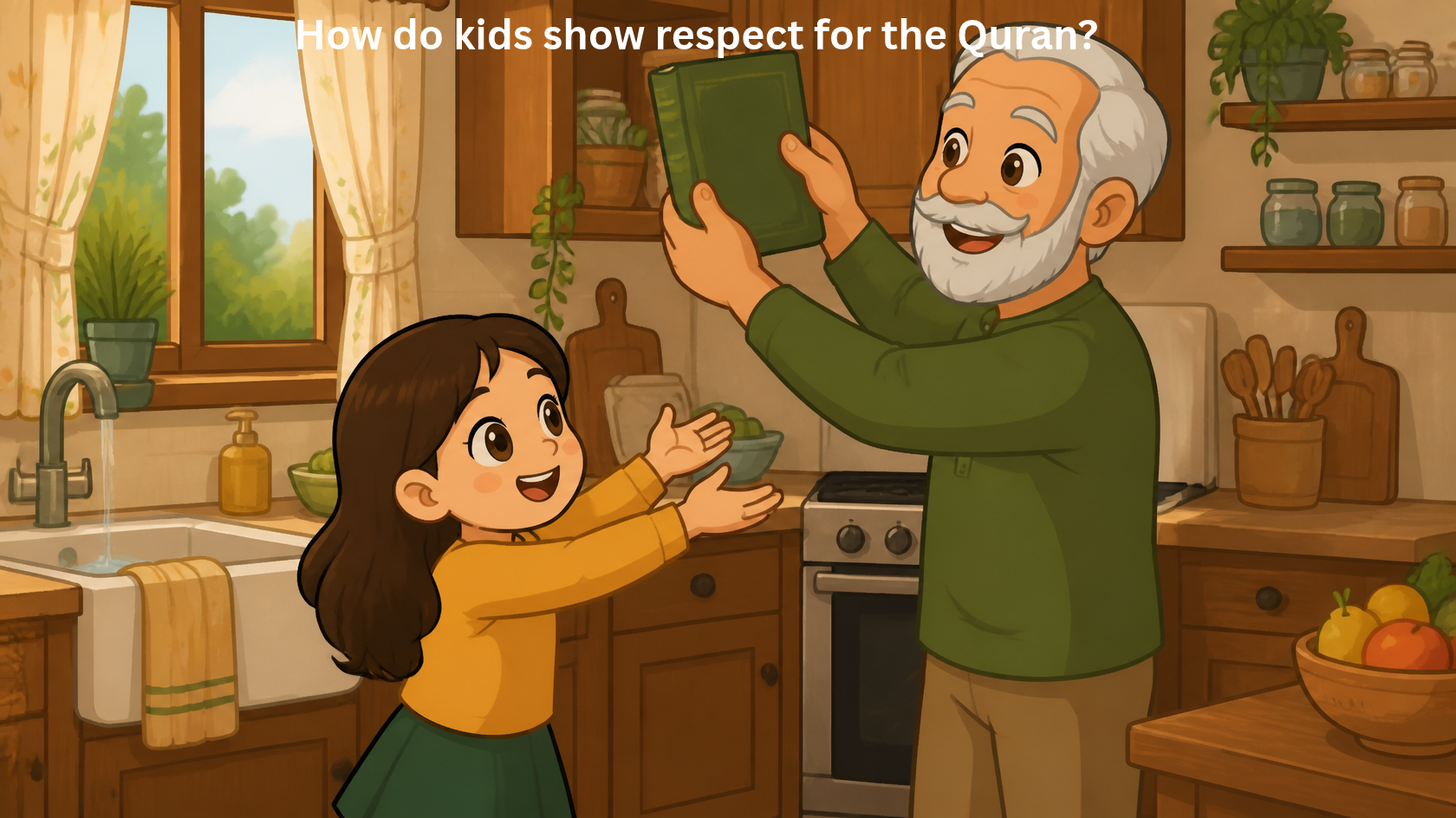
My grandfather's mushaf lived on top of the fridge. Not inside a cupboard, not on a shelf with the other books. On top of the fridge, wrapped in a green velvet cloth, highest point in the kitchen. As a kid I thought that was the strangest place for a book.
He told me once, when I was maybe seven and trying to reach it with a chair, that it lived up there because nothing in the house should ever sit above it. Then he lifted me down, washed my hands with me at the sink, and let me hold it. I still remember how heavy it was. And how careful I was.
Why this book is different
For kids, a book is a book. They throw them in bags, read them upside down, use them as ramps for toy cars. All of that's fine for a picture book about a dinosaur.
The Quran is Allah's own words. That's the whole difference, and kids can understand it if you say it simply. My niece Lina, six, asked me why we can't put it on the floor like her other books.
I said, if someone you love wrote you a letter, would you leave it on the floor where people walk? She thought about it. "No. I'd put it in my special box." Exactly.
Clean hands, and the wudu question
Most scholars say a person should be in wudu to touch the mushaf, and many point to the verse in Surah Al-Waqi'ah that says none touch it except the purified.
Some scholars read that verse as being about the angels and the heavenly record, so there's a real difference of opinion here, and some are more relaxed about it for young children who are learning.
What most families I know do: wudu if possible, always clean hands, and for little ones who haven't learned wudu yet, a gentle wash at the sink. That's what my grandfather did with me. It made touching it feel like a moment.
Small habits that show respect
None of these were rules handed down in a list in our house. They were just things I watched adults do. Put it somewhere high or at least somewhere clean.
A shelf, a stand, never the floor or under a pile of other stuff. Lina has a little wooden stand by her bed now and she dusts it, unasked, which she does for nothing else she owns.
Don't put things on top of it. Not a cup, not a phone.
Close it when you stop reading. Leaving it open face down cracks the spine, and somehow it just looks wrong.
Hold it with both hands when you carry it, right hand if you're using one.
Listening counts too
Respect isn't only about the book as an object. The Quran says in Surah Al-A'raf that when it's recited, listen and be quiet, so you may receive mercy.
That one's hard for kids. Car rides with recitation on, and someone's always talking. My sister tried a game: when the Quran is playing, everyone's voice goes to zero.
Whoever talks first loses. Her twins are now ferociously silent, glaring at each other, which isn't exactly peaceful reflection, but it's a start.
Loving it, not just handling it
Here's what I worry about. A kid can learn every rule about touching the mushaf and still feel nothing for what's inside. The Prophet Muhammad, peace be upon him, said the best of you are those who learn the Quran and teach it, and that's in Bukhari. Learning it is the real respect.
So read it with them. A few lines. Talk about what the story means. Let them ask the weird questions. If they ask where the Prophet's sayings fit in compared to the Quran, our post on what a hadith is explains the difference kindly.
For hands on fun, a printable sheet to colour while you listen to a short surah works really well. You can find some in the Islamic activities for kids section.
When something goes wrong
Kids drop things. It's going to fall one day. Lina dropped hers off the bed and burst into tears, sure she'd done something terrible. Her mum picked it up, kissed it, put it back, and said "it was an accident, Allah knows your heart." That's all. No panic, no shame. Mistakes aren't sins.
Conclusion
My grandfather's mushaf is mine now. It still has the green velvet cloth, a bit faded. I don't have a fridge tall enough to put it on, so it's on the top shelf in my living room, and the other day Lina pulled a chair over to reach it, exactly like I used to.
I lifted her down. We washed our hands. For more videos, games and activities that bring kids closer to the Quran, you'll find everything at Islamic Galaxy.
FAQs
Do kids need wudu to touch the Quran?
Most scholars say wudu is needed to touch the mushaf, while some are more lenient with young children who are still learning. Many families start with clean hands for little ones and teach wudu as they grow, so touching it feels special.
Where should we keep the Quran at home?
Somewhere clean and raised, like a shelf or a small stand, not on the floor or under other things. Some families wrap it in a cloth. Letting your child choose its special spot helps them feel the Quran is precious and theirs to care for.
What if my child drops the Quran by accident?
Pick it up gently, maybe kiss it if that's your family's habit, and put it back. Reassure your child it was an accident and Allah knows their heart. Getting upset or making them feel guilty does more harm than the fall.