

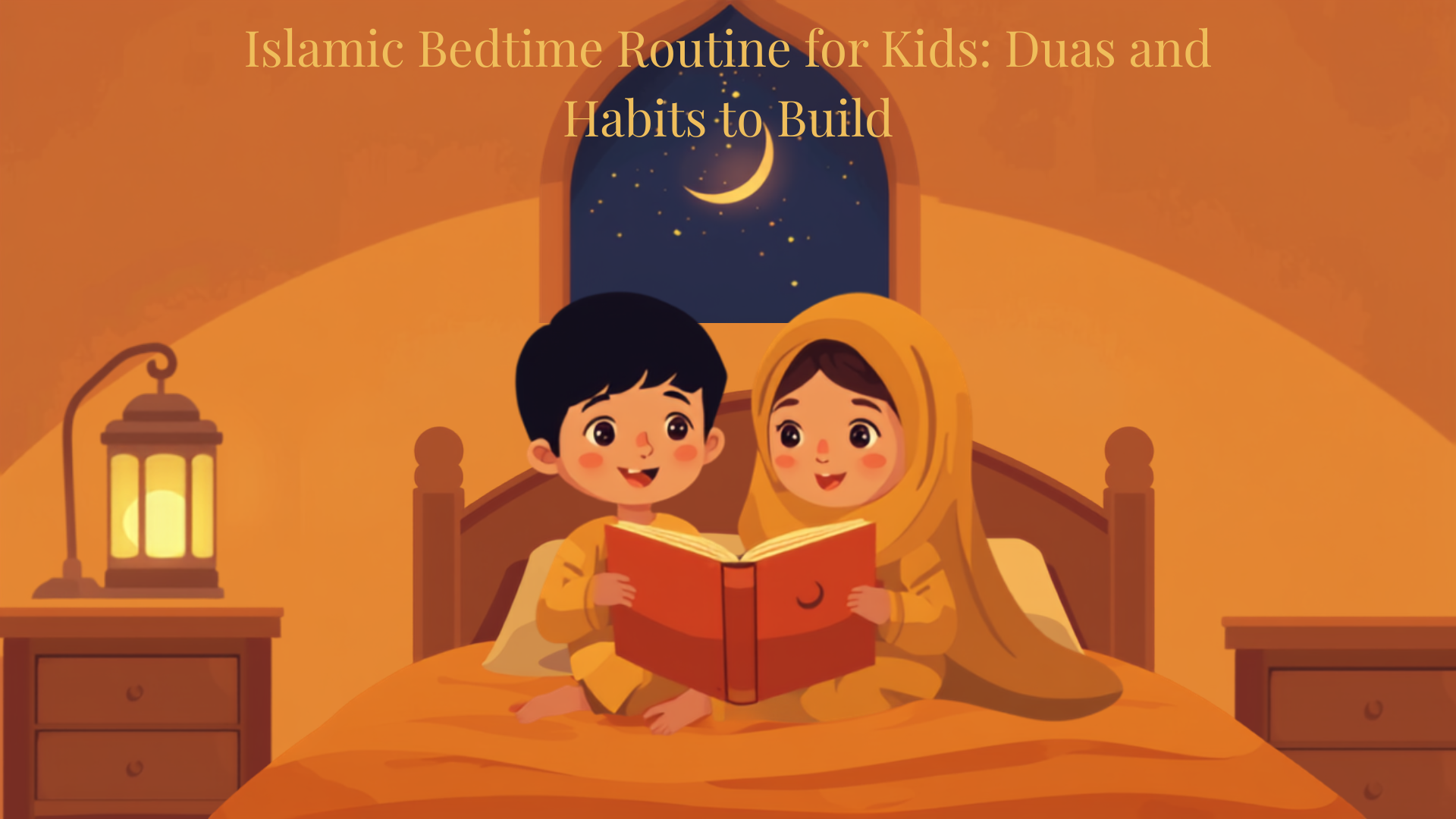
My youngest used to fight bedtime like it was a personal insult. Every night, same routine — one more glass of water, one more trip to the bathroom, "just five more minutes," repeat. It took me way longer than I'd like to admit to realize the issue wasn't bedtime itself. It was that nothing about it felt calm. We'd rush through teeth-brushing, flip off the lights, and then act surprised when she couldn't settle down.
What actually fixed it wasn't a new gadget or a stricter rule, not even close. It was just slowing the last ten minutes of the day down and filling them with something she started to look forward to. A dua, mostly. That's really it.
There's a reason the evening gets so much attention in Islamic tradition. The Prophet Muhammad, peace be upon him, taught specific words to say before sleep, and he made a habit of ending the day remembering Allah instead of just crashing into unconsciousness the second his head hit the pillow. For a kid, that's not only meaningful spiritually — it's genuinely useful. A predictable, quiet routine helps a small nervous system wind down, and when that routine has something sacred woven into it, it stops being just a habit. It becomes something closer to comfort.
So here's roughly what we do now, though I'll be honest, we don't hit every step every single night.
Screens go off a good twenty minutes before bed, no negotiating on that one, because bright light before sleep basically tricks a kid's brain into thinking it's still daytime. If my son's old enough for it, wudu becomes part of the wind-down too — doesn't need to be the whole ritual, but even washing hands and face tells his body, okay, something calm is starting now.
Then comes the dua, and this is the one non-negotiable part. The Prophet taught this line before sleep:
"Bismika Allahumma amutu wa ahya" ("In Your name, O Allah, I die and I live.")
For a toddler, you can shrink it down: "In Allah's name, I go to sleep, and in Allah's name, I wake up." Say it together, out loud, every night, and eventually it's as automatic as brushing teeth — actually more automatic than brushing teeth, in our house anyway.
After that we usually do a short surah, sometimes Ayatul Kursi, read slow enough that my daughter can mumble along. It's not a lesson. It's more like a lullaby that happens to be sacred text, and honestly the pressure-free part of it matters more than I expected. Then one gratitude question — "what was one good thing today?" — which isn't strictly a religious step but fits so naturally with the Islamic idea of shukr that it might as well be one.
Last thing, always: lights down, and the very last words before sleep are dua, not a rushed "okay, go to sleep now" said from the hallway.
Some nights that's the whole routine. Other nights we barely get through the dua before someone's already half-asleep, and that's fine too. Consistency matters more than doing it perfectly. If you're also working on talking to your kids about Allah during the day, bedtime becomes this natural extension of it — a quiet stretch where the bigger ideas get to settle in without anyone trying too hard.
And if your child ever needs more than the usual sleeping dua — nervous about a test tomorrow, missing someone, scared of the dark, whatever it is — that's the moment to bring in Dua e Hajat, the prayer of need, so they learn early that Allah's listening whether it's day or the middle of the night.
It took a few weeks before my daughter started reminding me to say the dua when I forgot, which, honestly, is the whole goal. Not a routine we enforce forever, but one they eventually just carry themselves.
If you're looking for more calm, faith-filled content to fill those evening hours — stories, duas, shows made for kids without the chaos — you'll find it at islamicgalaxy.