
Three bites. That's how much of the sandwich came back in my niece Malak's lunchbox. Every day. Three bites gone, the rest squashed under an apple she also hadn't touched. My sister was throwing out what felt like half a loaf a week, and Malak, seven, genuinely did not see the problem. "It's just bread."
Then my grandmother came to stay for a week. She watched one of those sandwiches go in the bin, said nothing, and the next morning she took Malak to the bakery downstairs at six a.m. to watch the bread being made. Malak came back covered in flour and quiet.
What israf means
Wasting, going past what you need. Food, water, money, time. The Quran puts it really plainly in Surah Al-A'raf: eat and drink, but don't be excessive, because Allah doesn't love those who waste.
I like that it starts with "eat and drink." It's not anti food. Nobody's asking kids to feel guilty for enjoying dinner. It's about the bin, mostly. And the tap left running.
The Prophet's plate
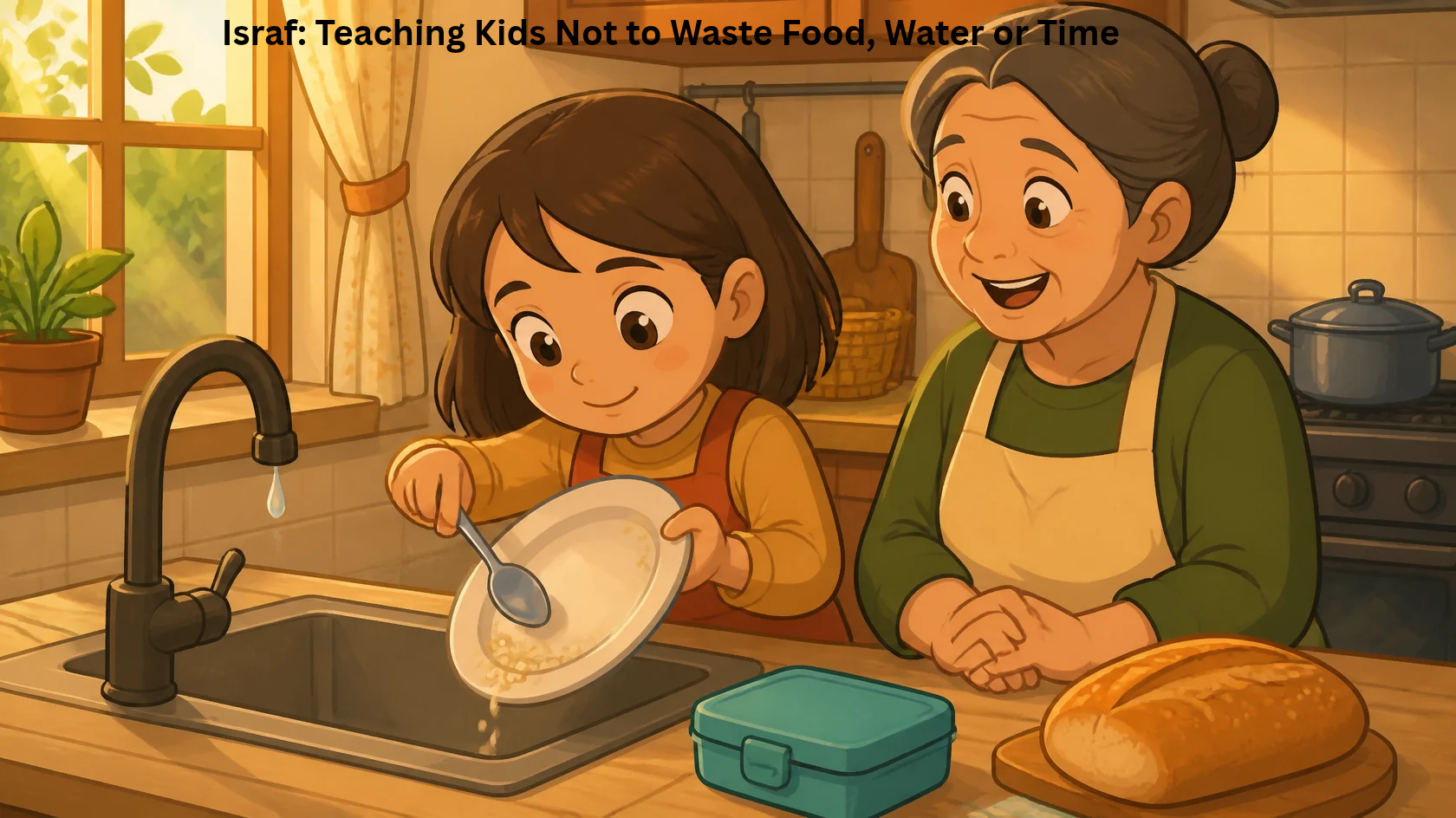
My grandmother told Malak a story that week I'd never heard told to a kid before. The Prophet Muhammad, peace be upon him, used to lick his fingers after eating and told people to wipe the plate clean, because you don't know which part of your food has the blessing in it. That's in Sahih Muslim.
Malak was delighted. Licking your fingers, allowed, actually encouraged. She now finishes her rice to "find the barakah," which involves a lot of chasing single grains around the plate with a spoon. It takes forever. It's fine.
Our post on what a hadith is is a good way in if your child asks where stories like that come from.
Water, the sneaky one
Kids waste water without noticing. Teeth brushing with the tap on, the whole song's worth of it. Long showers. Filling a cup, drinking two sips, pouring it out.
The Prophet did his whole wudu with about one mudd of water, roughly a double handful, and that's reported in both Bukhari and Muslim. I showed Malak with my two cupped hands. She did not believe me. We tried it at the sink, both of us, and made a huge mess and used way more. But she got the point.
Now she brushes with the tap off and turns it on to rinse. Tiny thing. Over a year it adds up to a lot of water.
Time counts too
This one surprised my sister. There's a hadith in Bukhari about two blessings most people lose out on, good health and free time. Wasting time is israf as well, just harder to see than a sandwich in the bin.
They didn't turn it into a screen ban. Just a question before the tablet comes out on the weekend: what did you want to do with today? Some days the answer's still cartoons. Some days it's the half finished Lego castle. If it's screens, our Islamic videos for kids are at least time spent on something that teaches a bit.
What changed at home
Smaller portions, seconds allowed. That one change cut the bin waste by half. Malak takes a little, finishes it, asks for more if she wants it.
Leftover night on Thursdays. Everything in the fridge comes out and gets eaten or turned into something. She named it "fridge party."
Her lunchbox is half the size it used to be. And she packs it with her mum the night before, so she only packs what she'll actually eat.
Conclusion
Last month Malak found a slightly hard bread roll in the kitchen, about to go in the bin, and rescued it. Made breadcrumbs with my sister, then made chicken with the breadcrumbs, then told everyone at dinner that the chicken was "saved bread." My grandmother just smiled into her plate. For more videos, games and activities for your family, you'll find everything at Islamic Galaxy.
FAQs
Is wasting food haram in Islam?
Israf, wasting and going beyond need, is something Allah says He doesn't love. Throwing out food on purpose or out of carelessness is blameworthy. That doesn't mean guilt over a spilled cup, it means building habits that respect what we've been given.
How can I stop my child from wasting food?
Serve smaller portions and let them ask for seconds. Let them help pack their lunch so they choose what they'll really eat. Tell them about the Prophet finishing his plate to find the blessing, kids love that one.
What does Islam say about wasting water?
The Prophet made wudu with about a double handful of water, as Bukhari and Muslim report. Teach kids to turn the tap off while brushing, take shorter showers, and only pour what they'll drink. Small habits, big difference over time.