
She promised her friend a seat at lunch and then forgot the second recess started, ended up sitting somewhere else entirely.
Small thing, really, but the guilt on her face afterward told me she already understood, on some level, that a broken promise means something. That's usually the moment worth building on, not brushing past.
Why This Gets Taken So Seriously
As stated in Islamic teachings, breaking a commitment for no reason is hypocrisy. It is serious, and therefore needs to be explained in detail, so it would not sound like a threat.
It is important to note that the objective is not to frighten anyone, but to achieve a high level of trustworthy character.
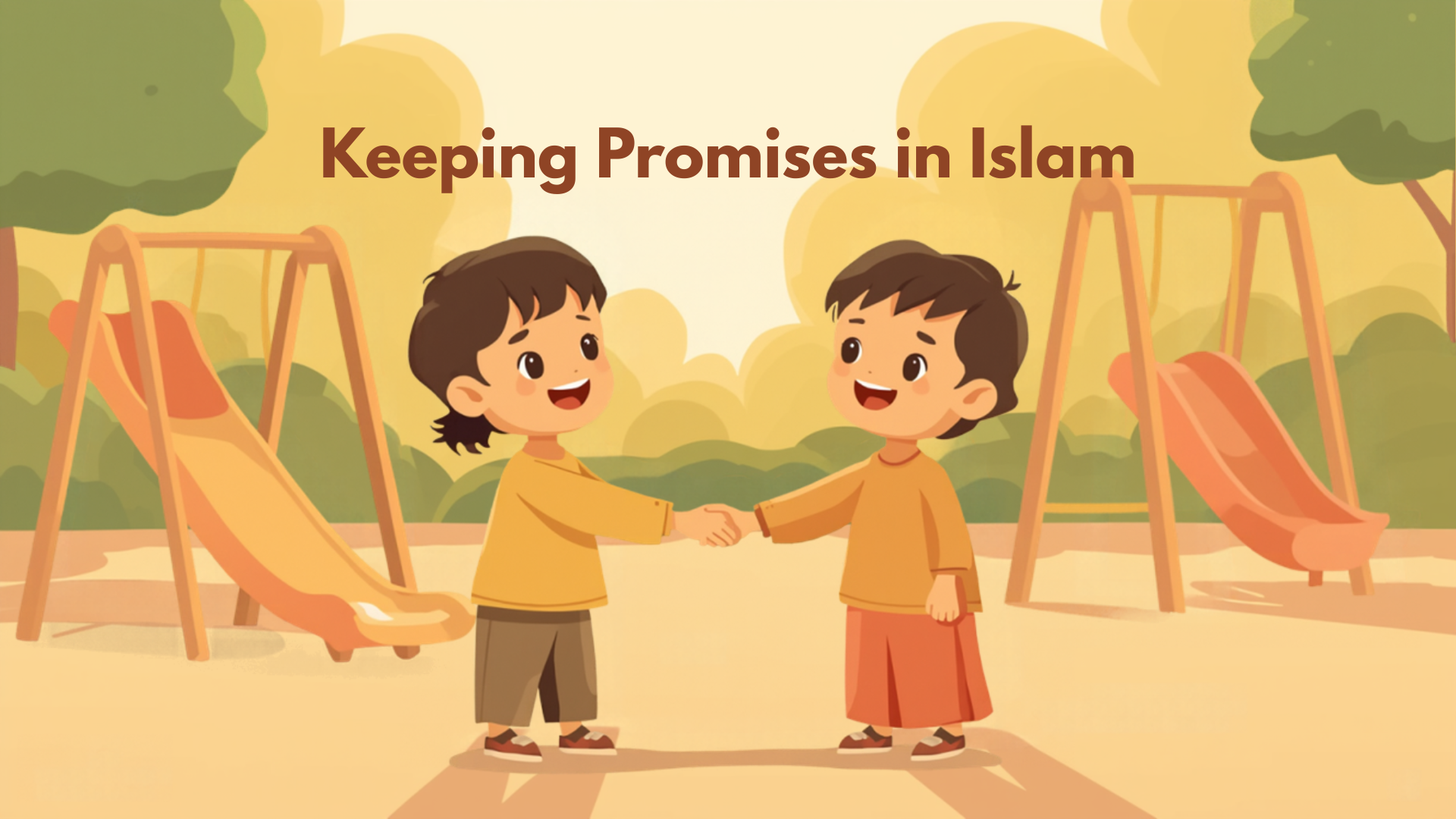
In Islam, people should be trusted, and they should keep their word.
Starting Small
No need for heavy religious framing right out of the gate. Start with everyday promises — returning a borrowed toy, showing up when you said you would, finishing a chore you agreed to.
These small, repeated moments build the habit long before a kid grasps the spiritual weight underneath it.
When a promise breaks, even by accident, treat it as a real conversation rather than a straight punishment. What happened? Why? What might work better next time?
Handling It When Promises Break
Kids will break promises sometimes. Part of growing up, honestly. What matters more is how they handle it afterward — a sincere apology, an attempt to make things right, rather than excuses. It's the same value from a different angle.
Model this yourself too. Tell your kid you'll do something and then can't follow through? Own it out loud instead of letting it slide. Kids notice inconsistency fast, and it undercuts the whole lesson if it only applies to them.
The Stakes Grow Up Too
As kids get older, promises carry more weight — commitments to friends, responsibilities at school, eventually bigger life decisions.
The habits built early tend to carry forward, which is really the whole point of starting while they're small, alongside related lessons kids pick up from raising Muslim kids abroad, where consistency ends up mattering just as much.
Conclusion
Teaching kids to value their word pays off well past childhood, shaping friendships, school, and eventually their own families. islamicgalaxy.com has character-focused stories that reinforce values like this in ways kids actually engage with, and there's more on this specific theme in this piece on honesty in Islam.
FAQs
Why does Islam place so much importance on keeping promises?
Breaking promises without a valid reason connects to hypocrisy in Islamic teaching, making trustworthiness central to good character. A reliable word reflects sincerity and faith, more than simple good manners alone.
How can I teach a young child to keep their promises?
Start with small, everyday commitments — returning toys, finishing tasks. Praise follow-through when it happens. Discuss slip-ups calmly, focused on solutions rather than punishment as the only response.
What should my child do if they can't keep a promise they made?
Teach a sincere apology and an honest explanation, no excuses attached. Encourage them to make it right where possible. Consistency in this response builds long-term trustworthiness over time.