

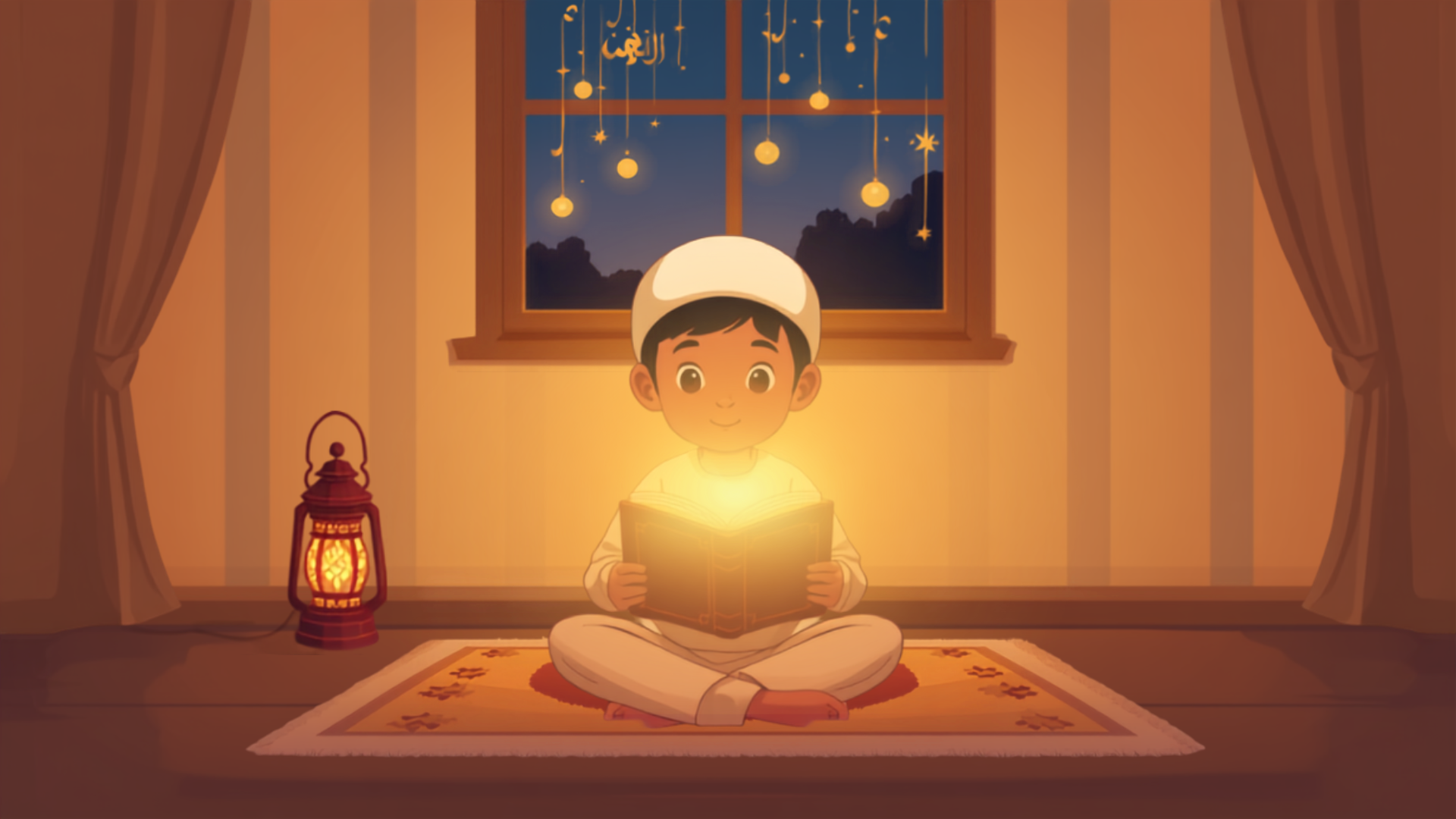
There's a very specific kind of chaos that happens in our house between "wake up" and "out the door." Missing socks. Someone in tears over the wrong cereal bowl. A genuine, tearful crisis over a hairbrush, once, that I still don't fully understand. For a long time our mornings had exactly zero calm in them, and adding a dua into that mess felt like a joke. But it ended up being the one thing that actually slowed everyone down, even if just for thirty seconds.
Why Start the Day With Dua
The Prophet Muhammad, peace be upon him, taught a specific dua for the moment you wake up, thanking Allah for another day. Small habit, pretty big idea underneath it — every morning is a gift, not something owed to you. Getting a kid to notice that, even while they're hunting for a missing shoe, builds a kind of gratitude that tends to stick around well past childhood, or at least that's the hope.
The Waking-Up Dua
The actual dua goes like this:
"Alhamdu lillahil-lathi ahyana ba'da ma amatana wa ilayhin-nushoor" ("All praise is for Allah who gave us life after having taken it from us, and to Him is the return.")
For a younger kid, you can shrink that down to something like, "Thank you, Allah, for a new day. Everything I do goes back to You." The exact wording matters way less for a toddler than just building the habit of pausing before their feet even hit the floor.
Making It Part of the Morning
We say it before anyone's even out of bed, which turns out to be the easiest place for it, since it happens before the whole getting-dressed, finding-backpacks scramble kicks in.
We also kept a small card taped near the bed for a while — Arabic, transliteration, translation, nothing fancy — just something for my son to glance at until he had it memorized. I try to say my own out loud too, where he can hear it, because kids pick up so much more from watching what you do than from being told to do it.
Some mornings we follow it with a quick question, "what's one thing you're excited about today," which pairs nicely with the dua and gives gratitude something concrete to attach to instead of floating around as an abstract idea a five-year-old can't really grasp yet. Don't stress too much over pronunciation early on, especially with little ones. The habit matters first. The polish comes later, usually on its own.
Pairing It With the Rest of the Day
If your family's already built a calming Islamic bedtime routine, this is really the perfect bookend to it. The day opens and closes with a moment of connection to Allah, and over months, years even, that shapes how a kid instinctively reacts to both the good days and the rough ones — with gratitude first, not just reaction.
You might also think about teaching your child to include their own parents in the morning dua. We wrote a whole piece on teaching kids to make dua for their parents that pairs really well with this.
Conclusion
Some mornings we still forget entirely. The missing shoe wins, chaos wins, whatever. But on the mornings we remember, there's a noticeably different feel to the whole house. Calmer. More grounded. Which, honestly, is about all you can ask of a habit like this. For more everyday Islamic learning, duas, and gentle routines built for families like yours, take a look at IslamicGalaxy.
FAQs
What's the easiest way to teach a toddler the waking-up dua? Say it for them, out loud, every single morning, even before they can speak it back. Repetition does most of the work before they're old enough to memorize actively.
Is it okay to say the dua in English instead of Arabic? Yes, especially at first. Understanding the meaning matters more early on than reciting the exact Arabic, which can be introduced gradually.
How do I remember to do this every morning myself? Attach it to something that already happens every day, like the moment your child's eyes open or right before you turn on the lights.
What if my child resists saying it some mornings? Don't force it into a battle. Say it yourself out loud and let them join in when they're ready — pressure tends to backfire with habits like this.