
My daughter's first question about Khadijah is always the same. "Was she rich?" And yeah, she was — but honestly that's the least interesting part of this story. What actually makes Khadijah worth talking about isn't what she had. It's what she did with it, and more than that, who she believed in when nobody else around her would.
A Businesswoman Ahead of Her Time
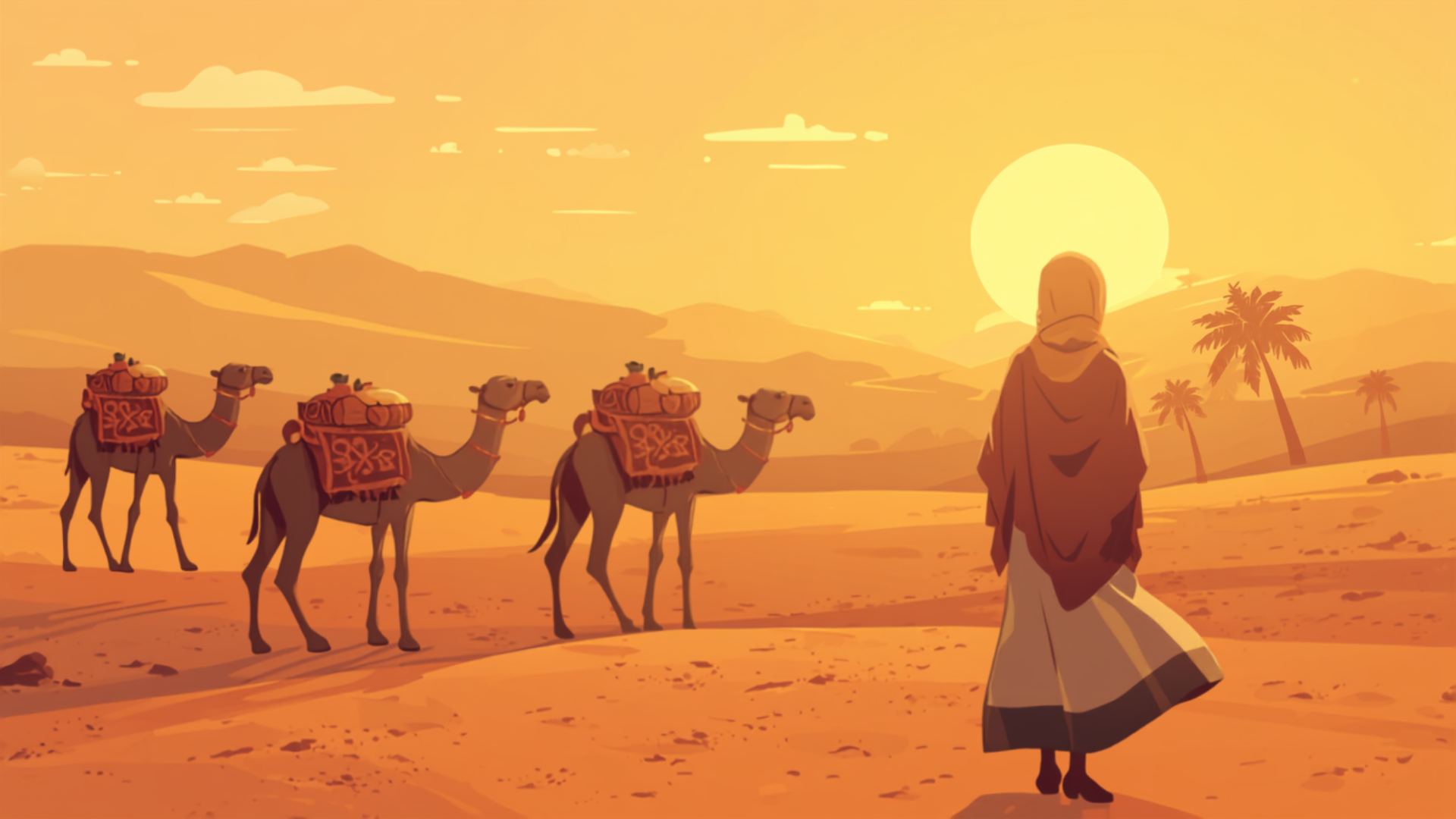
Khadijah bint Khuwaylid ran her own trading caravans in Makkah, which was, for the record, extremely rare for a woman at that time. People across the city knew her for her honesty and her character before they knew much else about her — they actually called her "At-Tahira," the pure one, and that was long before she ever crossed paths with the Prophet Muhammad, peace be upon him.
She hired him to lead one of her caravans, saw how honest he was in that work, and eventually proposed marriage to him herself. Think about that for a second. A woman in that time, in that place, doing the proposing. That tells you most of what you need to know about her.
The First to Believe
Then came the cave of Hira. The Prophet received his first revelation there from the angel Jibreel, and he came home shaking, genuinely afraid, not sure what had just happened to him. It was Khadijah who calmed him down, wrapped him in a blanket, and said something that every kid should probably hear at some point: "Allah will never disgrace you.
You keep good relations with your family, you help the poor, you're generous to guests." She believed him instantly. Completely. Before anyone else on earth did — not his friends, not his own family, nobody.
That moment, right there, makes her the first Muslim in history.
Standing By Him Through the Hardest Years
The years after weren't easy. Not even a little. People mocked the Prophet, threatened him, and eventually the Muslims were boycotted entirely, cut off from food and trade for three brutal years. Khadijah spent basically her whole fortune keeping the community alive through that stretch — feeding people, protecting them, standing next to her husband while most of Makkah had turned its back on him. She died not long after that boycott finally ended, and the Prophet grieved her so heavily that historians still call that year "The Year of Sorrow."
What Kids Can Learn From Her Story
What I want my daughter to take from this isn't just "Khadijah was nice" or whatever flattened version might come across in a quick retelling. It's that believing in someone before it's popular, before it's safe, before there's any proof it'll work out — that takes real nerve. She didn't wait around to see if Islam would succeed before she backed it. She trusted the Prophet's character and put everything she had behind that trust.
It's also, if you think about it, a pretty solid example for kids of what a strong marriage looks like. Not the fairy-tale kind. The kind built on trust and respect and showing up for each other when things get hard, not just when they're easy.
Conclusion
If Khadijah's story lands well with your child, the companions who surrounded the Prophet are worth exploring next, along with the story of Aisha (RA), another woman whose strength shaped Islamic history in her own, very different way. This is exactly why we built Islamic Galaxy, actually — real history, told the way kids will actually sit still for. You'll find Khadijah's story, and plenty more like it, through video, games, and books at islamicgalaxy.
FAQs
Why is Khadijah called "the first Muslim"? Because she was the very first person to believe in Prophet Muhammad's message, before anyone else in his family or community accepted it.
How old was Khadijah when she married the Prophet? Historical accounts generally place her around 40 at the time of their marriage, considerably older than the Prophet, who was around 25.
Why is Khadijah's story important for kids to know? It teaches courage, loyalty, and the value of believing in someone based on their character, along with what a supportive, trust-based marriage can look like.
Did Khadijah and the Prophet have children? Yes, they had several children together, including their daughter Fatimah, who became one of the most beloved figures in Islamic history.