
One of the most precious gifts that you can give to your child is helping him or her learn Arabic. Whether your family speaks Arabic at home or your child is growing up in a place where Arabic isn't spoken, being able to understand, speak, read, and write Arabic can help them connect with culture, identity, faith, and new opportunities around the world.
owadays, more parents are looking for quality Arabic courses for their children that are fun, current, flexible, and age-specific.
However, choosing the proper one is sometimes quite tricky since there are many courses, platforms, and teaching styles. Therefore, this article will provide you with everything you need to know when teaching Arabic to your children, from course types to important skills, teaching techniques, age approaches, and finding the best program for your child, and any common questions parents might ask.
Why Arabic Courses for Children Matter
Arabic is among the most significant global languages. This language plays an important role in terms of heritage, history, and identity for millions of people. It is also an important language concerning religion, cultures, and communication. You should teach this language to your children at a tender age so that it can help them in the following ways:
- Enhance brain capabilities
- Feel more connected to their culture and beliefs
- Enhance memory, attention, and problem-solving skills
- More confidence and emotional strength
- Master a new language that they can rely on for their whole lifetime and grow with
Whether it is becoming bilingual, learning to read the Qur’an, or just being able to speak back home, it is much easier and more fun when started at an early age.
Types of Arabic Courses for Children
All Arabic classes are not created equally. Children learn differently depending on their age group, nature, and environment. Below are the most typical types of classes offered.
1. Classical Arabic Courses
In these classes, Modern Standard Arabic or Classical Arabic is taught.
They apply to children who want to:
- Learn to Read and Understand the Arabic Language as Spoken in the Quran
- Master good grammar fundamentals
- Enhancing formal reading and writing abilities
In school or institutional settings, use Arabic. Fus-ha is essentially the core Arabic language and plays a significant role in long-term learning. one of the best Courses I found for my kids and for myself as well was after some research was a website called Studio Arabiya in Egypt, it teaches Arabic for all ages, and it's not just courses they even have blogs you can read and learn more for free!
2. Dialect Courses (Ammiya /Spoken Arabic)
These are useful for kids learning Arabic for:
- Interactions with relatives
- Communicating in everyday situations, such as at traveling to Arabic-speaking countries
- Developing speaking confidence
Common dialects include:
- Egyptian
- Levantine
- Gulf dialects (Khalejii)
Increasingly, many courses incorporate teaching in both Fus-ha and dialect to provide children with a comprehensive range of skills.
3. Quranic Arabic Courses
These programs are geared towards families who wish to emphasize religious learning.
These assist children:
- Learn words from the Qur'an
- Learn basic rules related to Tajweed.
- Identify roots and patterns of words
Establish a spiritual connection with the language. Such classes usually consist of narratives about prophets and Islamic values.
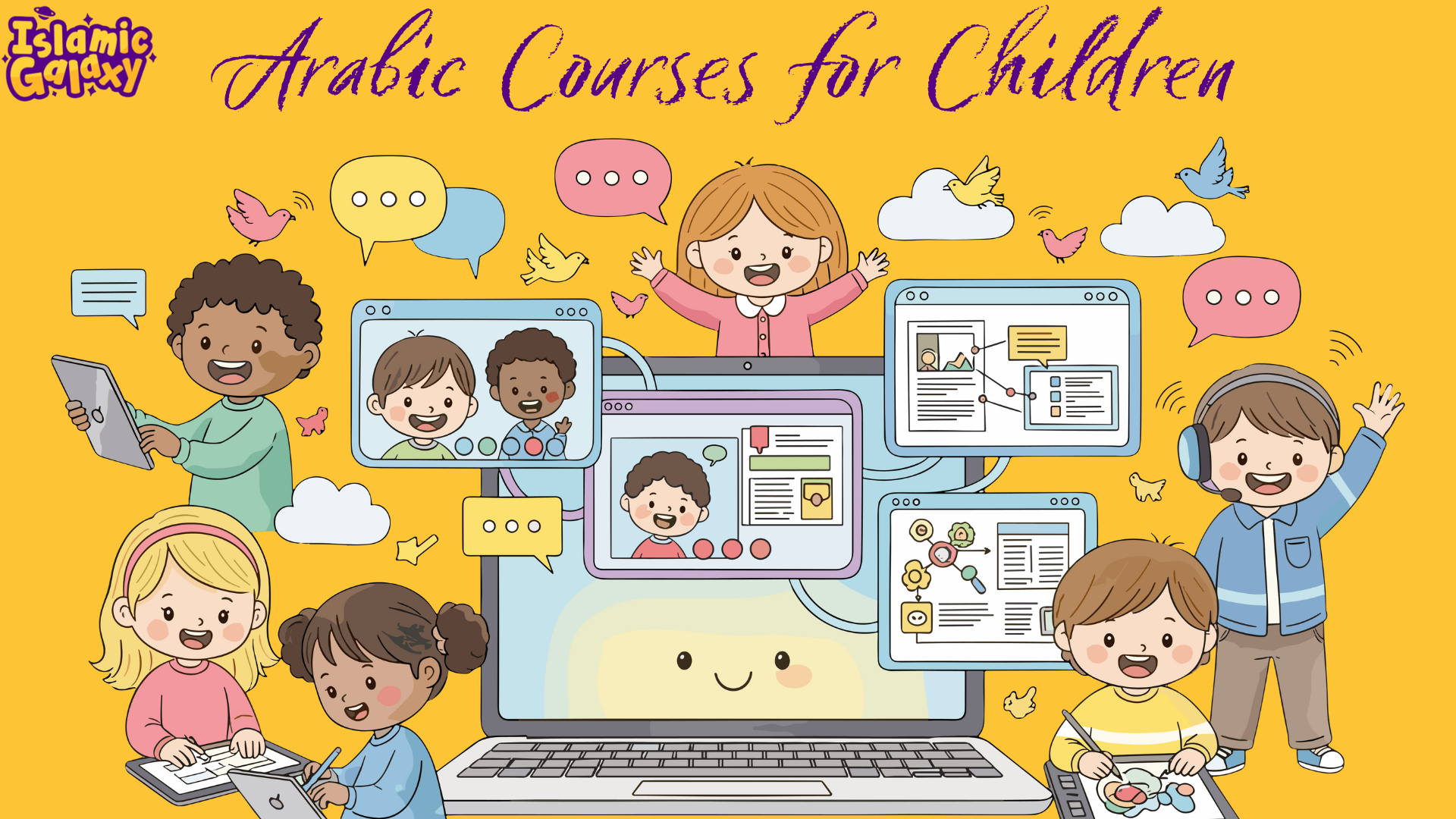
4. Online Arabic Courses for Children
e-learning is very popular because it's flexible, using fun tools.
Material is presented through the following courses:
- Videos
- Games and quizzes
- Digital flash cards
- Virtual classrooms with native teachers
- Learning apps
- Animated stories
It is very suitable for those families that live far from Arabic-speaking areas or have tight schedules.
5. In-person Arabic classes and learning centers
These are good for parents who want:
- Regular weekly lessons
- Opportunities to meet other kids
- Group activities and teamwork
- A learning classroom environment.
Many times, these programs will add cultural lessons, handwriting practice, and storytelling.
How Children Learn Arabic
Natural Learning vs. Structured Learning
Natural learning
The learning processes of children differ from one age group to another, 3-5 years: Natural absorption phase
- Learning through Songs, Stories, and Repetition
- Exposure-Based Learning
- Visual aids and sensation activities
Ages 6-9: Early Structured Learning
- Basic reading
- Vocabulary building
- Letter recognition
- Creating simple sentences
10 – 14 Years Grammar & Fluency
- High reading comprehension
- Writing paragraphs
- Understanding the Rules of Grammar
- Communication with Confidence
Ensuring that Arabic class choices for the child align with the child’s stage of development is vital to the child’s success.
Key Skills Children Need in Arabic Courses
A course to really learn Arabic must cover four areas.
Reading
Children learn to:
- Recognize the letters in all forms
- Understand short vowels (الحركات)
- Read simple words
- Build phonetic awareness
Some Arabic courses focus on phonics-style teaching, and others use classical Arabic methods.
2. Writing (الكتابة)
Writing helps children:
- Master the formation of letters
- Improve hand-eye coordination
- Spell skills Building
- Build confidence in expression
3. Pre-listening (الاستماع)
Children absorb language through:
- Stories
- Songs
- Teacher conversations
- Animations
- Interactive activities
This develops the foundation for speaking and comprehension.
4. Speaking (المحادثة)
Speaking practice ensures that
- Strong articulation
- A natural sentence would be: Confidence in communication
- Better retention
There is a place for repetition, relevant and natural-sounding dialogue, and even playful conversation in courses.
Modern Teaching Methods in Arabic Courses for Children
Arabic language learning today is more interactive than ever.
1. Gamified Learning
Children learn through:
- Points
- Levels
- Rewards
- Interactive games
- Flash animated flashcards
This reinforces motivation and reliability.
2. Story-Based Learning
Arabic stories develop in children the ability to:
- Learn vocabulary in context
- Attach meaning to words
- Improve listening and reading
- Enjoy learning
Narrated stories are most useful for smaller children.
3. Visual Learning
Children learn effectively with:
- Illustrations
- Picture dictionaries
- Video animations
- Color-coded worksheets
- Flashcards
Visual cues make Arabic less intimidating.
4. Repetition & Spiralling
Good Arabic courses repeat concepts in small, spaced-out intervals. It helps the children remember things for a longer period.
How to Choose the Best Arabic Course for Your Child
There are a few important things that depend on choosing an ideal Arabic language program.
1. Defining Your Aim
Are you learning Arabic for speaking, reading, writing, or focusing on Quranic Arabic?
Would you like to attain full fluency? Or is it supposed to help your child feel more connected with his or her heritage? It basically depends on what exactly you want from
the lessons and the teaching style for yourself.
2. Ensure that the curriculum matches their age group.
Younger children will learn better with activities, songs, and games.
Older children typically require more grammar, structured lessons, and practice in writing.
3. Look for Native or Professional Teachers
Good teachers make all the difference.
They explain everything clearly, help with the pronunciation of certain words, and keep the lessons fun and interesting.
4. Interaction Check
Kids learn best when they're involved, rather than simply watching. Choose programs that include quizzes, games, and role-playing, including even digital worksheets.
5. Consistency Over Intensity.
Even just 20 minutes a day, done regularly, makes a big difference.
Benefits of Early Arabic Learning for Children
1. Rapid Language Acquisition
They learn new sounds and words much quicker than an adult.
2. Cultural and Religious Attachment
Arabic links children to:
- Identity
- Heritage
- Stories
- Values
- community
3. Academic Advantages
Bilingual children:
- think more creatively
- can solve problems faster
- have a stronger memory
4. Emotional & Social Development
Learning a second language develops:
- Confidence
- Empathy
- Self-expression
Difficulties Children Face While Acquiring the Arabic Language
1. The Alphabet
The Arabic alphabet has letters that depend on their position.
2. Pronunciation
For example, letters such as ص ض ط ق may be hard in the beginning.
3. Grammar
The grammar of Arabic is very intricate.
4. Home Practice – Limited Practice
If Arabic is not spoken at home, it might cause delays in progress.
However, a good Arabic program for children can convert these issues into advantages.
Tips for Parents Supporting Arabic Learning at Home
1. The Arabic Typewriter
- Tag objects at home
- Use Arabic books
- Use Arabic Posters
2. Integrate Arabic in Daily Routines
- Greeting
- Counting
- Simple questions
3. Use Arabic Media
- Songs
- Cartoons
- Story
4. Celebrate Small Progress
Each new word learned must be celebrated because motivation builds momentum.
Conclusion
Picking the best Arabic classes for kids is one of the greatest achievements that parents can make. With the new methods in teaching and approaches emphasizing the involvement of kids in the learning process, learning Arabic has never been more accessible.
When your kid learns the Arabic language to adapt to school requirements or to fulfill religious obligations, the whole experience will give them more reasons to feel attached to their roots and provide them with new opportunities for the future.
The key is simply to choose a program that is fitting for your child’s age and personality and aligns with goals they wish to fulfill while ensuring that their learning pursuit remains enjoyable and consistent.
With a proper course, learning the Arabic language for children becomes a joyful, significant, and empowering experience. You can make learning easier and more fun for your kids with Islamic Galaxy!