

You can think of Tajweed as an art; it doesn't just make the words sound better, but Tajweed makes reading and reciting more fun, but you know what that only depends on the learning method, I still remember when I was first introduced to Tajweed; my teacher kinda forced me into it, if you think about it whenever someone told us we have to learn something without an explanation of why we need to learn it makes us more stubborn and not wanting to learn at all.
And that's what happened to me at first, when my parents felt like I was only studying tajweed because I had to; they sat with me and explained the beauty of tajweed, they made me feel like learning tajweed will make me kinda special or unique, and believe me this made all the difference with me; I became more interested, started wanting to learn more about and not just learning tajweed itself but the beauty and history behind it. And one of the most significant and widely accepted rules in Tajweed is known as Idgham. What is Idgham, if you've ever thought of asking that question?
For those of you who find that certain letters blend when reading the Quran, well, you're not alone, and in this article, I will guide you through everything you need to learn in Idgham. Once you learn Idgham correctly, you will find yourself more connected to the Quran, so let's get into it.
Why Is Idgham Important in Quran Recitation?
The Quran requires more than just being read, as every sound is significant. This is why it is recited.
Understanding Idgham helps you:
- Say words correctly.
- Maintain a natural and effortless way of reciting.
- Follow the footsteps of the Prophet (PBUH) in reciting the Quran.
- Speak more fluently and confidently.
- Sounds more accurate and natural.
Failure to comply with the Idgham rules can cause your recitation to sound incorrect, even if you correctly say each letter. The Idgham rules are essential for both novice and experienced students to learn.
The Letters of Idgham.
There are six Idgham letters, and they can be found in an Arabic word of repute:
(ي — ر — م — ل — و — ن)
Often, these letters are remembered by the term:
The presence of a Tanween or Noon Saakin after one of these six letters results in Idgham.
Two primary classifications of these letters are present, resulting in two significant types:
- Idgham with Ghunnah (nasal sound)
- Idgham without the recognizable Ghunnah (no vocalization)
We'll look at both next.
Idgham with Ghunnah.
The sound of Noon Saakin or Tanween is followed by Idgham with Ghunnah when four letters are added: ي, ن, م, or و.
Whenever this occurs, the Noon tone merges with a two-way nasal sound known as ghunnah.
Idgham with Ghunnah Letters.
- ي (Ya)
- ن (Noon)
- م (Meem)
- و (Waw)
Idgham Examples (With Ghunnah)
مِنْ مَالٍ.
If the word ghunnah is not "min mal", then it becomes "mim-ml".
مَنْ يَقُولُ.
Ghunnah is a modified form of may-yaqool, replacing the original man yach.
غَفُورٌ وَرَحِيمٌ.
With a smooth merging, it is now known as ghafoorun wa (non-ming word) and raheem.
Noon or Tanween no longer resembles an unambiguous "n."
Idgham without Ghunnah.
When Noon Saakin or Tanween is followed by or -, Idgham becomes the only place where Ghunnah can be found without it.
The Noon sound is blended in this scenario, but there is no nasal sound.
Idgham without Ghunnah Letters.
- ل (Lam)
- ر (Raa)
There is no longer a Noon sound, and the next letter is clearly pronounced without the word "ghunnah”.
Idgham Examples (Without Ghunnah)
مِنْ رَبِّهِمْ.
The word is changed to mir rabbihim, not min rabiim.
هُدًى لِّلْمُتَّقِينَ.
Haudan lil... instead becomes hudal-li...
These illustrations demonstrate how the letters are entirely blended without the nasal sound.'
The idgham rules incorporate this form as an essential element.
The Quran isn't just read — it's recited, and every small sound matters.
Tajweed has so many other aspects, not just Idgham, such as Yaa Madd or Shaddah rules; you can learn more about Tajweed in general with Islamic Galaxy!
Idgham Rules Explained in Simple Steps
The idgham rules can be explained in this manner, making them easy to remember: 1.
When does Idgham happen?
It happens when:
- There is a noon saakin (نْ) or tanween (ً ٍ ٌ)
- The next word starts with ي، ر، م، ل، و، ن
- The two words are separate (idgham happens between words)
It does NOT happen when:
- The noon saakin or tanween is in the same word
Example: دُنْيَا – no idgham happens here
- The next letter is one of the throat letters (then it’s idhaar, not idgham)
So always check:
Noon saakin or tanween + next word starting with "يرملون" = idgham
Common Mistakes Learners Make With Idgham
A lot of students struggle to grasp and implement this rule initially.
The most frequent errors are:
- Using the whole "n" sound instead of adding it to the next letter?
- Rejecting the idea of naming the ghunnah by specific letters.
- Including the ghunnah when it is not essential.
- Quickly reading and disregarding the sounds.
- Not detecting the tanween marks in the text.
The easiest way to enhance your situation is by:
- Practice reading slowly, listening to reciters to read the Quran, and practicing daily. Please do not rush!
- It is more effective to acquire Idgham through listening, rather than simply memorizing rules.
How to Master Idgham Quickly
These are the most effective methods for achieving proficiency in the idgham tajweed rules:
1. Focus on Listening First.
See famous Quranic reciters, such as:
- Mishary Alafasy.
- Abdul Basit.
- Maher Al-Muaiqly.
- Observe the areas where the sounds merge smoothly.
2. Mark the Idgham Letters.
As you read, highlight every:
- Noon Saakin.
- Tanween.
- A shortened version of ". " is used instead.
3. Read With a Teacher.
Having a teacher as an ally is the best way to receive accurate feedback and guidance.
4. Practice Every Day.
A daily routine that lasts 10 minutes can significantly improve your health.
The Spiritual Beauty of Idgham in the Quran
- The Quran is recited with an effortless and melodious tone by Idgham, which goes beyond just a rule.
- The recitation would sound unnatural and stiff without the presence of idgham.
- The Arabic language's divine structure is characterized by this blending.
Idgham assists in the recitation of words when done correctly:
- Easier to follow.
- More moving.
- More impactful.
- More beautiful.
It aids in connecting the heart to the words of Allah.
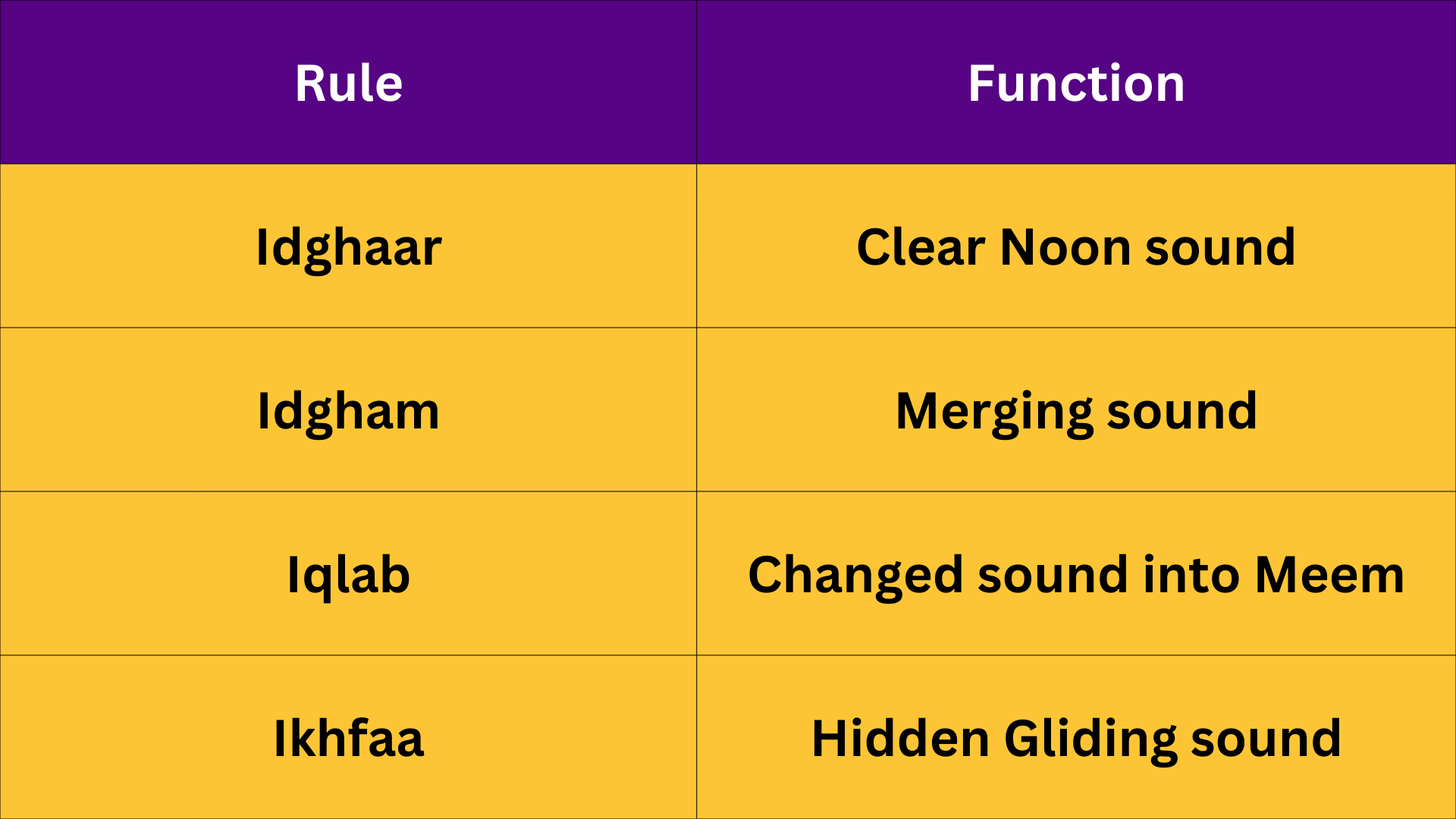
Idgham vs Other Tajweed Rules (Quick Comparison)
For better understanding, here is a simple difference:
Conclusion
Learning Adham is very vital to transcend Tajweed. It is among the most widely used guidelines in the Quran. Your recitation. You will become more confident and beautiful when you learn it more effectively.
The Quran. When you understand, it becomes more authentic, meaningful, and powerful. The letters are linked together and together.
Don't rush through it. A genuine skill, it also requires time and care, a profound appreciation for the things you arrive at. Idgham knowledge encompasses More than just the correct pronunciation of the letters. It's about payment, respect, and consideration for every verse in the Quran.
Learn more with Islamic Galaxy; start your kid's journey of making learning more fun!