

Look, I know Tajweed sounds intimidating. When I first heard about noon saakin and tanween rules, I thought, "There's no way my kid (or I!) can learn this." But honestly? These rules are way simpler than they seem.
Once your child gets the hang of what tanween in Arabic actually is, it's just four little patterns that pop up everywhere in the Qur'an. And the best part? Kids pick them up pretty quickly when you break it down. So let's do exactly that. We'll go through these tajweed rules for kids together—no fancy terms, just clear examples and tips that actually work.
What Is Noon Saakin?
Noon saakin just means a noon letter (ن) with a sukoon on top—that little circle that tells you to stop and not add any vowel sound. Your child might already recognize it without knowing the fancy name for it.
You'll spot noon saakin sitting in the middle or at the end of Arabic words. For example, in the word مِنْ (min), which means "from," that noon has a sukoon right there. Kids generally understand very fast after you demonstrate to them what to find—simply indicate that small circle and they will begin to see it everywhere.
The rules of noon saakin determine how we pronounce it depending on what letter comes next. And here's where it gets interesting: tanween follows these same rules.
If your child is still learning to recognize Arabic letters, our Arabic alphabet resources at Islamic Galaxy make it so much easier to build that foundation first.
So what exactly is tanween? Let's talk about that next.
What Is Tanween in Arabic?
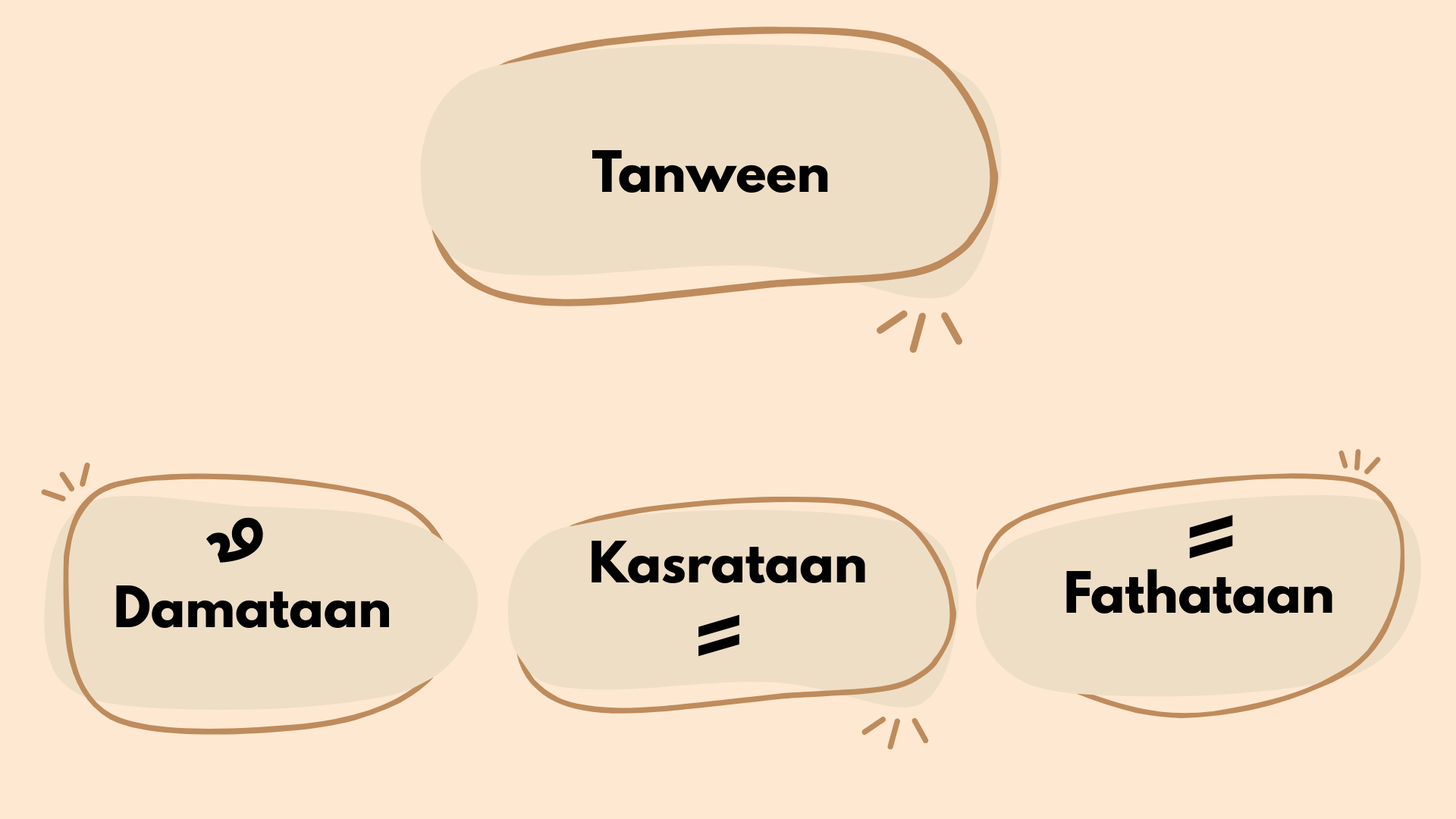
Okay, so what is tanween? Think of it like this: When you spot a word with two small identical marks, one on top of the other, and if you want to pronounce that word, you should add an "n" sound there. A double mark is what they call veery in Arabic. There are three types, and they're pretty easy to spot:
- ً (fathataan) - looks like two slashes. You say it like "an" - as in كِتَابًا (kitaaban - a book)
- ٍ (kasrataan) - two slashes under the letter. Sounds like "in" - like بَيْتٍ (baytin - of a house)
- ٌ (damataan) - looks like a tiny "و" doubled up. Pronounced like "un" - as in عِلْمٌ (ilmun - knowledge)
Your child will see tanween all over the Qur'an, especially at the ends of verses. Once they know to add that "n" sound, half the battle is won. And here's the thing: Tanween
Arabic for kids isn't hard to teach when you practice with words they already see in their daily surahs. But why do these rules even matter? Let's get into that.
Why These Rules Matter for Qur'an Recitation?
Here's the thing: you might be thinking, "Do we really need to get into all this?" And I totally get that. But these rules of noon saakin and tanween actually make a huge difference in how your child connects with the Qur'an.
The thing is, it's not only about mimicking the sounds correctly. Upon mastering these Arabic pronunciation rules, children are essentially repeating the language of the Prophet ﷺ and the Companions. There is something wonderful about that bond, isn't there?
Plus, I've seen this happen over and over: kids who learn tajweed for Qur'an reading early on feel more confident. They're not second-guessing themselves every other word. They actually look forward to recitation time. Alright, ready to learn the four rules? Let's break them down one by one.
The 4 Rules of Noon Saakin and Tanween
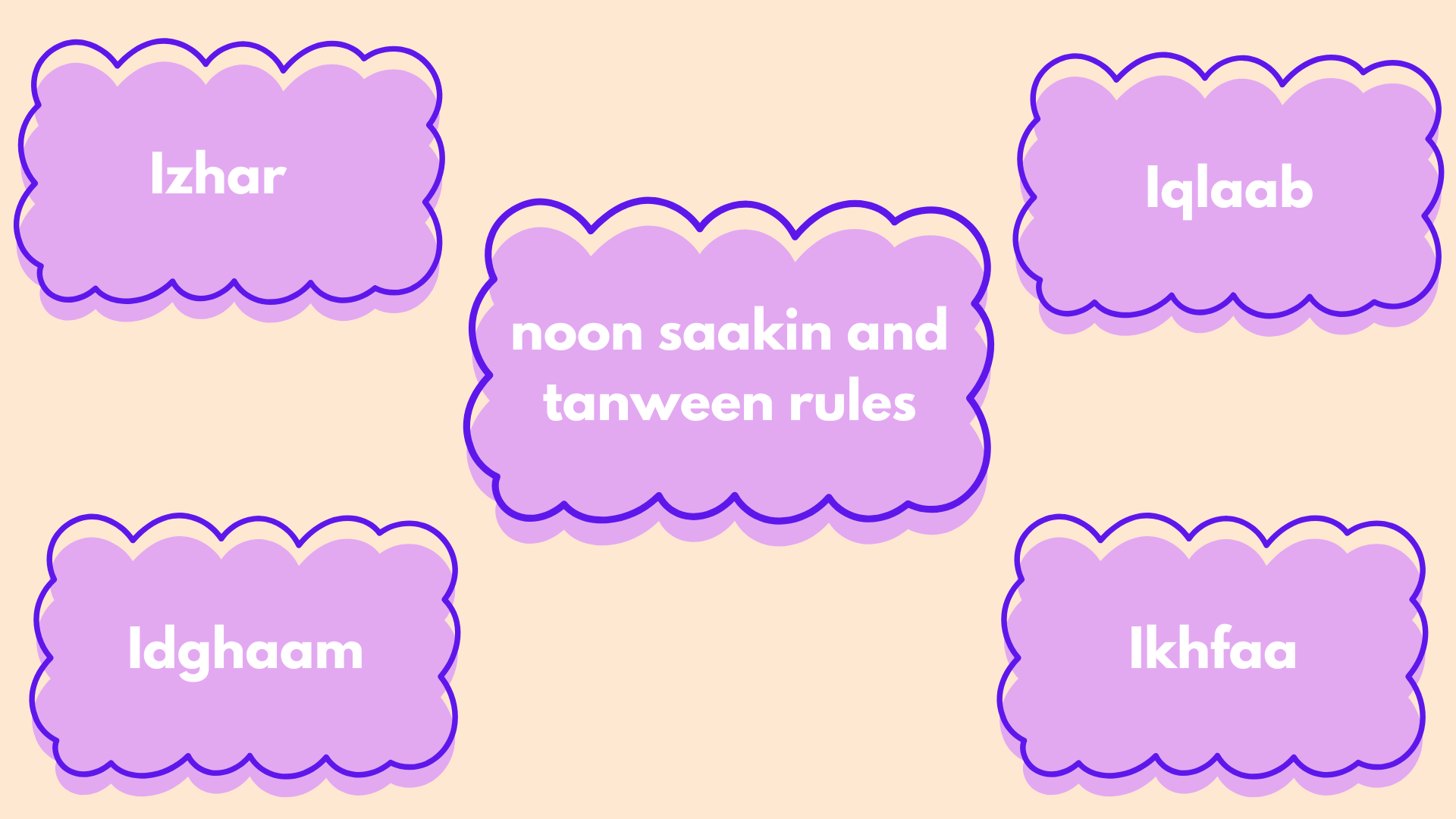
So here's what makes this easier: both noon saakin and tanween follow the same four rules. The only thing that changes? Which letter comes after them? That next letter informs you of the rule to be followed and the way the word should be pronounced. After your kid can recognize these patterns on his own, it is practically an automatic process. Let's see each one.
Rule 1 – Izhaar (Clear Pronunciation)
This one's pretty straightforward. When noon saakin or tanween comes before one of six special throat letters (أ ه ع ح غ خ), you pronounce the noon clearly and completely. No hiding, no blending—just a nice, strong "n" sound.
These six letters all come from deep in your throat, which is probably why the noon stays so clear and strong. It's the Izhaar rule for kids, and honestly, it's one of the easiest to teach.
Here's what it looks like in the Qur'an:
- مِنْ آمَنَ (min aamana) - "whoever believes" (from Surah Al-Baqarah)
- عَلِيمٌ حَكِيمٌ (aleemun hakeemun) - "All-Knowing, All-Wise"
Think of it this way: when noon saakin meets these throat letters, it stands tall and says, "I'm here!" Don't rush through it—let that noon have its moment. Your child will feel the difference when they slow down and give it that clear pronunciation that tajweed teachers always talk about.
Rule 2 – Idghaam (Merging Sound)
Now this one's a bit different. With idghaam, the noon doesn't stand alone—it blends right into the next letter, almost like they're merging. This happens when noon saakin or tanween meets one of the YARMALOON letters: ي ر م ل و ن.
(Side note: YARMALOON is just a made-up word to help you remember those six letters. Pretty clever, right?)
Here's where it gets slightly detailed—there are actually two types of idghaam:
- With ghunnah (that's a soft nasal hum): happens with ي ن م و
- Without ghunnah: happens with ل ر
But don't stress about memorizing this right away. The main thing is understanding that the noon blends in.
Check out these examples:
- مَنْ يَعْمَلْ (man ya'mal) - "whoever does" (from Surah Al-Zalzalah)
- مِنْ وَلِيٍّ (min waliyy) - "any protector"
Think of it like saying "ten nice" really fast—it kind of becomes "te-nnice." When noon meets these YARMALOON letters, it's like two friends holding hands. They blend into one smooth sound. Kids usually love Idghaam for kids once they hear how natural it sounds.
Rule 3 – Iqlab (Changing to Meem)
Okay, parents—this is hands down the easiest rule to teach. Seriously. With iqlab, the noon changes to a soft "m" sound, and it only happens before one letter: ب (baa).
That's it. Just one letter to remember.
When you see noon saakin or tanween before ب, your lips naturally want to close to make that "b" sound anyway, right? So the noon becomes a meem sound—soft and a little nasal, like you're humming gently.
Examples from the Qur'an:
- مِنْ بَعْدِ (mim ba'di) - "after"
- سَمِيعٌ بَصِيرٌ (samee'um baseerun) - "All-Hearing, All-Seeing"
Here's how I explain it to kids: when noon sees the letter baa coming, it changes its appearance and becomes meem! Your lips close, you hum softly, and boom—you've got the noon saakin Iqlab rule down. Most kids pick up the Iqlab meaning super fast because it's just that one letter.
Rule 4 – Ikhfa (Soft Nasal Sound)
Okay, the final rule—and this is the one you will find very frequently in the Qur'an. Ikhfa translates as "hiding," and this is pretty much what takes place. The noon doesn't disappear completely, but it softens into this gentle, nasal hum.
Ikhfa happens before 15 different letters—basically all the letters that aren't covered by the other three rules. I won't list all 15 here because honestly? It's easier to just remember: if it's not izhaar, idghaam, or iqlab... It's probably ikhfa.
The sound sits right between clear and merged—not fully pronounced, not fully blended. It's like humming gently through your nose while you move on to the next letter.
Qur'anic examples:
- مِنْ قَبْلِ (min qabli) - "before"
- يَوْمَئِذٍ خَاشِعَةٌ (yawma-idhin khashi'ah) - "on that Day, humbled."
Think of noon becoming shy when it meets most other letters. It doesn't want to stand out, so it hides behind a soft hum. That hiding sound Arabic learners talk about?
That's ikhfa. Ikhfa for beginners indeed seems confusing at least initially; however, if you keep practicing slowly, your child's ear will be able to distinguish it naturally.
We have gone through each of the four rules in detail; now, let's compare them visually by putting them side by side.
Quick Comparison: The 4 Rules at a Glance
Sometimes you just need to see everything in one spot without all the explaining, you know? So here's your cheat sheet—a simple noon saakin and tanween rules chart that you can come back to whenever you need it.
| Rule | What Happens | When? | Example |
| Izhaar | Clear noon sound | Before throat letters (أ ه ع ح غ خ) | مِنْ آمَنَ |
| Idghaam | Noon blends in | Before YARMALOON (ي ر م ل و ن) | مَنْ يَعْمَلْ |
| Iqlab | Becomes 'm' sound | Before ب only | مِنْ بَعْدِ |
| Ikhfa | Soft nasal hum | Before 15 other letters | مِنْ قَبْلِ |
Honestly? Screenshot this. Print it out. Stick it somewhere you'll actually see it during practice time. It's less of a hassle to me if I can keep this sort of tajweed rules comparison close by.
So now the real question: how do you actually teach this to your kids without it turning into a battle?
5 Simple Steps: How to Teach Noon Saakin and Tanween Rules to Your Kids
Look, knowing the rules yourself is one thing. Actually getting your child to understand them? That's where it gets real. Here's what's worked for me and tons of other parents when trying to teach tanween to kids.
1. Start with What They Already Know
Don't dive into a bunch of random verses that your kid has never seen before. Just use the surahs that they have already memorized—Al-Fatiha, Al-Ikhlas, Al-Falaq, and
An-Nas.
Read those verses that you both know and simply indicate the spots where the rules appear. "See this tanween here? That's using the ikhfa rule." It clicks faster when they recognize the words.
2. Teach One Rule at a Time
Please don't try to cram all four rules into one sitting. You'll both end up frustrated. Here's a better approach:
- Week 1: Just Izhaar. That's it.
- Week 2: Add iqlab (it's the easiest one anyway)
- Weeks 3-4: Introduce idghaam and ikhfa
When you teach noon saakin to children this way, they actually retain it instead of getting overwhelmed.
3. Use Color-Coding (Even Verbally)
If you've got a color-coded Qur'an, use it! Most of them highlight different tajweed rules in different colors.
Even if you don't have one, you can create verbal associations: "When you see the noon before these letters, think 'clear and strong.'" Kids love patterns and colors—it makes the rules stick.
4. Focus on Examples, Not Theory
Less talking, more doing. Instead of explaining the mechanics for ten minutes, just say, "Listen to how I say this word—now you try." Let them hear it, repeat it, and feel how their mouth moves. That's how these tajweed teaching tips actually work in real life.
5. Keep Practice Sessions Short
Here is the fact: 5-10 minutes of concentrated training daily is much better than an hour session once a week. Don't let it drag; maintain a good vibe and always finish with a win. Even if that victory is getting one word correct.
Need structured practice tools? Take a look at the Tajweed learning activities for kids at Islamic Galaxy; they are specially designed to keep kids engaged for a long time without losing their energy.
Want to make this even more fun? Let's talk about some games and activities you can try.
3 Fun Activities to Practice Together
Alright, let's be honest—drilling tajweed rules can get boring fast. But when you turn it into a game? Suddenly, your kid is asking to practice. Here are some noon saakin activities for kids that actually work.
Spot-the-Rule Game
Grab any surah your child knows and read it together slowly. Every time you hit a noon saakin or tanween, pause and ask: "Which rule is this?" If they get it right? High-five, fist bump, whatever gets them hyped. Make it celebratory. This is one of those tanween learning games that sneaks in real learning without feeling like work.
Color the Tanween Challenge
Print out a few simple verses (or just write them out if your handwriting's decent). Hand your child some colored pencils and have them hunt for all the tanween marks. Circle them, color them. Then count how many they found. Kids love this kind of visual hunt.
Listen and Repeat Race
Put on a beautiful recitation—Mishary Rashid or Sudais are great choices. Play a verse, but pause right before a rule happens. Ask your child: "What comes next? What rule is this?" Then hit play and check together. It's like a mini quiz, but way more fun.
Looking for more creative ways to practice? We've got interactive practice activities at Islamic Galaxy that keep the learning fresh.
Conclusion
Tajweed learning is to be understood as a journey and not a race, and your kid is not required to grasp everything at the same time. It might be that the noon saakin and tanween rules scare you a bit at the very first moment; however, after a gentle help and a few minutes of practice every day, they will turn into your child's familiar patterns, which he will recognize naturally.
Remember: when it comes to learning tajweed for kids, consistency matters far more than perfection. What truly counts is nurturing a warm, positive connection with the Qur’an. When children feel supported, encouraged, and unpressured, they grow into confident little reciters who love engaging with Allah’s Words.
Start small: pick one short surah today and practice spotting just one rule together. These little habits build confident young reciters — one verse at a time.
Don't hesitate to send us if you still have any Questions about noon saakin and tanween rules, and while you are at it, check out more resources for your little ones here.
Frequently Asked Questions (FAQs)
Q: What is tanween in simple words?
Tanween is a pair of short vowel marks written at the end of a word in Arabic—ً ٍ ٌ—that add an “n” sound when you read it. It appears only in nouns and helps make the recitation smoother. If you’re wondering what tanween is while helping your child, think of it as a tiny sign that says, “Add an N sound here!”
Q: What is noon saakin in the Qur’an?
Noon saakin means the letter ن with a sukoon (a small circle above it), showing that the letter has no vowel. This affects how it’s pronounced when another letter comes after it. If you're searching for a simple noon saakin meaning, just remember: it’s noon without a vowel sound.
Q: How many rules are there for noon saakin and tanween?
There are four main rules: Izhaar, Idghaam, Iqlab, and Ikhfa. The beautiful part? The rules of noon saakin and tanween are exactly the same. Once kids understand the pattern, applying it becomes much easier.