
Thin walls. That's how this started. My daughter was on a call in her room, the door half shut, and I was in the hallway holding a basket of laundry, and I heard her say, "No, but did you see her shoes though?" Then laughing.
Then something about a lunchbox. I stood there with socks in my hand like an idiot. Not because it was awful; it wasn't, it was ten-year-old stuff. It was because I recognized it. I'd said almost the same sentence about a coworker two days before. Different shoes, same tone.
So. This post is for kids, sort of. Mostly it's for me. Maybe for you too.
What Is Backbiting, For a Kid
Gheebah. You say something about a person while they're not there, something they wouldn't like to hear.
And here's the bit that always throws kids off: it can be true. Totally true. Still counts.
The Prophet Muhammad, peace be upon him, asked his companions once, " Do you know what backbiting is? They said Allah and His Messenger know best. He said it's saying something about your brother that he would dislike.
Then somebody asked, " What if it's really true, what I'm saying? And he told them, if it's true, that's backbiting. If it's not true, you've gone further; you've slandered him.
Two different wrongs, one worse. Kids can hold that, I think, better than we assume.
The Quran Uses a Picture You Won't Forget
Surah Al-Hujurat. Allah asks whether any of you would like to eat the flesh of his dead brother, and you'd hate it, and then says So hate this too.
Gross, right? That's the point. My daughter went "ew, Mama" out loud the first time I read it to her, and I let her. Don't rush past the ew.
Then I asked her why she thought Allah chose something that disgusting, and she thought for a bit and said, "Because the person can't do anything?" Which is, I mean, basically it. Someone who isn't there can't answer back. Can't explain. Can't say, actually, that's not what happened.
I didn't teach her that. She got there on her own, with a little push.
Why Does It Matter So Much If It's Small
It isn't small, is the thing. Words don't stay put.
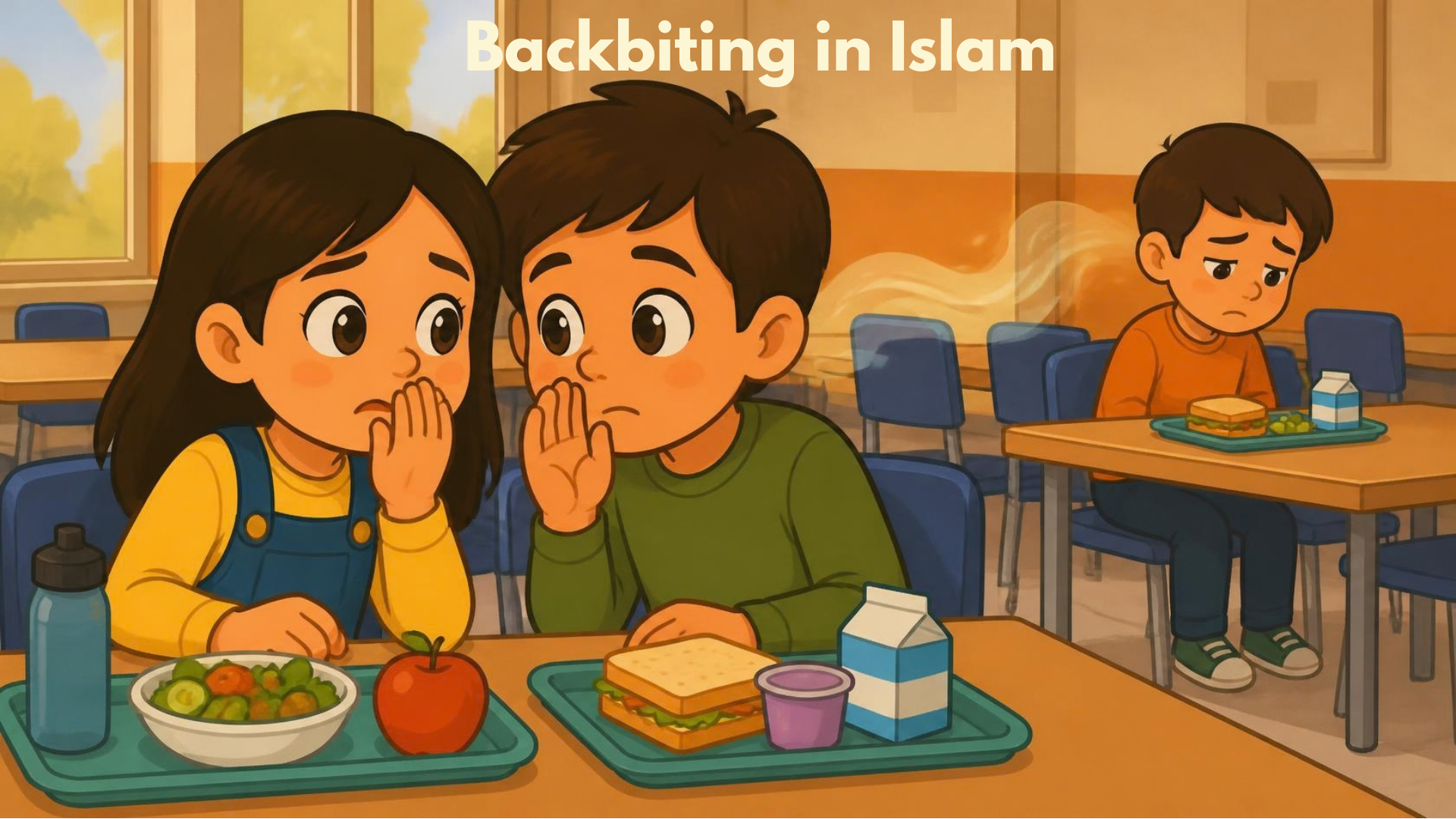
Take a classmate. One kid says something to one friend at recess. By lunch it's been passed along twice, and somebody changed a detail, maybe made it a little funnier, and now the whole table knows a version nobody quite remembers starting. And the kid it's about walks into the cafeteria feeling it, even if nobody says a word to their face.
There's another side, quieter. Gossip feels good for about five seconds. Then it sort of curdles. Ask your child how they felt after the last time they did it. Mine said, "kind of bad, kind of weird." That's useful. That's the heart doing its job.
And friends notice. If you whisper about someone else to me, I start wondering what you say about me when I leave the room. Trust gets thin that way, fast. We wrote about this from another angle in our post on choosing good friends, worth a read next.
What Can They Do Instead
Because "don't" alone is useless. Kids need a move.
A hadith says: whoever believes in Allah and the Last Day should say something good or stay quiet. We turned it into a house rule; a little one said half as a joke whenever a conversation starts sliding. Good or quiet. My son says it in a robot voice now. Fine by me; it works.
Changing the subject is a skill. A real one. "Anyway, did you finish the science thing?" Takes practice, and nerve, honestly; even grown-ups blow it.
Or say one good thing about the person being picked on. "She helped me with my zipper yesterday." That's it. One line can turn a whole mood around, and it doesn't make your kid a hero, just kind.
Already did it? Everyone does. Ask Allah for forgiveness, make dua for the person, and if it makes sense, tell them sorry. It's a mistake kids learn from, not proof they're a bad kid.
When Is It Okay to Talk About Someone
Important to say this, otherwise kids freeze up and stop telling you anything.
If someone's getting hurt, bullied, or is in danger, your child should tell you or a teacher. Right away. That is not backbiting; that's asking for help, and Islam wants that.
What changes things is the reason. Am I trying to help, or trying to make them look bad? Teach your kid that question. "Why am I saying this?" Four words. They'll use it for the next fifty years.
Make It a Game, Not a Lecture
I tried a sit-down talk first. Ninety seconds in, my son was counting the tiles on the floor. So, no.
What worked: a jar. Every time someone in the house said something kind about a person who wasn't there, a pebble went in. We filled it in nine days, which says something about us. Ice cream followed.
Also role play. I'm the gossipy friend; my daughter practices her line. She starts out giggling and ends up pretty sharp.
If your kids like hands-on stuff, our activities page has more ways to practice good manners without it feeling like homework.
Conclusion
That night I told my daughter I'd done the same thing, with the coworker. She stared at me like I'd said I was secretly a pirate. Then, "Okay, so we both have to be careful." Yeah. We do. Kids listen better when we admit we're still figuring it out. For more videos, games, and activities that help your family grow good character together, have a look at Islamic Galaxy.
FAQs
What is backbiting (gheebah) in simple words for kids?
Backbiting means saying something about a person when they aren't there that they would not like to hear. It counts even if every word is true, and that is what makes it different from lying or slander.
Is it backbiting to tell a parent about a classmate who hurt me?
No. Telling a trusted adult when someone is being hurt or is in danger is asking for help, not backbiting. What matters is your reason: you are trying to help, not trying to make that person look bad in front of others.
How can I help my child stop gossiping at school?
Give them simple tools: say something kind or stay quiet, change the subject, or walk away. Practice these at home through role-play, and share your own mistakes so they feel safe learning and trying again.