
So last Eid my sister called me in a mild panic at 9pm the night before asking if I had any ideas for keeping her three kids occupied the next morning before the big family lunch. The youngest was four, the middle one six, and the eldest eight and apparently "too old for boring stuff" according to the eldest herself.
I sent her six ideas. She did two of them. The kids talked about both for weeks.
That's sort of the whole point of Eid crafts — not the objects themselves but what happens while you're making them. A four-year-old gluing cotton wool onto a paper sheep is also a four-year-old asking why we have sheep on Eid. And that question leads somewhere good.
Here's what actually works.
Cardboard Kaabah
Dead simple. Wildly effective.
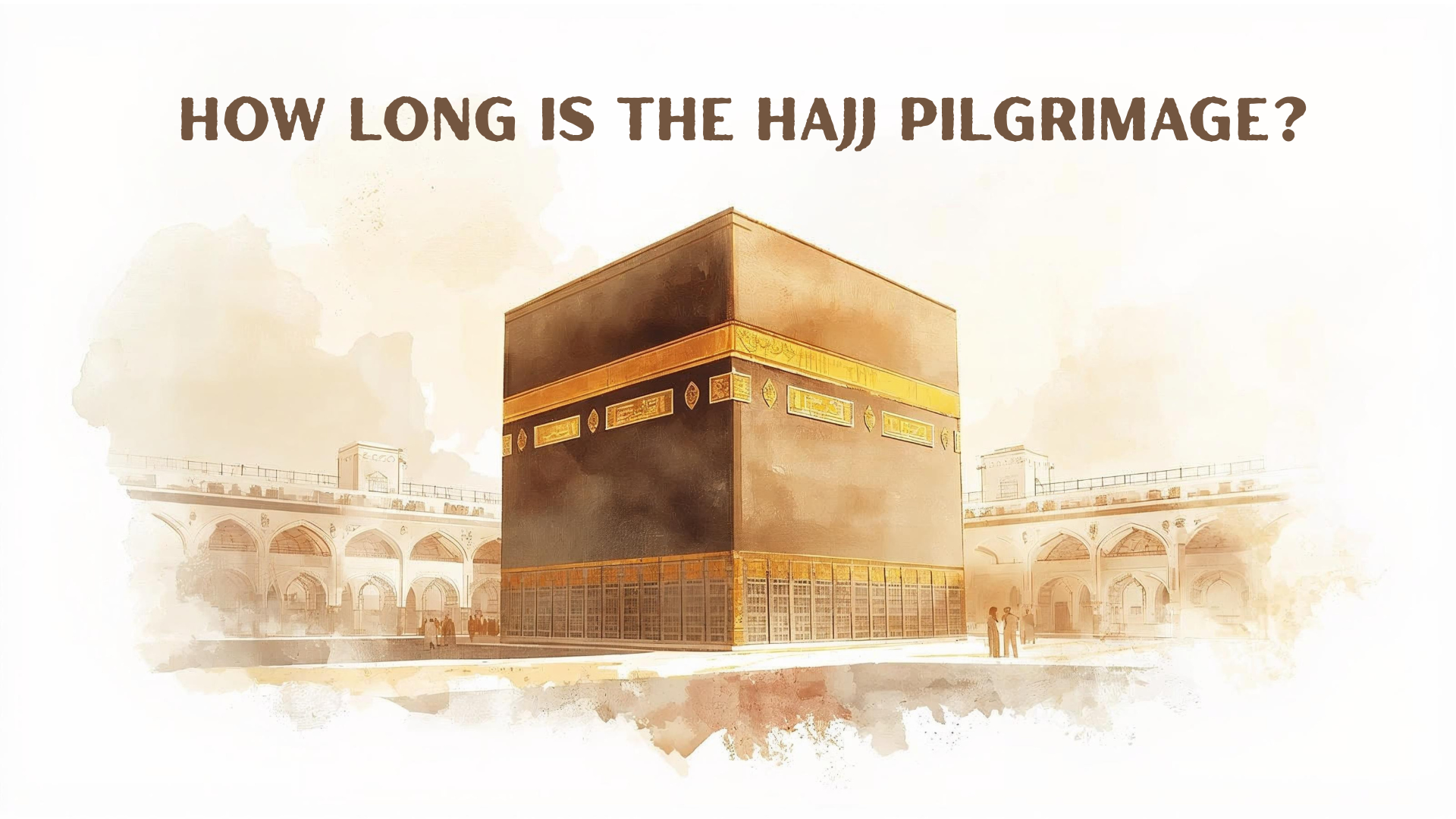
Take any small box — honestly a cereal box is perfect, a tissue box works, whatever's in the recycling — and cover it in black paper or paint it black. Then cut a rectangle of gold or yellow paper and stick it on one side for the door panel. Done. That's the Kiswa, the black cloth with gold calligraphy that covers the real Kaabah.
Older kids — seven, eight, nine — can look up photos of the actual Kaabah and try to recreate the gold embroidery strips running around it using a gold marker. My nephew spent forty-five minutes on this last year and was furious that his strips weren't perfectly straight. Which, to be clear, is the most engaged I have ever seen him.
While you're making it: where is the Kaabah, why do Muslims face it when they pray, what happens during Tawaf. Not as a lesson — just talk. Kids pick up what they pick up.
Ihram Dress-Up
This costs literally nothing if you have a white sheet somewhere in the house.
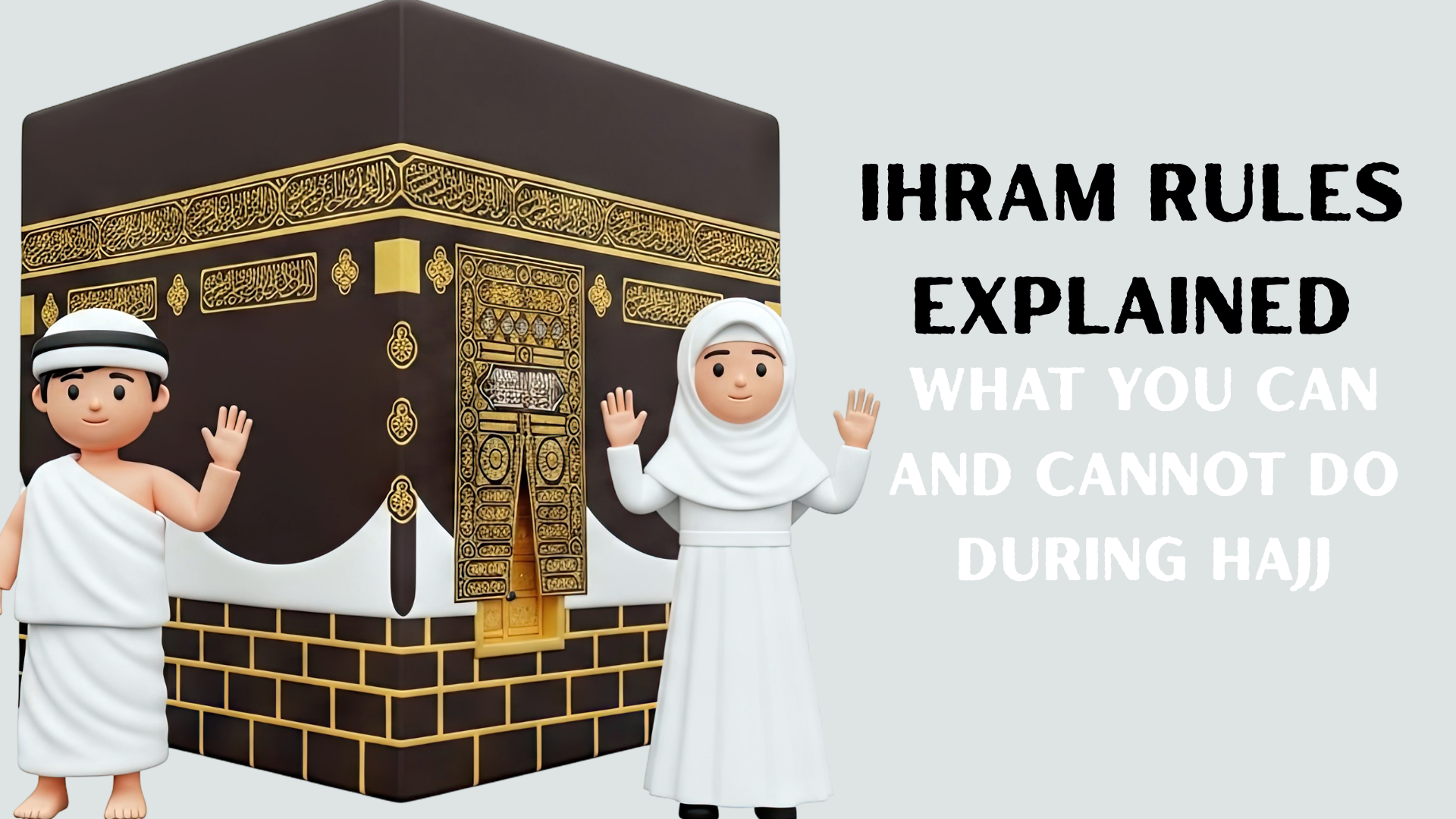
Drape it around a child the way male Hajj pilgrims wear ihram — one piece over the left shoulder, one wrapped around the waist — and pin it so it stays put. Let them walk around as a Hajji for a while.
The conversation this opens is actually the most important one about Hajj — why does everyone wear the same thing? No fancy clothes, no labels, no way to tell who has money and who doesn't. A prime minister and a farmer standing next to each other dressed identically. Even young children find this genuinely interesting when you frame it right.
Paper Sheep
Every child I have ever met found this immediately appealing and I think it's because of the googly eyes.
Cut a simple sheep-body shape from white card — it really doesn't need to be precise, an irregular blob is fine — and cover it with cotton wool balls. Draw on four legs with a brown or black marker. Stick on googly eyes. Give it a name. Argument ensues about the name.
The reason this one matters: the sheep opens the Qurbani conversation. Why do we sacrifice a sheep on Eid? This is where the story of Ibrahim and Ismail comes in. What happened when Ibrahim raised the knife. What Allah sent instead. Why the Qurbani meat gets shared with people who need it.
A child who has made a small cotton-wool sheep and then heard that story will remember both. The physical thing anchors the story in their memory in a way that just telling it doesn't always do.
Eid Mubarak Bunting
Cut triangles from coloured card. Write one letter of EID MUBARAK on each one, or just let children decorate them however they want — stars, crescents, patterns, their name, a drawing of a sheep, whatever. Thread string through the tops.
Hang it somewhere visible.
This is the one where you genuinely cannot go wrong. A two-year-old can scribble on a triangle and feel they contributed. A ten-year-old can do careful calligraphy and feel proud. Everyone ends up with their triangle on the bunting. The house looks like Eid.
One thing I'd say: don't pre-cut everything perfectly and just hand children things to decorate. Let them cut their own triangles even if they come out wonky. Wonky bunting is better bunting.
Zamzam Well
This one takes a bit longer but it's worth it for the story attached to it.
Take an empty toilet roll tube. Paint it grey or brown — to look like old stone. While it dries, talk about where Zamzam is and how it got there. Hajar running between Safa and Marwa seven times looking for water. Nothing, nothing, nothing, nothing, nothing, nothing, nothing — and then water coming out of the ground.
When the tube is dry, cut a circle of blue paper or blue cellophane to sit in the top as the water. Make a tiny bucket from a small paper cup with a piece of string as the handle.
Kids who are old enough — six and up, roughly — can follow the whole Hajar story while making this. Younger ones mainly enjoy painting the tube and putting the blue bit in. Both are fine.
The well also connects directly to Sa'i, the Hajj ritual where pilgrims walk between Safa and Marwa.
Eid Cards to Actually Give Away
Making Eid cards is one of those crafts that pulls double duty — it's an activity AND it teaches something about Eid al Adha without you having to say "and now we will learn something."
The giving part is the Eid lesson. Children who make a card for the elderly neighbour down the road and then walk it over and knock on the door — that's the spirit of the day in action. It's not abstract. It happened, they did it, they can remember it.
Fold paper in half. Decorate the front. Write "Eid Mubarak" or draw a crescent or paste on some stickers. Write something on the inside — even if a four-year-old "writes" it by scribbling and you translate.
Then go give it to someone.
Hajj Map
This one is less craft and more activity but I'm including it because it genuinely changed how one of my nephews thinks about Hajj.
On a large piece of paper, draw a simple map together — Makkah in the middle with a little black square for the Kaabah, Mina off to one side, Arafat further out, Muzdalifah between Mina and Arafat. Label each place. Draw little tent symbols for Mina. A small mountain for Jabal al-Rahmah at Arafat.
Then trace the route. Pilgrims go from Makkah to Mina on the 8th. From Mina to Arafat on the 9th — and they stay there until sunset, which is the most important part of the whole Hajj. Then to Muzdalifah for the night. Back to Mina on the 10th for the stoning and sacrifice.
Drawing it makes it real in a way that describing it doesn't. Suddenly Hajj has geography. It has a path. It's not just an abstract big religious journey anymore — it's a specific route between specific places that you now know the shape of.
A Few Things I've Learned the Hard Way
Have materials ready before you start. The moment you leave to go find the scissors, everyone loses interest and someone eats the cotton wool.
Don't aim for beautiful results. Aim for engaged children. A lopsided Kaabah made by a five-year-old who was really concentrating is worth more than a perfect one you mostly made yourself.
And let them ask the weird questions. "What if someone doesn't want to sacrifice their sheep." "What if the Zamzam runs out." "Can I do Hajj in my ihram costume." These questions come from real curiosity. Answer them honestly even if the answer is "I'm not sure, let's find out."
Conclusion
Eid al Adha crafts at their best are just excuses for conversations that matter. The cardboard Kaabah gets a child asking about Makkah. The paper sheep opens up Ibrahim's story. The Zamzam well brings Hajar into the room. The Eid cards become an act of generosity, not just decoration.
Make the things. Have the conversations. Don't worry about the glitter situation until after.
For the stories and explanations behind everything covered in these crafts — Hajj, ihram, the history of Eid al Adha — Islamic Galaxy has it all written in a way that works for the whole family.
Eid Mubarak 🌙
FAQs
What age are these crafts suitable for? Most work from age three upward with some adult help. The Hajj map and Zamzam well suit ages six and up better. The dress-up and paper sheep work even for toddlers who mostly just enjoy the chaos.
How do I explain Qurbani to a young child without it being upsetting? Focus on the sharing. We give meat to people who don't have enough food. That part lands well with young children. The Ibrahim story can come in layers as they get older.
Can these be done at a school or mosque Eid event? The bunting, Eid cards, and paper sheep all work really well in group settings. The Kaabah craft makes a great classroom display. The Hajj map is better in smaller groups where you can have a proper conversation while drawing.