


You're halfway through Shaban when you realize it. Again. Ramadan feels suddenly close as the month just quietly slipped in while you were busy with life.
Maybe you've seen posts about people fasting on Mondays and Thursdays. Maybe your mom mentioned it at dinner. And now you're wondering if you should be doing something too.
Here's the thing. Fasting in the month of Shaban isn't some complicated requirement. The Prophet ﷺ fasted during this month more than any other besides Ramadan. Not because he had to. Because he wanted to prepare his heart.
That's what this is really about. Gentle preparation. Get your soul ready before the blessed month arrives.
In this guide, we'll walk through the authentic hadith on fasting in the month of Shaban, figure out how much actually makes sense for your life, and clear up those confusing questions you've been wondering about and if you can fast in the month of Shaban and why. No pressure. No perfect routines. Just honest guidance to help you make the most of these precious days.
What Is the Month of Shaban in Islam?
Shaban is the eighth month according to the Islamic calendar. It is surrounded by Rajab and Ramadan. Rajab ends, and we breathe. Ramadan feels far enough away. Life goes back to normal for a bit.
But here's what the Prophet ﷺ did differently. While everyone else took that break, he used Shaban to prepare. His wife, Aisha, noticed he fasted more during this month than any other besides Ramadan.
Why? Because Shaban is your practice month. It's when you can ease back into fasting without the pressure. Basically, if you manage to repair your sleep routine and get your heart in shape before Ramadan comes, that would be perfect
Shaban is a month of gentle preparation. It allows you to ease back into fasting and worship without the pressure of Ramadan. Instead of jumping in all at once, you rebuild habits slowly and intentionally. So is fasting during Shaban actually Sunnah, or just a nice idea?
Is Fasting in the Month of Shaban Sunnah?
Yes. Aisha used to watch her husband fast during Shaban. She noticed he fasted more this month than any other, except Ramadan. She said, "I never saw the Messenger of Allah fast for a complete month except Ramadan, and I never saw him fast more in any month than in Shaban." (Bukhari & Muslim). Think about that. More than any other month besides Ramadan.
Now, Sunnah means it's something the Prophet ﷺ loved doing. Not an obligation. You won't be sinful for skipping it. But there's a reward in following his footsteps.
He didn't fast every day of Shaban either. Some days yes, some days no. He kept things balanced. The goal was never to exhaust himself before Ramadan even started.
So if you're sitting there wondering how many days you should fast, start small. Two days are better than zero. Even one fast count. But why Shaban specifically? What made this month special to him?
Hadith on Fasting in the Month of Shaban
Usama ibn Zayd noticed the Prophet ﷺ was fasting a lot during Shaban. More than usual. So he asked him about it.
"O Messenger of Allah, I do not see you fasting any month as much as Shaban."
The Prophet ﷺ explained why:
"That is a month to which people do not pay much attention, between Rajab and Ramadan. It is a month in which the deeds are taken up to the Lord of the worlds. And I like that my deeds be taken up when I am fasting." (Sunan an-Nasa'i 2357, graded Hasan). Simple as that.
Most people are either coming down from the month of Rajab or waiting for the month of Ramadan. No one really gives it a thought. However, the Prophet ﷺ did.
And he knew something else. This is the month when our deeds get lifted up to Allah. Everything we've done, said, thought. It all goes up during Shaban.
He wanted his deeds presented while he was fasting. While he was in that state of worship and closeness to Allah.
That's it. No complicated reasons. He just loved the idea of being in worship when his actions were shown to his Lord. So what does this actually mean for how we should approach Shaban?
Why Did the Prophet ﷺ Fast So Much in Shaban?
We just read what the Prophet ﷺ said. Now let's talk about what it actually means.
Shaban is the forgotten month.
Between Rajab and Ramadan, people relax. Rajab is sacred, so there's awareness of it. Then it ends, and everyone exhales .Ramadan is still weeks away. Life goes back to normal.
But the Prophet ﷺ saw those quiet weeks differently. While everyone else stepped back, he had made up his mind. Not struggling at the last minute. Not stressing. Just steadily getting ready.
Your deeds are presented to Allah during Shaban.
This one hits differently when you think about it. Every month, our actions go up. But during Shaban specifically, there's this lifting of deeds to Allah. The Prophet ﷺ knew this. And he wanted to be fasting when it happened.
Imagine if your yearly review at work was actually a review of your year by Allah SWT. You'd definitely want to be at your best, right? That's the feeling here. The Prophet ﷺ wanted his record presented while he was in a state of worship.
He loved being close to Allah during this time.
That's really the heart of it. Not an obligation. Not fear. Just love. He loved the thought of his good deeds going up while he was fasting. While he was drawing near to Allah through an act of worship.
It wasn't about impressing anyone. It was between him and his Lord.
That same opportunity is sitting in front of us right now. Shaban is here. Your deeds are going up this month, too. How do you want to show up?
Benefits of Fasting During Shaban Month
Why bother fasting in Shaban if you don't have to?
Ramadan won't hit you as hard.
You know that first day of Ramadan when everything feels difficult? Hunger, thirst, forcing yourself to wake up for suhoor? If you have been fasting in Shaban, your body is already prepared for what lies ahead. It's not a shock anymore.
You actually have momentum going in.
Starting Ramadan after fasting in Shaban is different. You're not beginning from scratch. You're continuing something you already started.
You fix your mistakes now, not during Ramadan.
Remember last Ramadan when you spent the first week figuring out what time to sleep? What to eat for suhoor? Which foods made you too thirsty? Shaban is your practice round. Test things now while the stakes are lower.
Nobody's watching.
Ramadan gets all the attention. Shaban doesn't. And honestly, that makes it better. No one's checking if you're fasting. No one's posting about it. It's just between you and Allah.
Most people don't do it.
Everyone fasts in Ramadan because they have to. Shaban is different. It takes real intention to fast when it's optional. That's worth something.
Fasting during the Shaban month isn't about being hardcore. It's just smart preparation.
How many days, though?
How Many Days Should You Fast in Shaban?
There isn't a certain number. The Prophet ﷺ fasted frequently in Shaban, yet he never instructed, "You have to fast this many days."
Just starting out? Pick two days.
That's it. Two days for the entire month. You're not trying to win anything. You're just trying to actually do it instead of planning twenty days and quitting after three.
Already fast Mondays and Thursdays? Keep doing that.
Don't change anything. Your routine is working. Stick with it through Shaban.
Want to do more? Space it out.
Fast for a few days. Take a break. Fast a few more. Don't pack everything into the first week and then collapse.
Owe fasts from last Ramadan? Do those first.
Makeup fasts come before voluntary ones. Most scholars agree on this. You've got all of Shaban to finish what you owe. Get those done.
Feeling tired or sick? Stop.
Seriously. If fasting is draining you before Ramadan even starts, you're missing the point. This is about getting ready, not proving something.
The Prophet ﷺ didn't fast every single day of Shaban. Some days yes, some days no. He kept the balance. Do what works. Not what sounds good. But here's where people get tripped up.
Can You Fast After the 15th of Shaban?
People argue about this one.
One hadith says: "When Shaban is half over, do not fast." (Abu Dawud, al-Tirmidhi, Ibn Majah)
Seems simple. Stop fasting after the 15th.
Except Aisha said the Prophet ﷺ fasted most of Shaban, sometimes right until Ramadan started. (Bukhari & Muslim). And he also said not to fast right before Ramadan unless you already fast regularly. (Bukhari & Muslim). So yeah. Scholars disagree.
Some say ignore that first hadith. Others say it only counts if you're starting fresh after the 15th. Regular Monday/Thursday fasters? Keep going. Makeup fasts? Do them whenever.
What about you?
Been fasting already? Keep going. It's your first fast, and Shaban's almost over? Wait for Ramadan.
That's really it. Follow the opinion that best aligns with your regular fasting habits and seek local scholarly advice if unsure. If fasting currently leaves you drained by the time Ramadan starts, then simply don't fast now. If you are ok with it and it's something you normally do, that's great.
Ask your local imam if you're really stuck on this. Now here's something people don't think about much.
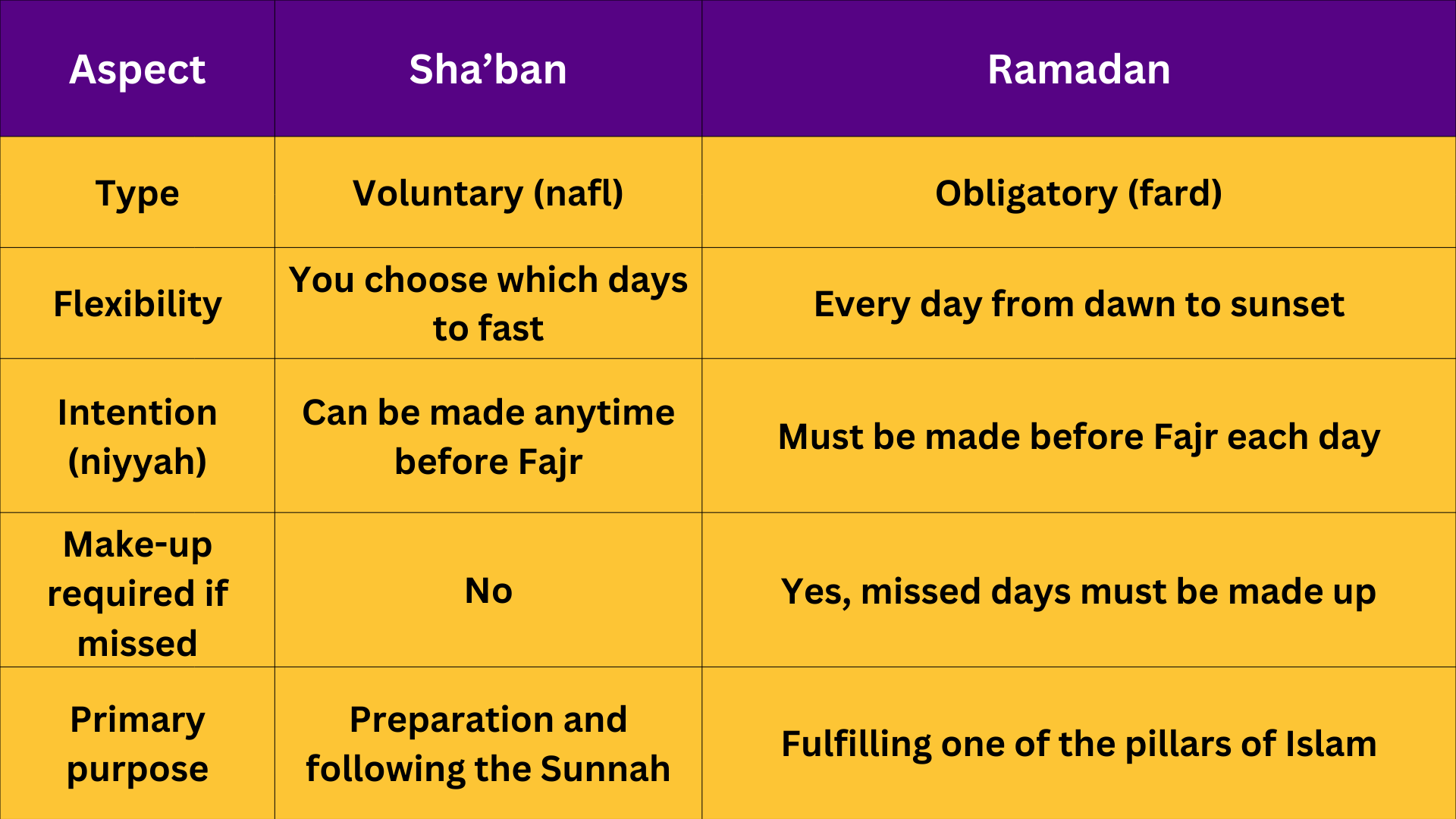
Shaban Fasting vs Ramadan Fasting: What's the Difference?
Ramadan is required. Shaban isn't. In Ramadan, you have to fast. Every adult Muslim who's able to. In Shaban, you're choosing to. Big difference in how that feels.
Ramadan has rules. Shaban is flexible.
Miss a day in Ramadan? You owe it back. Skip a day in Shaban? Nothing happens. You can fast for two days one week, none the next. Whatever works.
Ramadan is intense. Shaban is practicing.
Everyone is fasting during Ramadan. The entire community is participating together. There's some kind of energy, momentum, and collective effort . Shaban is quieter. It's just you deciding to prepare.
Ramadan gets all the attention. Shaban doesn't. People ask how your fasting is going in Ramadan. They check in. They care. Shaban? Most people don't even notice you're fasting. And that's actually kind of the point. Think of Shaban like warming up before a game.
You don't go from sitting on the couch straight into playing full speed. You stretch. You warm up. You get your body ready. That's what Shaban does for Ramadan.
You test your limits now so you know what works later. You figure out sleep schedules, meal timing, and what keeps you full. All the practical stuff that helps when Ramadan actually comes.
Plus, your body isn't shocked on day one of Ramadan if you've been fasting in Shaban. It already knows what to expect.
Shaban Preparation Beyond Fasting
Fasting gets all the hype. But here's what people forget.
The Prophet ﷺ didn't just fast more in Shaban. He increased everything. His entire worship routine shifted up a gear. Fasting was part of it, sure. But it wasn't the only thing.
Think about it. If you only focus on fasting, you're training one muscle. Ramadan needs your whole spiritual body to be ready.
Start reading the Quran daily.
You don't need to finish a juz. Even half a page counts. The point is building the habit now so it doesn't feel weird when Ramadan starts, and everyone's suddenly reciting.
Open the mushaf after Fajr. Just a few verses. That's it.
Add two rakaat after Isha.
Night prayer doesn't have to be this huge production. Two rakaat of qiyam before you sleep. That's literally five minutes. But do it consistently through Shaban and watch what happens to your Ramadan nights.
Practice being generous.
Give some money. Buy someone lunch. Help a neighbor. Whatever. Just start the flow of charity now. Ramadan generosity hits differently when you've already been giving.
Increase your dhikr.
Subhanallah, while you're walking. Alhamdulillah, when you finish a task. Allahu Akbar when something good happens.
These small remembrances throughout your day? They add up. And they make your heart softer before Ramadan even begins.
Make dua and seek forgiveness.
You know those mistakes you're carrying around? The things you feel guilty about? Start asking Allah to forgive you now. Don't wait until Ramadan to clean your slate.
Regular istighfar through Shaban means you enter Ramadan lighter.
Get your family involved.
Preparing alone is one thing. Preparing your household together? That's the next level.
Talk to your family about Ramadan. Make plans. Get everyone thinking about it. Kids included. When the whole house is spiritually preparing, Ramadan becomes easier for everyone.
If you’re preparing for Ramadan as a family, having structured, age-appropriate guidance makes the journey much easier. Islamic Galaxy helps parents introduce fasting, worship, and Islamic habits in a way kids actually enjoy.
Here's the thing. Fasting is beautiful. But it's one tool among many. Build a balanced Shaban routine. You wouldn't train for a marathon by only practicing one leg, right? Same idea here. Choose one additional act of worship alongside your fasting. Just one. Your Ramadan soul will thank you.
Simple Shaban Fasting Plans (Beginner-Friendly)
Stop trying to copy what someone else is doing. Your life is different. Your schedule is different. Your energy is different.
Pick a plan that actually fits your reality.
Plan 1: The Busy Professional
You work full-time. Meetings. Deadlines. Commute. You barely have time to think. Fast Saturdays only. That's four fasts total for the entire month. Every Saturday, you're fasting. That's it.
Prep your meals Friday night. Have your suhoor food ready. Know what you're breaking your fast with. Remove the guesswork so Saturday morning doesn't turn into chaos.
Keep your intention simple: "I'm fasting tomorrow for the sake of Allah." Done.
Four Saturdays. Four fasts. Completely doable.
Plan 2: Working Parents
Kids. School runs. Work. Homework. Dinner. Bedtime battles. Your schedule isn't really yours.
Alternate weeks. Fast on Monday or Thursday each week.
Week 1: Monday. Week 2: Thursday. Week 3: Monday. Week 4: Thursday.
That's 6-8 fasts total, depending on how the month falls.
Here's the bonus move: involve your kids in meal planning. Let them help pick what's for suhoor. Talk about why you're fasting. They'll remember this when Ramadan comes.
You're not just preparing yourself. You're preparing your household.
Plan 3: Students
Classes. Exams. Group projects. Late nights studying. Early morning lectures.
Fast on your lighter days.
Check your schedule. Which days have fewer classes? Fewer labs? No major assignments due? Those are your fasting days. Coordinate with study breaks. Don't fast the day before a huge exam unless you know your body can handle it.
Aim for 5-10 fasts based on your energy levels. Some weeks you'll do two. Some weeks, none. That's fine. You're still in training for life. Don't sabotage your education trying to be super religious. Balance matters.
Plan 4: Following the Prophet's ﷺ Example Closely
You want to fast most of Shaban as he did. Good for you. Aim for 15-20 days throughout the month. But listen. Listen to your body.
The Prophet ﷺ was strong. Healthy. He knew his limits. You need to know yours, too.
Feeling exhausted? Rest. Getting sick? Stop. Ramadan is coming, and you need to be ready for that. Keep it sustainable, not heroic. Nobody's handing out awards for destroying yourself before Ramadan even starts.
Plan 5: Complete Beginners
You've never fasted outside of Ramadan. This is all new.
Start with 2-3 fasts this entire Shaban.
Just three days. Spread them out. Week one, fast one day. Week three, fast another. Week four, one more.
Experience the spiritual benefit without the overwhelm. Next year? Maybe you'll do five. Then seven. Then ten. That's how growth works.
Small steps count just as much in Allah's sight.
Pick your plan right now.
Seriously. Which one matches your life? Don't overthink it.
You can always adjust mid-month if something isn't working. This isn't a contract. It's just a starting point.
Start with just one fast this week. Every small step counts in Allah's sight.
If you want your children to understand fasting beyond hunger, Islamic Galaxy offers interactive lessons and videos that explain worship in a way that sticks.
But here's where people mess up. They pick a plan, start strong, then completely derail themselves by making the same avoidable mistakes.
Common Mistakes to Avoid When Fasting in Shaban
You're going to make mistakes. Everyone does.
But some mistakes are so common, so predictable, that you can just skip them entirely if you know what to watch for.
Mistake 1: Going Too Hard, Too Fast
Ahmed planned to fast every day. Made it to day five. Quit completely. Felt so bad about it.
Don't be Ahmed. Start small. Two days beat zero days.
Mistake 2: Treating Sunnah Like Fard
It's voluntary. Miss a day? You're fine. No sin. No makeup. No guilt needed.
Stop judging people who aren't fasting. Stop judging yourself.
Mistake 3: Instagram Fasting
Everyone's posting about day 15. You're on day 2. Suddenly, you feel inadequate.
Close the app. Your three sincere fasts might mean more than someone's twenty distracted ones.
Mistake 4: Believing Viral Posts
"Fast the 15th for special rewards!"
Most of those posts? Weak hadiths or straight-up fake.
Stick to what's actually authentic. The Prophet ﷺ fasted in Shaban. That's enough.
Mistake 5: Ignoring Your Body
Pregnant? Sick? Exhausted? Then don't fast.
Allah doesn't burden you beyond your capacity. Taking care of your health is also worship.
Mistake 6: Forcing Your Family
Your spouse isn't fasting. Your kids aren't interested.
Stop pressuring them. It's voluntary, remember?
Lead by example. Invite gently. Don't guilt-trip.
Mistake 7: Doing Everything at Once
Fasting, tahajjud, five pages of the Quran, daily charity, and a hundred istighfar.
Week two? You've done nothing.
Pick one or two things. Do them consistently. That's the win. Balance is Sunnah. The Prophet ﷺ chose consistency over intensity.
Now, what if you actually can't fast for real health reasons? Let's talk about that.
Health Considerations and Exemptions
If fasting will actually hurt you, don't do it.
Skip fasting if you're:
- Pregnant or nursing. Your body's busy feeding someone else.
- Dealing with chronic illness. Diabetes, heart stuff, whatever. You know your limits.
- Recovering from being sick or surgery. Healing needs energy.
- On meds that need food. Your treatment matters more.
What Islam actually says:
"Allah does not burden a soul beyond what it can bear."
Taking care of your health? That's worship, too. Your medication matters. Rest when you need to.
Can't fast? Try this:
- Give a little charity. Even one or two dollars.
- Read some Quran. One page. Half a page. Whatever.
- Make dua throughout your day.
- Be extra patient with your family.
Worship isn't just fasting. Pick what works for your body. Taking care of the body Allah gave you is obedience to Him.
Final thoughts,
Let's wrap this up. Sunnah isn't supposed to stress you out. Following what the Prophet ﷺ did should feel good. Not heavy. Not guilt-inducing. If fasting in the month of Shaban is making you anxious, you're missing the point.
You're preparing, not performing. This isn't for show. Not for Instagram. Not to one-up anyone. It's just you and Allah. Nobody else matters.
Small and consistent wins. One real fast beats ten you planned but never did. You don't need perfect. You just need to show up. Confused? Ask someone. That's what scholars are for. Don't just wing it when you're unsure.
Cut yourself some slack. Allah is Most Merciful. He sees you trying. That counts for something. You're doing fine.
Shaban is a gift. It's your chance to get ready before Ramadan hits. Three days or twenty-three. Doesn't matter. What matters is your heart's in it. Take what works for you. Allah sees the effort. Pick one thing to do this Shaban. Future you will be grateful.
Small steps stick. That's how real change happens. Want your kids to actually understand fasting and Islam? Check out Islamic Galaxy. Give them the foundation that lasts.
Frequently Asked Questions About Fasting in Shaban
Is fasting on the 15th of Shaban special?
The night might be significant. Scholars debate the hadiths about it. Fasting on the 15th specifically? No solid proof for that. If it's a white day or falls on Monday/Thursday, yes, go ahead otherwise you don’t have to.
Should children fast in Shaban?
Not required until they hit puberty. Want to let them try for a few hours? Go for it. Keep it fun. Zero pressure. How do you make them feel about worship now? They'll remember that forever.
Should women prioritize makeup fasts in Sha’ban?
Yes, if you owe days from Ramadan, completing them in Sha’ban is highly recommended before the next Ramadan begins.