
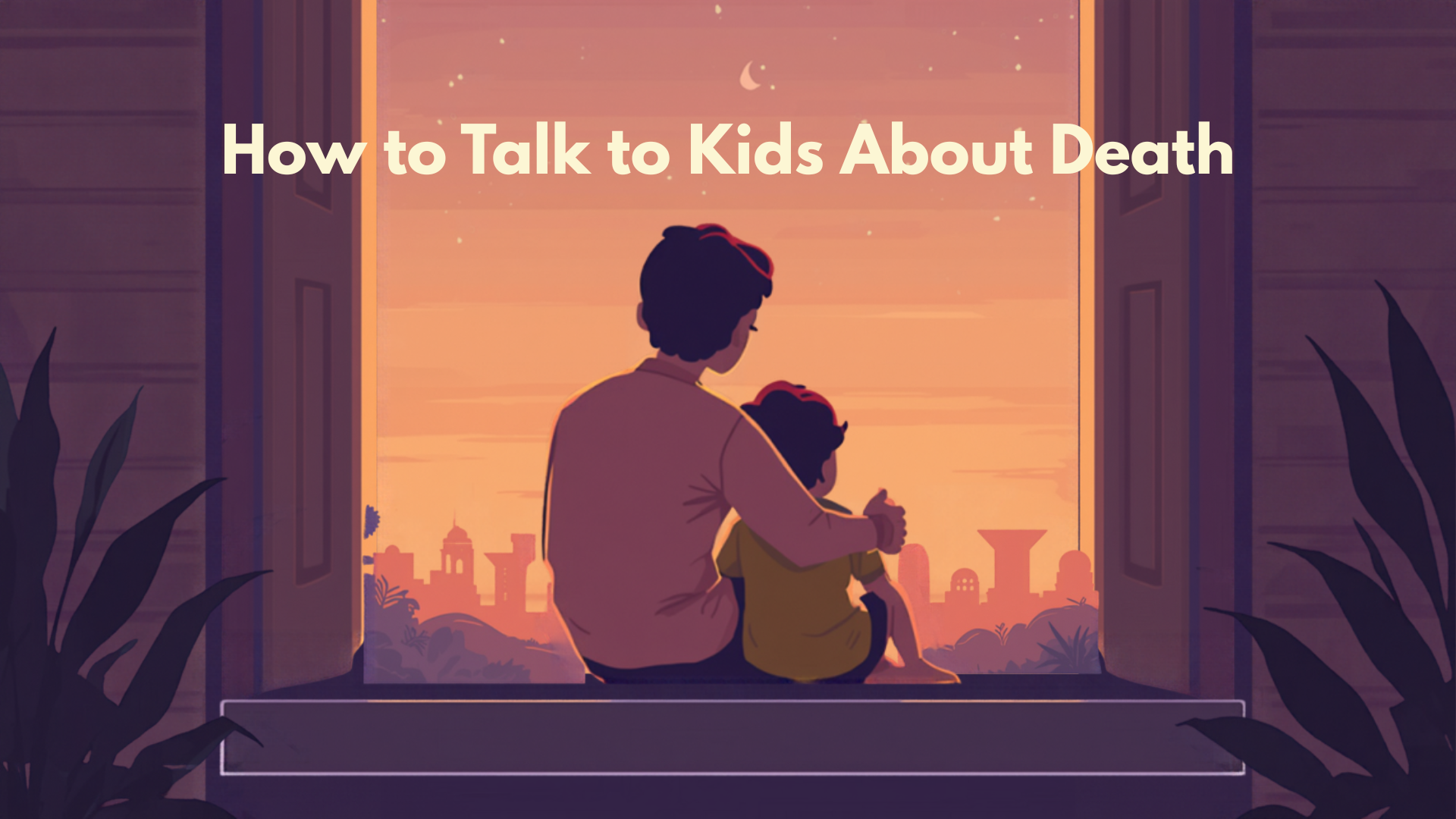
A goldfish. That's what triggered the first real death conversation in our house. My daughter was five, and I fumbled through it badly, trying to be honest without terrifying her. Afterward, I realized I really should have thought this through before it happened, not while improvising over a plastic castle and a net.
Death Isn't the End of the Story
In Islam, death is a transition, not a conclusion. Every soul experiences it, and what follows continues rather than closes. This framing does real work for kids — it shifts death from purely frightening into something that fits inside a bigger, purposeful picture.
You don't need theology for a five-year-old. Even something simple- our time here is one part of a much longer journey- gives a sense of stability instead of dread.
Age Changes the Language, Not the Honesty
Younger kids, three to six or so, need concrete language. Skip "went to sleep" — it invites confusion around bedtime that nobody needs.
Something closer to "their body stopped working, and their soul went to be with Allah" tends to land cleaner, with less room for the wrong kind of fear to creep in.
Older kids can handle more, questions about the soul, what happens after, how faith shapes grief and remembrance. Let those conversations grow as the kid does.
The Questions Nobody Wants to Answer
"Will you die? Will I?" Kids ask this bluntly, no warning. Dodging it rarely helps. Gentle honesty tends to build more trust than avoidance ever does.
Acknowledge that yes, everyone eventually dies, while reassuring them Allah has a timing and plan for every soul, something explored further in this story about Laylatul Qadr.
Not having every answer is fine, too. "I don't fully understand that part either, but here's what I believe" is a completely reasonable thing to say to a nine-year-old, and it's usually more comforting than a rehearsed script.
Grief Needs Room
When death actually touches your family, kids need space for confusion, sadness, even anger — without being nudged toward acceptance too fast.
Rituals like making dua for someone who's passed give kids something concrete to do with grief, and that often helps more than words ever could. It's a theme worth revisiting more broadly too, alongside this guide on talking to kids about Allah, since the two conversations tend to circle back to each other.
Conclusion
This isn't a single heavy conversation; it's an ongoing one that evolves as your kid grows and starts asking sharper questions. islamicgalaxy.com has gentle, faith-based content that can support these talks at home, without forcing them into one big sit-down.
FAQs
What's the best age to start talking to kids about death?
There's no fixed age — usually a real event prompts it, a pet, a relative. Even preschoolers can handle simple, honest explanations. Match the language to their stage rather than avoiding it altogether.
Should I say a deceased person is "sleeping" to soften the news?
Better to avoid it. That phrase can create fear around sleep and bedtime later on. Simple, honest wording paired with reassurance about the soul tends to hold up better over time.
How can I help my child cope after losing a loved one?
Let them feel whatever comes up without rushing toward acceptance. Involve them in small rituals like dua. Consistency and patience matter far more than saying exactly the right thing.