
Cereal. That's what it was about. My youngest lost it completely over the last of the cereal, and for about ninety seconds it genuinely was the end of the world in his book.
Watching him try, and mostly fail, to hold himself together is what got me thinking about how early this conversation actually needs to start — not after the meltdown, during the calm stretch before it.
Anger Isn't the Problem
Islam doesn't ask anyone to stop feeling angry. That's not realistic, and it's not the goal. What gets taught is how to respond once the feeling shows up, through a handful of specific, fairly simple steps.
One piece of advice from the Prophet: change your physical position. Standing? Sit down. Sitting? Lie down. Sounds almost too simple, but it interrupts the momentum of a tantrum before it fully takes off, giving a kid's body a chance to reset.
Tools That Actually Work
A few techniques pulled straight from the Sunnah, and they hold up surprisingly well against modern parenting advice too:
Changing position — breaks the physical pattern of escalation.
Staying quiet during anger instead of speaking impulsively buys time before words get said that can't be unsaid.
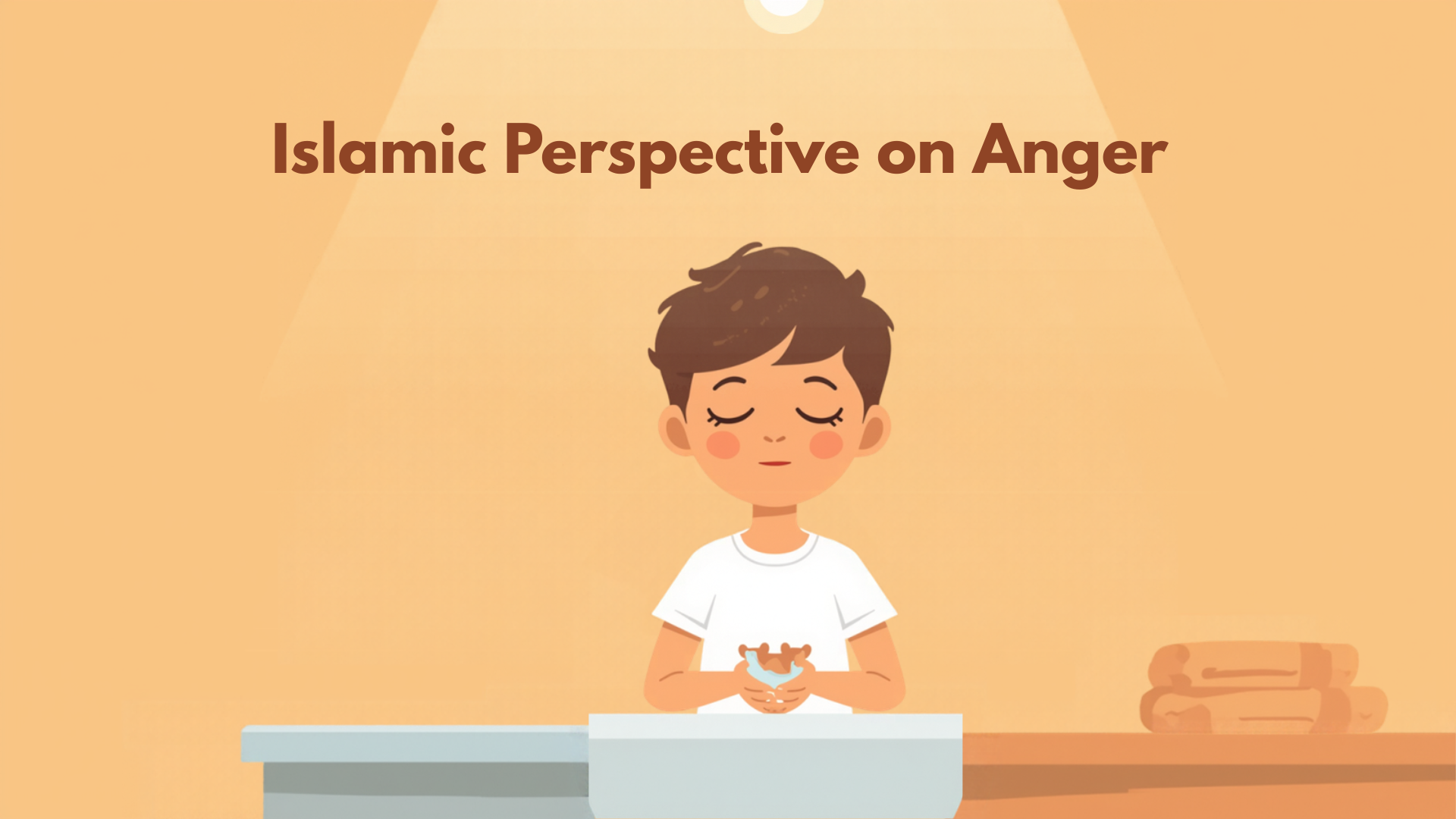
Making wudu, cool water on the face and hands- the Prophet recommended this specifically, and it lines up almost exactly with what modern child psychology says about sensory regulation.
The Timing Matters More Than the Content
Trying to teach anger management mid-meltdown rarely goes anywhere. Better window: during calm moments, when a kid can process what's being said instead of just reacting.
Ask where they feel anger in their body first. Where does it start? What's helped before? These questions work better than any lecture, and they connect naturally to broader conversations kids eventually have about faith, the kind covered in this parent's guide to talking about Allah.
When It's More Than a Bad Day
Occasional outbursts are normal at nearly every age, nothing to panic about. If anger starts showing up constantly, or seems way out of proportion to whatever triggered it, something else is usually going on underneath — tiredness, hunger, something unsaid from school.
Worth a closer look, and worth pairing with honest conversations, similar to the ones in this piece on honesty in Islam, where kids learn to name what's actually bothering them.
Conclusion
Grounding anger management in Islamic teaching gives kids tools that feel less arbitrary than generic parenting advice, and they tend to stick better because of it. islamicgalaxy has age-appropriate stories that model these same values in ways kids actually enjoy.
FAQs
What did the Prophet Muhammad teach about controlling anger?
Change your physical position, stay silent instead of reacting, use cool water to calm down. Simple, practical, and effective at interrupting escalation before it builds into something bigger.
How young can I start teaching my child these techniques?
Around four or five, once a child can name their own feelings. Introduce one tool at a time — deep breaths, sitting down — rather than overwhelming them with the full list at once.
Should I intervene during a tantrum or wait until it passes?
Stay present without lecturing mid-meltdown. Kids can't absorb anything while overwhelmed. Revisit what happened once things have settled, ideally within the hour, while it's still fresh.