
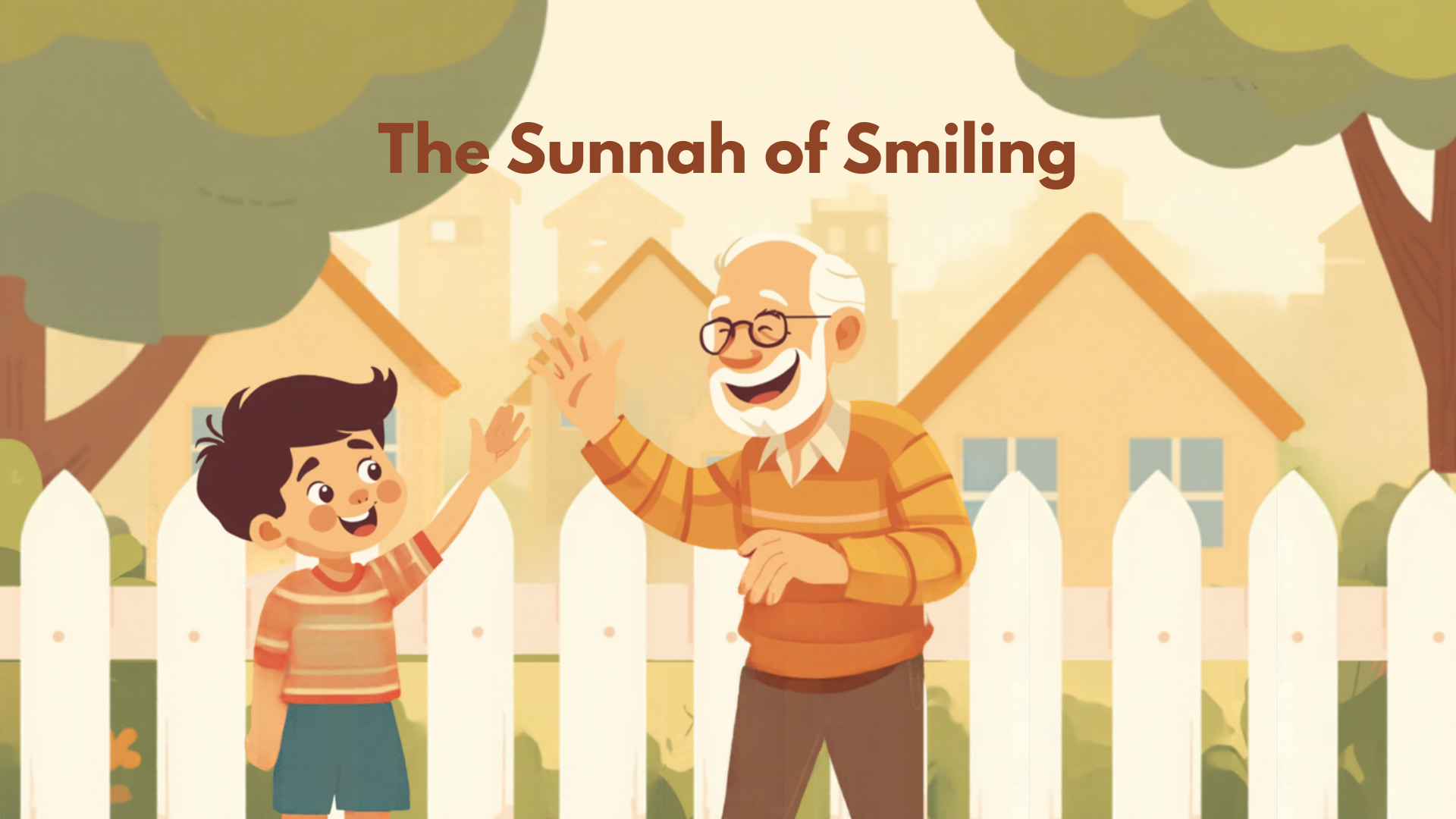
There's a neighbor down the street who barely speaks English, and my son barely speaks anything but English, and yet the two of them have this whole wordless routine every morning — a wave, a grin, done.
He asked me once why the old man always smiles even though "we can't even talk." Turns out a smile doesn't need translation. Kids figure this out faster than adults give them credit for.
A Smile Counts As Charity
There's a hadith, fairly well known, where the Prophet says smiling at your brother is charity. Sit a kid down with that idea and watch it land differently than the usual "be nice" talk. Charity usually gets tied to money or food in a child's head. Hearing it applies to something free and instant reshuffles the whole category.
It turns small interactions into something with actual weight. Holding a door. Smiling at the kid eating lunch alone. Greeting a sibling first instead of waiting to be greeted. None of it costs anything, which is sort of the point.
Explaining It Without Getting Preachy
Skip the lecture, ask a question instead. How does it feel when someone smiles at you? How does it feel when they don't? Kids already know the answer; they just haven't connected it to their own behavior yet.
From there, you can mention that the Prophet was known for a warm, welcoming face even during genuinely hard stretches of his life. That's a useful model for a kid learning that kindness shouldn't depend on your own mood swinging one way or another.
Building the Habit
A few things that work without feeling forced:
Point it out when you catch them doing it on their own — reinforcement, not correction.
Turn it into a mini challenge. Smile at three people today, see what happens.
Talk about who might need it most — a new kid at school, a tired parent, someone clearly having a bad day. This is where empathy sneaks in alongside the habit itself, and it pairs well with other small character lessons, the kind explored in stories about honesty for kids.
Not Every Kid Is Naturally Outgoing
Some kids are shy, and that's fine; forcing a personality shift isn't the goal here. A quiet nod counts. A small smile counts. Warmth doesn't have one shape, and pretending otherwise just adds pressure a shy child doesn't need.
There's a whole separate conversation to be had here too, about how small weekly rituals like Jumu'ah reinforce this same idea of showing up warmly for others, week after week.
Conclusion
Teaching kids that a smile carries real weight gives them a free, always-available way to practice kindness. No money required, no special occasion needed. For more everyday character lessons woven into stories kids actually want to watch, islamicgalaxy is worth a look.
FAQs
Is smiling really considered a form of worship in Islam?
Yes. A hadith describes smiling at another person as charity. It costs nothing yet still carries spiritual reward, making it one of the simplest good deeds for kids to grasp and repeat daily.
How can I teach a shy child this Sunnah without pressuring them?
Start small — a quiet smile or nod counts just as much as an enthusiastic one. Focus on sincerity over expression. Let them find a version of warmth that actually fits their personality.
What other small acts does Islam treat as charity?
Removing something harmful from a path, saying a kind word, helping someone struggling with a task — all fall under the same idea. Small, low-effort, high-value acts that anyone can manage daily.