
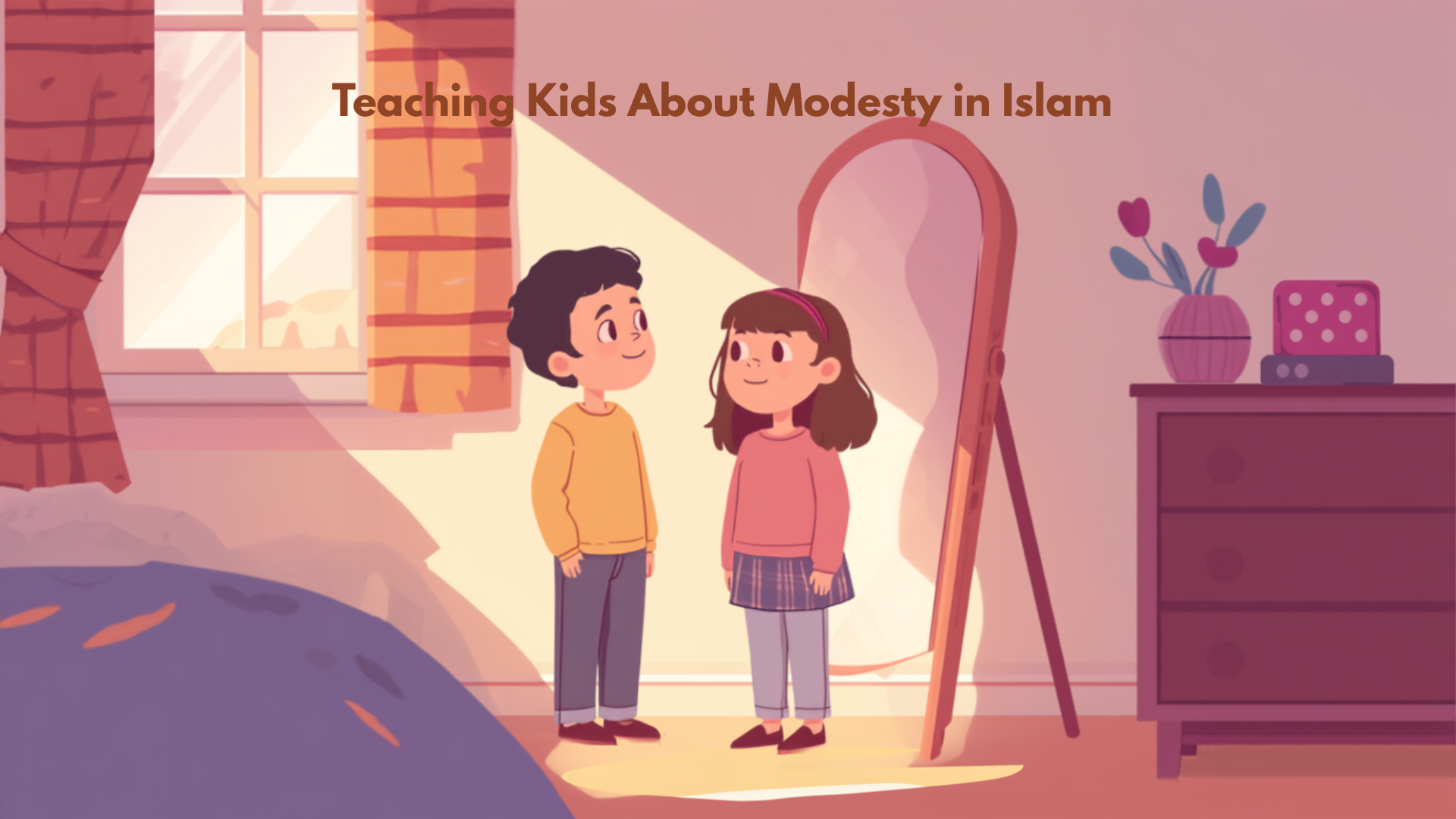
"Why do I have to wear a cardigan and nobody else does?" That was the question waiting for me at pickup one afternoon, dress still half-buttoned from a birthday party, and no, I did not have a good answer ready. Modesty sounds simple right up until a seven-year-old asks you to justify it on the spot.
It's tempting to reduce modesty to clothing rules. Islam doesn't really see it that way. Haya, the Arabic word usually translated as modesty, covers a lot more ground than what a person wears.
Haya Is Bigger Than an Outfit
Haya includes how loud you are, how you speak about others, and whether you brag about what you have. The Prophet described haya as a branch of faith. Not a footnote, not a side note about hemlines, an actual branch.
So when kids ask why modesty matters, clothing is really the last thing to bring up, not the first. Start with the voice. Start with how someone treats a person who has less than them. Good character in general, honesty included, tends to travel together, which is part of why stories about honesty often end up doing double duty here.
How the Conversation Actually Lands
Kids remember tone far more than content. Deliver modesty as a list of restrictions, and that's exactly what sticks — restriction, not meaning. Frame it instead around self-respect. Your body and your choices belong to you, not to whoever's watching.
My own kids tuned out lectures almost instantly but leaned in when a character in a show made a modest choice on screen. Kids learn sideways more often than they learn head-on, through story rather than instruction, and that's worth remembering before you plan a big sit-down talk.
Keeping It Practical
A few things that hold up in practice, not just in theory:
Bring it up when it comes up naturally — a shopping trip, a scene in a cartoon, a comment from a friend at school. Formal lessons tend to fall flat.
Give kids some real choice within reasonable limits so the decision feels like theirs.
Model it. Say one thing and do another, and kids clock the gap immediately.
This actually connects to a bigger theme worth talking through separately: the way these harder conversations with kids about faith tend to work best when parents lead by example first.
When They Push Back
Pushback shows up hardest around the tween years, when fitting in outranks almost everything else. Don't shut the conversation down. Ask what's actually bothering them — sometimes it's peer pressure, sometimes it's just an itchy sweater, and those two problems need very different responses.
Conclusion
Modesty isn't a lesson delivered once and checked off. It gets built through years of small conversations, the shows kids watch, the example parents set without realizing it. Platforms built around Islamic values, like islamicgalaxy.com, can add useful reinforcement outside of parent lectures, which kids sometimes tune out anyway.
FAQs
At what age should I start talking to my child about modesty?
Around four to six, using simple language about privacy, respect, and kindness. Formal lessons aren't necessary yet. Everyday moments, like getting dressed, work fine as a starting point.
Is modesty only about how kids dress?
No, clothing is one piece. Modesty also covers speech, humility, and how someone carries themselves around others. Teaching kids not to boast matters just as much, arguably more.
What if my child resists dressing modestly?
Stay curious instead of strict. Figure out what's driving it, comfort, peer pressure, something else. Offer choices within modest boundaries so they feel some ownership over the decision.