
My daughter came home last October holding a flyer. Class costume parade. She just stood there in the kitchen, still had her backpack on, waiting for me to say something. And I didn't know what to say.
Not right away. Candy, costumes, feels harmless on the surface. It isn't, not fully, once you actually dig into where this thing came from. Every parenting blog I checked just skips that part entirely, which honestly annoyed me enough to go look it up myself.
Where Halloween Actually Comes From, Because Nobody Tells You This Part
Samhain. That's the root of it. Old Celtic harvest festival, end-of-season thing, tied up with beliefs about spirits crossing over and the line between living and dead getting thin for one single night. Later got absorbed into Christian "All Hallows' Eve." Then, decades of commercial push turned it into the candy-costume version everyone's kid now begs for.
So. Not neutral. Rooted in actual spiritual beliefs, ones that just don't match Islamic aqeedah at all. Spirits wandering around, a thin veil between worlds, that whole idea. A five-year-old dressed as a dinosaur isn't thinking about Celtic spirit worship, obviously not; I'm not saying that. But the roots still matter when scholars sit down and actually rule on something like this.
What Scholars Actually Say, Not the Watered-Down Internet Version
Most contemporary scholars put Halloween in the non-Islamic religious or quasi-religious bucket. The general ruling leans toward skipping it as a celebration. Not the trick-or-treating part. Not the costume parties built around it. Not marking the day at all, really.
Fun isn't the actual problem here; that's not what this is about. It's tashabbuh. Imitating the distinct religious practices tied to other faiths, something Islam discourages pretty hard. The Prophet Muhammad, peace be upon him, said: "Whoever imitates a people is one of them." Comes up constantly in fatwas on exactly this kind of question.
There IS nuance though. Real nuance, not the fake kind people add just to sound balanced. Some scholars draw a real line between actively celebrating Halloween's spiritual side versus just existing in a culture where it happens around you anyway.
A kid in costume at a school event with zero spiritual weight attached, versus a kid going door to door specifically marking Samhain itself- those aren't the same thing, and treating them the same misses something.
Most Muslim parents I actually know, in real life, land somewhere in the middle of this. Skip the spooky spirit-heavy stuff. Redirect the fun elsewhere. Not full participation. Not total isolation from it either.
So What Do You Actually Say to Your Kid
Honesty, age-appropriate honesty, beats vague dodging every single time. Something close to: this holiday started from beliefs that don't match what we believe, so our family does this week a little differently; here's what we're doing instead.
Kids catch avoidance faster than we think they do. A calm, clear explanation plus an actual, real alternative works so much better than a flat "we don't do that" with nothing offered in its place. That just leaves a kid standing at a classroom door feeling singled out, which, no, that's not the goal at all.
Halal Alternatives That Still Feel Like Something
This part matters most, practically. Kids want the fun piece. Costumes. Treats. That whole event feeling. You can actually give them that. Without the parts that clash with aqeedah.
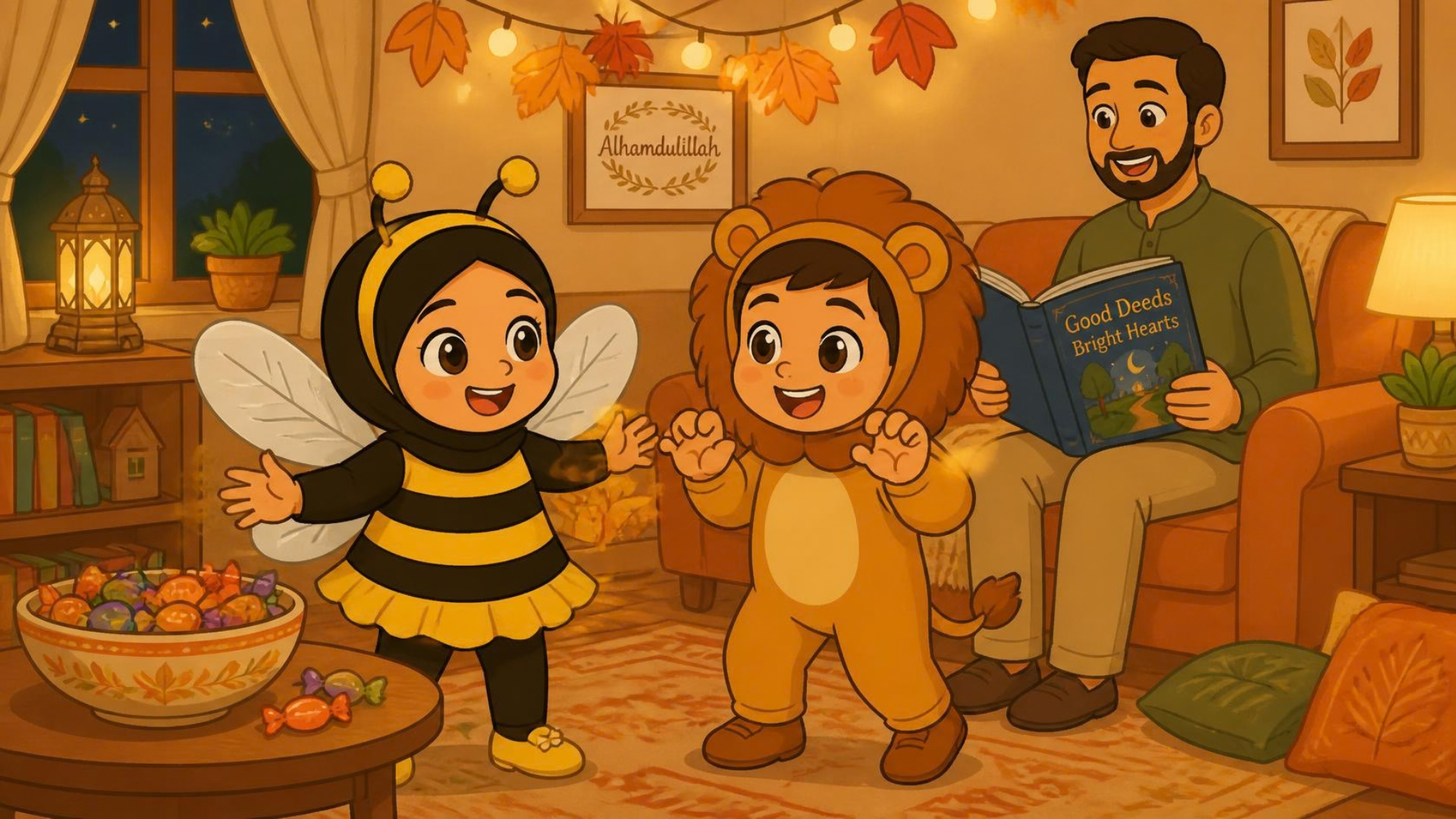
Host your own themed night at home. Prophets, animals mentioned in the Quran, favorite characters from Islamic Galaxy, whatever keeps the dress-up part while dropping the spooky spirit angle completely.
A "sweets and stories" night works too. Treats, plus a parent reading a companion tale or a short seerah story out loud. Turns into its own tradition fast; kids genuinely start asking for it again the next year.
Or turn the candy-collecting urge into a charity night instead. Gathering treats or small donations for kids who have less than yours do. Keeps that neighborhood-walking excitement, just pointed somewhere that actually matters.
And look, if your kids still want screen time that night anyway, our own Islamic videos and shows make a solid alternative movie-night option. Stories and lessons building their deen instead of leaning on ghosts and spirits the way most October content does.
And What About Trick-or-Treating, Specifically
Probably the question I get asked most, this time of year, every single year. Most scholars treat trick-or-treating as the more flexible piece, compared to full Halloween participation generally. Some families allow it, treating it purely as a neighborhood candy tradition with the religious meaning stripped out. Others skip it entirely, do their own version that same evening instead.
No single ruling binds every family the exact same way here. It really comes down to your comfort level as a parent, your community's norms, and how clearly you can separate the candy part from the spiritual undertones for your own specific kids.
Conclusion
My daughter ended up going as a honeybee. Not a ghost. We did our sweets-and-stories night that weekend instead of trick-or-treating, and she didn't miss a thing, not really; she just got a different kind of fun that actually lined up with what we believe as a family. For more ways to build traditions like that with your kids, year-round, explore what's waiting at Islamic Galaxy.
FAQs
Is it haram for Muslim kids to wear a Halloween costume?
Most scholars focus less on costumes themselves and more on the spiritual context around them, so a costume with zero spooky or spirit-based theming is generally viewed as the safer, more flexible choice.
Can Muslim kids go trick-or-treating?
Opinions vary here, with some families allowing it as a neutral candy tradition and others opting for an alternative activity instead. There's no single binding ruling for every household.
What's a good Halloween alternative for Muslim families?
A themed dress-up night, a sweets-and-stories evening, or a charity candy drive all keep the fun element while steering clear of Halloween's spiritual origins.