
Bath night used to be a full negotiation in our house; my son treated soap like a personal insult.
At some point, I mentioned that being clean is actually part of praying properly in Islam, not just a parent thing, and something about that reframing got him to stop fighting the washcloth quite so hard. Small win, but it stuck.
Taharah Isn't Just About Being Tidy
Taharah means purity, and in Islam it covers both physical cleanliness and something deeper — a kind of spiritual readiness. Prayer specifically requires a state of physical purity, which is why wudu comes before every prayer, not as an extra step but as part of the act itself.
Kids don't need the full fiqh explanation right away. A simple starting point: Allah loves cleanliness, and taking care of your body is one way of showing respect for something He gave you.
Wudu as the Everyday Version
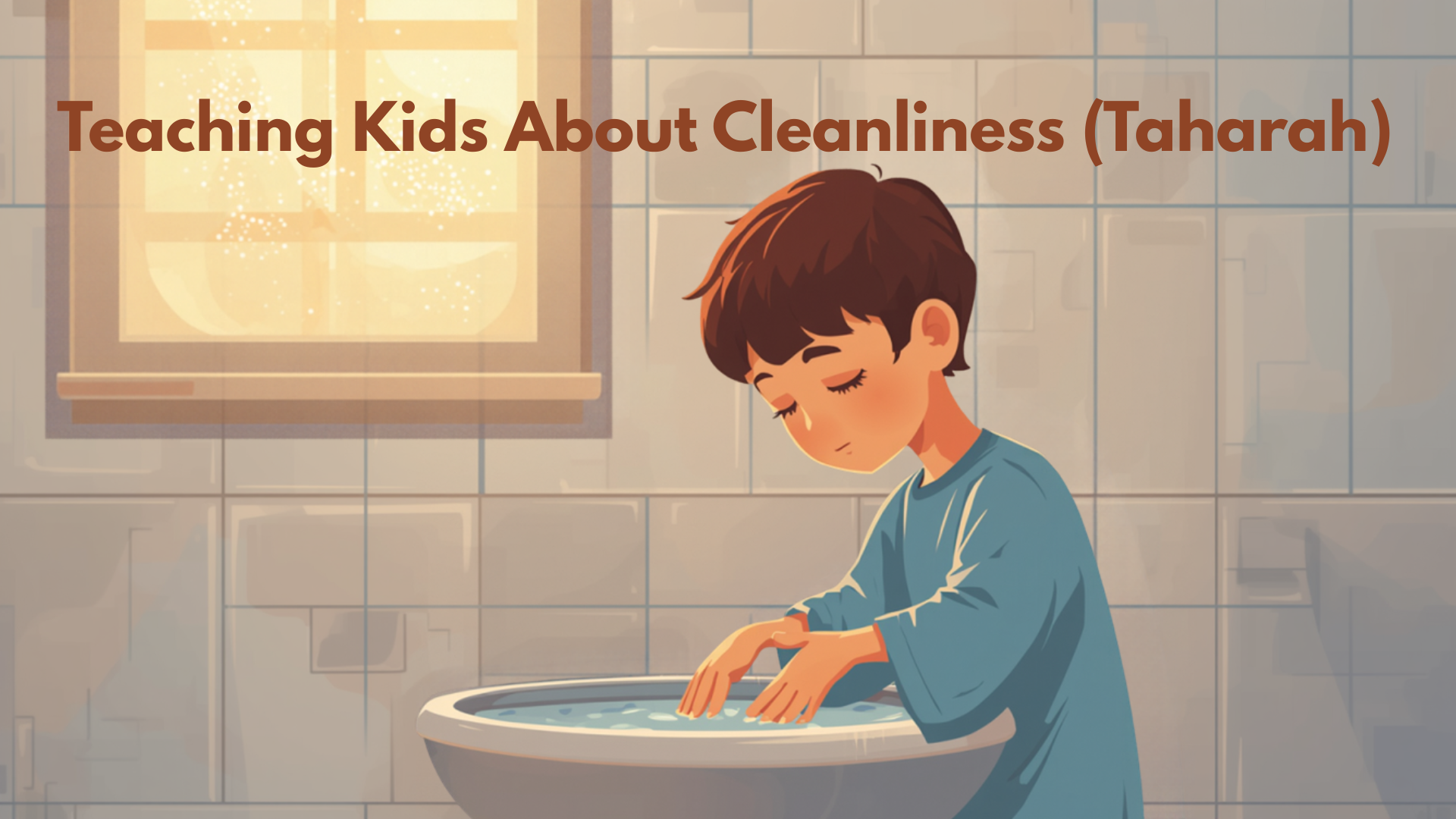
Wudu, the ritual washing before prayer, is probably the most tangible entry point for kids. Washing hands, face, arms, feet, in a specific order, five times a day if praying regularly.
It becomes a rhythm fast once it's introduced early, almost like brushing teeth becomes automatic after enough repetition.
Turning it into something kids do alongside a parent, rather than something explained once and left alone, tends to build the habit faster than any verbal instruction on its own.
Cleanliness Beyond Prayer
Taharah extends past prayer prep too. Regular bathing, brushing teeth, keeping clothes clean, trimming nails — all of it connects to the same underlying value, even the everyday stuff that has nothing directly to do with prayer.
The Prophet spoke about cleanliness being tied closely to faith itself, a link worth mentioning when kids start asking why it matters so much beyond the obvious hygiene reasons, something that pairs naturally with broader character lessons like the ones in this piece on honesty in Islam.
Making the Habit Stick
A few things that help without turning it into a battle:
Model wudu yourself, out loud, so kids see the steps rather than just hearing about them secondhand.
Keep bath time and personal hygiene framed positively, connected to comfort and worship, not just as a chore parents insist on.
Use short videos or songs designed for kids to walk through the wudu steps, which tend to stick better than a spoken explanation alone, similar to what's covered in Islamic Galaxy's video library, built around exactly this kind of visual repetition.
Conclusion
Taharah gives kids an early, physical entry point into faith, something they can practice with their hands well before they grasp the bigger concepts behind it. islamicgalaxy has content built around exactly these kinds of everyday practices, made approachable for younger viewers.
FAQs
At what age should I start teaching my child about taharah and wudu?
Around age five or six works well, once a child can follow multi-step instructions. Start by doing wudu together, narrating each step out loud, rather than explaining the rules separately from the actual practice.
Why is cleanliness so connected to prayer in Islam?
Prayer requires a state of physical purity, which is why wudu comes before it every time. The connection reflects a broader idea in Islam that outward cleanliness supports inward spiritual readiness and focus during worship.
What if my child resists washing up or doing wudu regularly?
Keep it low-pressure and consistent rather than forceful. Framing it as something connected to comfort and worship, not just a chore, tends to reduce resistance more effectively than repeated reminders alone.