
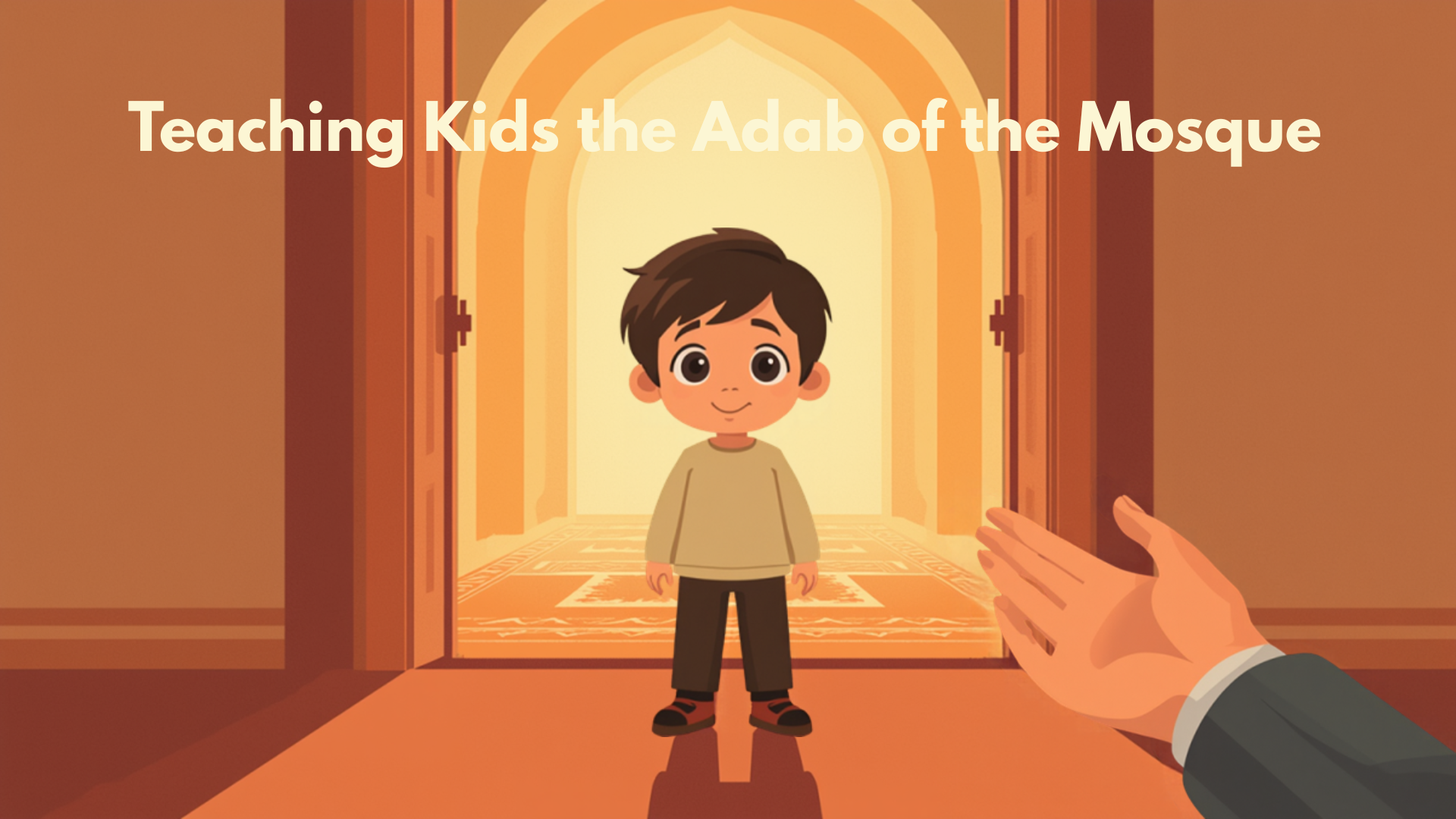
First Friday prayer with my son, and he spent most of it trying to climb over my shoulder to inspect the ceiling, loudly asking why everyone was "doing yoga." Nobody seemed too bothered — mosques tend to be forgiving toward little kids — but it made clear how little I'd actually explained beforehand about what we were even doing there.
Adab, Not Rigid Rules
Adab means manners or etiquette, and in the mosque it covers everything from how you enter to how you behave during prayer. Less about strict rules, more about building respect for a space considered sacred.
Teaching adab isn't about forcing kids to sit silently and perfectly still — unrealistic for most young children anyway. It's about gradually growing awareness of why the space deserves a certain kind of care.
The Basics, Before You Go
A few things worth covering beforehand: removing shoes at the entrance, keeping voices low, understanding the main prayer hall is for focus and worship, not play. Frame these as acts of respect rather than arbitrary rules, and the behavior connects to meaning instead of just compliance.
Explaining basic prayer movements ahead of time — standing, bowing, prostrating — also helps, so kids aren't confused or anxious about what's happening around them once prayer starts.
Realistic Expectations Matter
Very young kids won't sit through a full prayer quietly, and that's genuinely fine. Most mosques expect this and build in flexibility. Bring a small quiet activity for toddlers, or plan to step out briefly if needed — keeps things manageable without adding stress for anyone.
At younger ages the goal isn't perfect behavior, it's positive early exposure. Kids with good early experiences at the mosque tend to feel more comfortable and engaged as they grow, similar to the gradual comfort built through regular Friday prayer habits over time.
Building the Habit Slowly
Adab develops through repeated exposure, not a single lesson. Regular visits, even short ones, help kids absorb the rhythm and expectations naturally, without needing
constant correction each time they walk in the door.
Pairing these visits with related learning, like Quran-based games for kids, tends to reinforce the same respect for sacred spaces and texts alike.
Conclusion
The most effective way to teach one about mosque etiquette is through a continuous, stress-free process that emphasizes the experience rather than enforcing rules all at once. Islamic Galaxy offers a variety of videos and stories to aid in interesting the young ones to mosque and prayer.
FAQs
What basic mosque etiquette should I teach my child before visiting?
Cover removing shoes, keeping voices low, and treating the prayer hall as a space for focus. Framing these as respect rather than strict rules helps kids remember and understand the reasoning behind them.
How do I handle my toddler being restless during prayer at the mosque?
Bring a small quiet activity and be ready to step out briefly if needed. Most mosques are understanding toward young children. Focus on positive early exposure rather than expecting perfect stillness right away.
At what age should kids start learning mosque adab?
No fixed age — exposure can start in toddlerhood through short, low-pressure visits. Formal etiquette lessons tend to work better once kids reach around five or six years old.