
"Why don't we watch the ball drop?" A fair question from a kid whose friends all stay up for New Year's Eve.
Took a while to explain we actually have our own New Year, one that moves around the regular calendar and doesn't land on the same date twice in a row, which honestly confuses plenty of adults too.
A Calendar That Follows the Moon
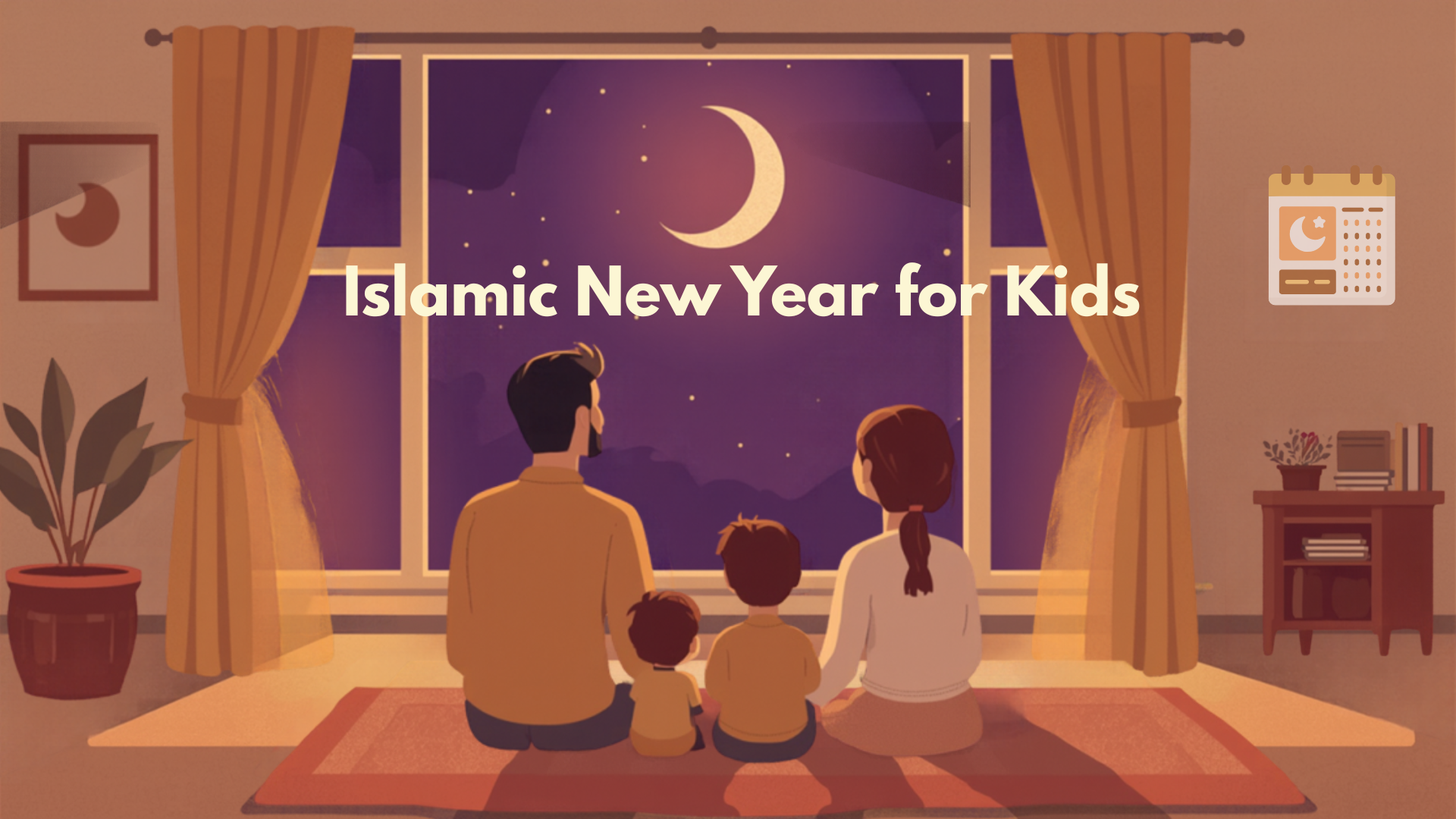
The Hijri calendar is lunar, following moon cycles instead of the sun. About eleven days shorter than the Gregorian calendar, which is exactly why Islamic dates — Ramadan, the New Year, Eid — keep shifting earlier each year relative to the regular calendar most people use.
It begins with the Hijrah, the Prophet's migration from Mecca to Medina, marking a pivotal historical moment rather than a birth or founding date. Worth clarifying for kids, since the distinction trips people up sometimes.
Why It Actually Matters
Beyond the new year itself, the Hijri calendar sets the timing for major events — Ramadan, Hajj, both Eids all follow this lunar system. Understanding it helps kids make sense of why these dates seem to creep earlier every year.
It also builds a sense of Islamic identity separate from the secular calendar running most of daily life, a framework distinctly their own.
The Hijrah Story Itself
Worth telling on its own merits. The migration from Mecca to Medina wasn't just a move — it involved real sacrifice, trust in Allah, the start of a new chapter for the early Muslim community. Kids tend to respond to the adventure and courage baked into the story, more than the calendar mechanics honestly.
Marking It at Home
Unlike the secular new year, Islamic tradition doesn't push big celebrations for this one, but that doesn't mean it passes unnoticed either.
A simple family conversation works, or a related story, or reflecting together on goals for the coming year, similar in spirit to how families mark the month of Shawwal without needing elaborate traditions attached.
A related, easier entry point for younger kids is talking through what happens during Eid al-Fitr, since the calendar concept clicks faster once tied to a holiday they already recognize.
Conclusion
The Hijri calendar connects kids to a rhythm of time uniquely tied to Islamic history, worth explaining well beyond just memorizing month names. islamicgalaxy offers content that ties seasonal Islamic events to engaging, age-appropriate storytelling.
FAQs
Why does the Islamic New Year fall on a different date each year?
The Hijri calendar is lunar, roughly eleven days shorter than the Gregorian calendar. This shifts Islamic dates, including the New Year, Ramadan, and Eid, earlier each year relative to the standard solar calendar.
What event marks the start of the Islamic calendar?
The Hijrah, the Prophet's migration from Mecca to Medina. Marks a historical turning point rather than a birth, symbolizing sacrifice and the start of the early Muslim community's next chapter.
How can I help my kids celebrate the Islamic New Year at home?
Keep it simple — a family conversation about the Hijrah, a related story, or setting personal goals for the year ahead. No elaborate traditions required, just consistent, low-pressure engagement.