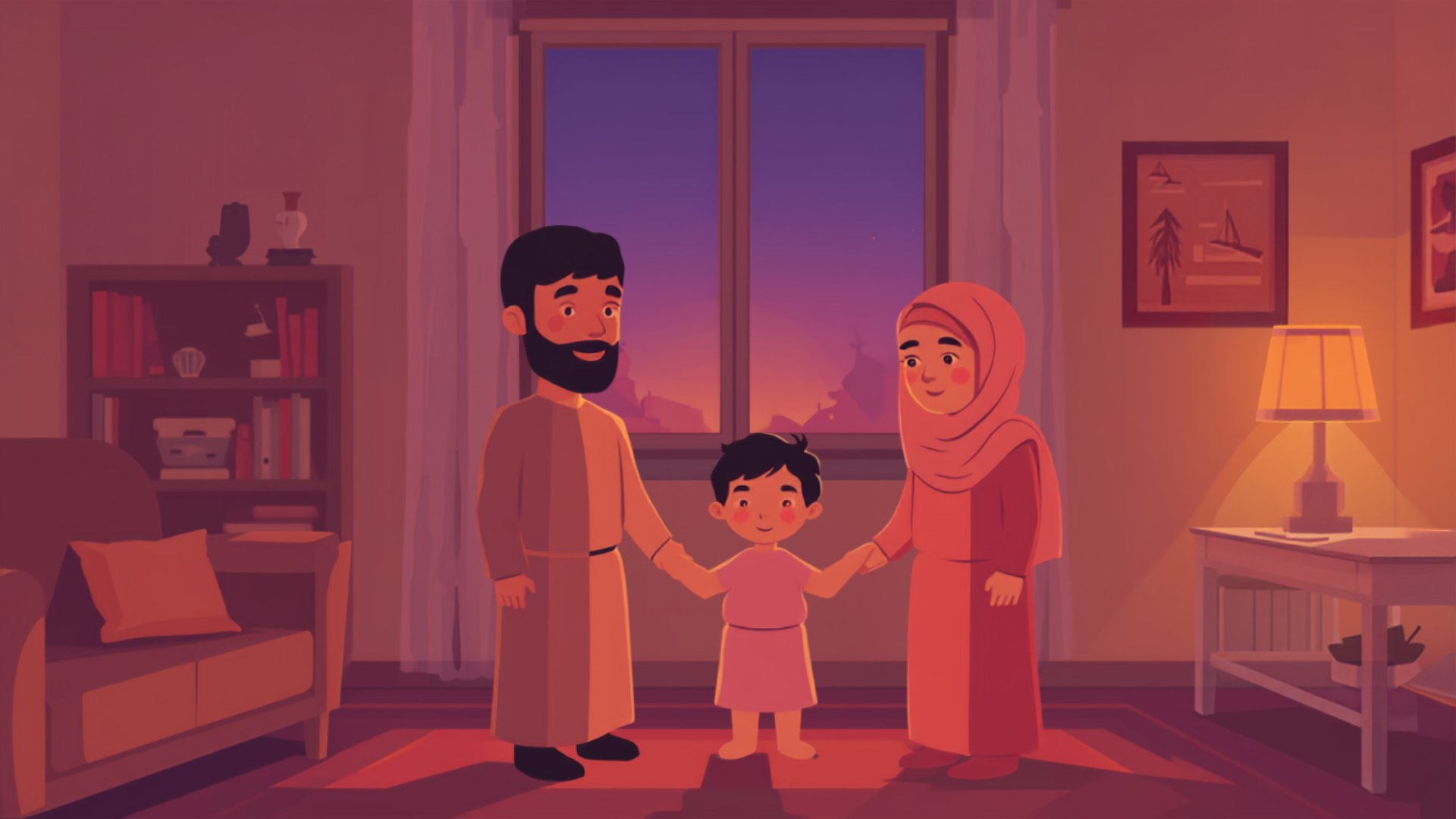


We spent basically the entire nine months of my second pregnancy arguing about names, lovingly, mostly, but arguing. Every list I made got shot down for some reason or other — too common, too hard for my in-laws to pronounce, "sounds like a cartoon character" according to my husband, which I'm still not over. What finally settled it wasn't finding a name we both liked. It was finding one where the meaning actually meant something to us, once we sat down and looked into it properly.
Why Meaning Matters in Islamic Naming
The Prophet Muhammad, peace be upon him, took naming seriously — taught that a good name is really a gift, one your child carries for their whole life, gets called by their whole life, including on the Day of Judgment. A lot of scholars encourage names that reflect good character, or honor someone righteous from Islamic history, or describe a beautiful attribute of Allah. Doesn't have to be complicated or unfamiliar. Just worth pausing on before it becomes somebody's entire identity.
Beautiful Names for Boys
Bilal, meaning "moist" or "fresh water" on paper, but really carrying the weight of Bilal ibn Rabah, the companion known for his courage and that unforgettable voice calling the very first adhan — his story's here if you want the full picture before deciding.
Umar, "long-lived" or "flourishing," tied to Umar ibn Al-Khattab, one of the most just and powerful leaders early Islam ever had.
Yusuf, "God increases," belonging to a Prophet whose story of patience and forgiveness is one of the most loved in the whole Quran.
Zayd, "growth" or "abundance," connected to Zayd ibn Harithah, a companion the Prophet loved deeply.
Idris, a Prophet's name tied to wisdom and knowledge — a beautiful pick if you're hoping for a thoughtful kid down the road.
Beautiful Names for Girls
Khadijah, which technically meant something like "premature child" originally, but carries enormous weight now as the name of the Prophet's first wife, the very first person to believe in Islam — worth reading her story before naming a daughter after her, honestly.
Aisha, "alive" or "living," belonging to one of history's greatest Islamic scholars — her story explains exactly why the name carries so much respect.
Maryam, the Arabic form of Mary, mother of Prophet Isa, one of the most honored women mentioned anywhere in the Quran.
Amina, "trustworthy" or "faithful," also the name of the Prophet's own mother.
Safiya, "pure" or "chosen," a soft, graceful name with deep roots going back to early Islamic history.
A Few Tips Before You Decide
Say the name out loud, a lot, more than feels necessary — something that reads beautifully on paper can land completely differently once you've said it a hundred times in a week.
Think about how it travels too, especially if you're outside a Muslim-majority country. Not to avoid meaningful names, just to be ready for how teachers, classmates, doctors, whoever, are going to pronounce or spell it, because that adjustment is real.
Ask what story comes attached to the name, because as you can see above, so many of these names carry a whole story behind them, and that story becomes something you get to hand down to your child eventually.
And double-check the meaning before you fall in love with a name purely on sound — some names are prettier than their actual meaning, and it's better to know that going in.
Conclusion
Whatever name you land on, the story behind it can turn into something you share for years, at bedtime, during Ramadan, whenever it feels right. If you want more of those stories, companions, prophets, and remarkable women in Islamic history, you'll find them all at islamicgalaxy.
FAQs
Does an Islamic name have to be Arabic? No. Names from many cultures and languages are used by Muslim families, as long as the meaning is good and appropriate.
Can I change my child's name later if I find out the meaning isn't ideal? Yes, and many families do exactly this once they research a name more thoroughly, though it's easier to check beforehand if possible.
Is it better to name a child after a Prophet or companion? It's a beautiful tradition but not a requirement. What matters most is a good, meaningful name, whether or not it's tied to a specific historical figure.
What's a good resource for checking a name's meaning before choosing it? Speaking with a knowledgeable local imam or scholar is a reliable option, since some online sources give inconsistent or inaccurate meanings.