
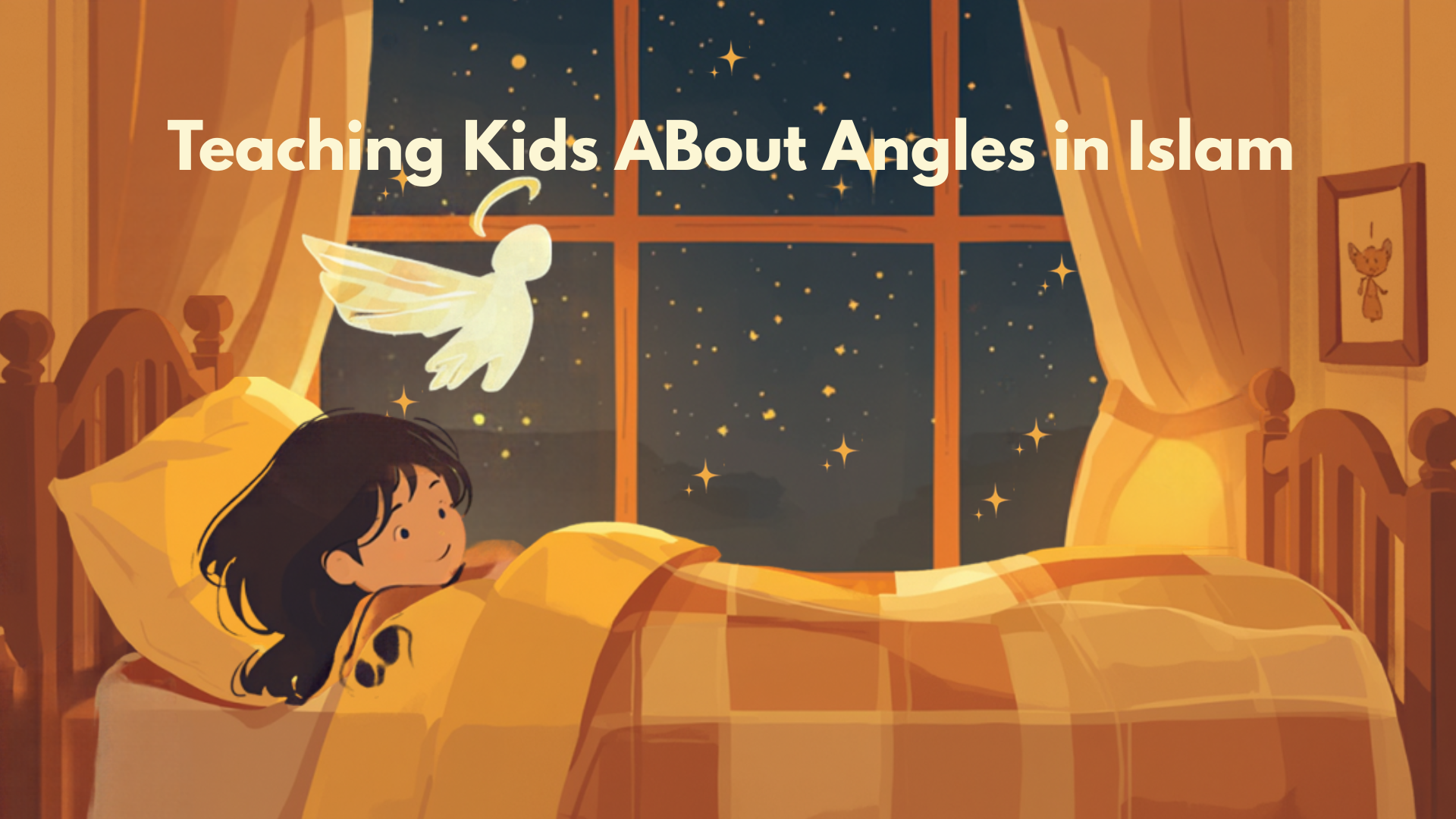
For a while she'd whisper "hi" toward her own shoulder every night before bed, fully convinced an angel was sitting right there, listening in. Not wrong exactly, just working out the details in her own five-year-old way.
It ended up being one of the more enjoyable topics to dig into with her, more than I expected going in, honestly.
What Angels Actually Are
In Islam, angels are beings made of light carrying out specific tasks assigned by Allah. Unlike people, they don't have free will — they simply do what they're created to do, no disobedience involved.
Useful contrast for kids, since it highlights something unique about humans too: the ability to choose.
Some angels have well-known roles. Jibreel delivered revelation to the Prophets. Mikaeel is linked to sustenance. Israfil connects to the trumpet blown on the Day of Judgment. Specifics like these can come gradually as curiosity builds.
The Angels Kids Relate to Most
Two angels come up naturally in most kid conversations — the ones recording good and bad deeds, often called Kiraman Katibin. Frame this positively rather than as a source of dread. A gentle nudge toward good choices, not a threat hanging overhead.
"Angels who love to write down the good things you do" tends to land better than heavy focus on mistakes alone.
Making It Feel Real
Kids often ask if they can see angels, or why angels don't just show themselves. Fine to say they exist in ways we can't perceive with regular senses, similar to how we trust gravity exists without seeing it directly.
Stories from the Quran and Islamic history featuring angels, like Jibreel visiting the Prophet, give kids something concrete rather than a purely abstract idea to hold onto. Quran-based games and activities help here too, the kind found in this piece on Quran games for kids.
Watch for the Wrong Version
Kids pick up ideas about angels from cartoons and general pop culture that don't quite match Islamic teaching.
Correct these gently, without making a kid feel embarrassed about it, and the conversation stays open instead of shutting down entirely, which tends to happen more than you'd expect once outside media enters the picture, something worth pairing with this story about Laylatul Qadr for a fuller picture of the unseen world.
Conclusion
Angels are a rich, meaningful part of Islamic belief, and kids tend to find the topic genuinely fascinating once it's explained clearly, without the confusion pop culture adds.
islamicgalaxy.com features Quran-based stories that touch on angels and other core beliefs in engaging, age-appropriate formats.
FAQs
How do I explain what angels are to a young child?
Describe them as beings of light created by Allah for specific tasks, like delivering messages or recording deeds. Keep the explanation simple and positive rather than diving into abstract theology too soon.
Why can't we see angels?
They exist in a way that's not perceivable through normal human senses. A helpful comparison for kids: believing in things like air or gravity, trusted to exist even without ever seeing them directly.
Which angels should kids learn about first?
Start with the angels recording good and bad deeds, since it ties directly to daily behavior and choices. Introduce Jibreel and other named angels gradually as curiosity and questions naturally develop.