
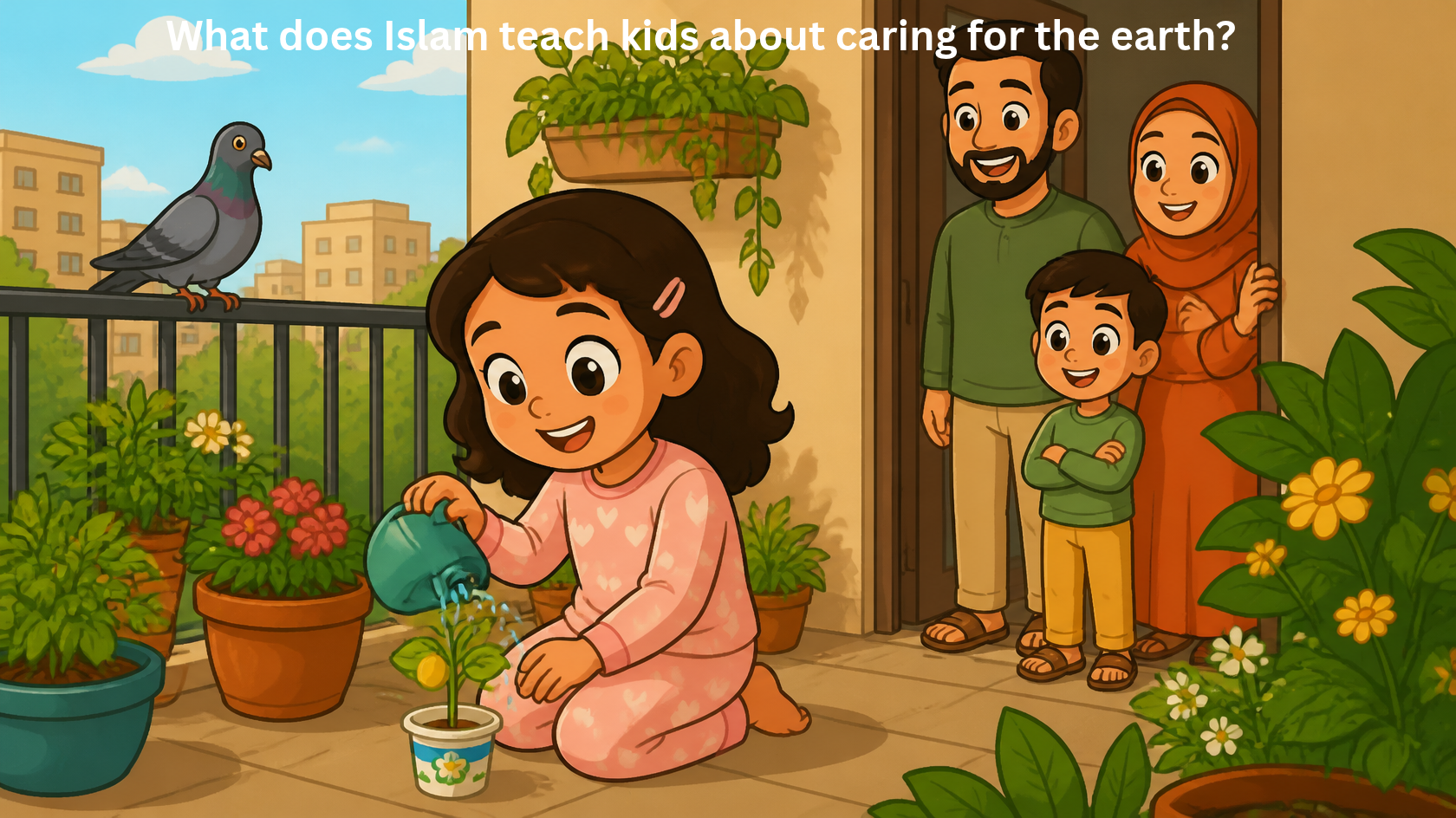
A lemon seed. That's how it started. My niece Salma, five, spat one out at lunch, looked at it on her plate, and asked if it would turn into a tree. I said maybe, if you plant it. She went very serious, wrapped it in a napkin and carried it around the house for the rest of the afternoon like a tiny egg.
We planted it in a yogurt pot on the balcony that evening. She watered it so much the first week it nearly drowned.
It's a little tree now. About as tall as her hand. She visits it every morning before school and tells it about her day.
The tree in the hadith
When Salma's pot finally showed a green shoot, I told her something the Prophet Muhammad, peace be upon him, said. If a Muslim plants a tree or sows a seed, and a bird or a person or an animal eats from it, it counts as charity for them. That's in both Bukhari and Muslim.
She asked if the pigeons count. Yes, the pigeons count. She now leaves the balcony door open "for customers."
There's another one that kids find funny and grown ups find a bit shocking. If the Day of Judgement comes and one of you is holding a little sapling, and you can plant it before it arrives, plant it. Scholars have graded that one authentic, it's in Adab al-Mufrad by Imam Bukhari and in Musnad Ahmad. Plant it anyway, even at the very end. That's how much it matters.
Why the earth is an amanah
Amanah means something trusted to you. Something you look after because it isn't really yours. In Surah Al-Baqarah Allah tells the angels He's placing a khalifah on the earth, a caretaker, a steward.
I explain it to kids like borrowing a friend's toy. You can play with it, enjoy it, but you give it back in good shape. The earth is like that. We get to use it, we don't get to wreck it. And Surah Al-A'raf says it plainly, don't spread corruption on the earth after it has been set right.
Salma's summary: "Allah lent us the world." I couldn't do better.
Small things, done often
Big environmental speeches go straight over kids' heads. Small jobs don't.
Turning off lights in empty rooms. Salma is now the light police in her house, which her dad finds less charming than the rest of us do.
Not wasting water. The Prophet made his wudu with about a double handful of water, which Bukhari and Muslim both report.
Picking up rubbish. The Prophet said removing something harmful from the path is charity, and that's in Sahih Muslim. On walks, Salma's family brings a bag and a glove each. She once found a whole umbrella. She was thrilled.
Being kind to animals and insects. Watching the ants carry crumbs instead of stepping on them. That sort of thing.
Bringing nature indoors
Not every family has a garden or even a balcony. A windowsill works. A jar with a bean in wet cotton works, kids can watch the roots grow day by day, which feels like magic.
Drawing and colouring the things you saw outside is a good rainy day version, and there are some nice printables in the Islamic Galaxy activities section to start with.
Talking about the hard stuff
Older kids hear about climate change and pollution at school, and some get really worried. Don't brush it off, and don't pile on either.
What helps is giving them something to do with the worry, plus a bit of tawakkul. We do our part, the planting and the saving and the picking up, and we trust Allah with the rest. If they ask where these sayings of the Prophet come from and how we know they're real, our post on what a hadith is explains it simply.
Conclusion
Last week Salma's lemon tree grew its first proper leaf. Shiny, dark green, smells exactly like lemon when you rub it. She made everyone in the house come out to the balcony in their pyjamas to smell it.
Then she said, very quietly, "Bismillah, little tree," and went inside to brush her teeth. For more videos, games and activities that help kids love Allah's world, you'll find everything at Islamic Galaxy.
FAQs
What does Islam say about the environment?
Islam teaches that the earth is a trust from Allah and people are its caretakers. We can use it, but we mustn't spoil or waste it. The Prophet even said planting a tree that feeds birds, people or animals counts as charity.
How can kids take care of the earth the Islamic way?
Plant something, even in a pot. Turn off lights and taps, pick up litter on walks, and be gentle with animals and insects. The Prophet said removing harm from the path is charity, so small jobs really do count with Allah.
What does amanah mean for nature?
Amanah means something trusted to you. The earth isn't ours to wreck, it's lent to us by Allah to look after. A simple way to explain it to kids is like borrowing a friend's toy and giving it back in good shape.