
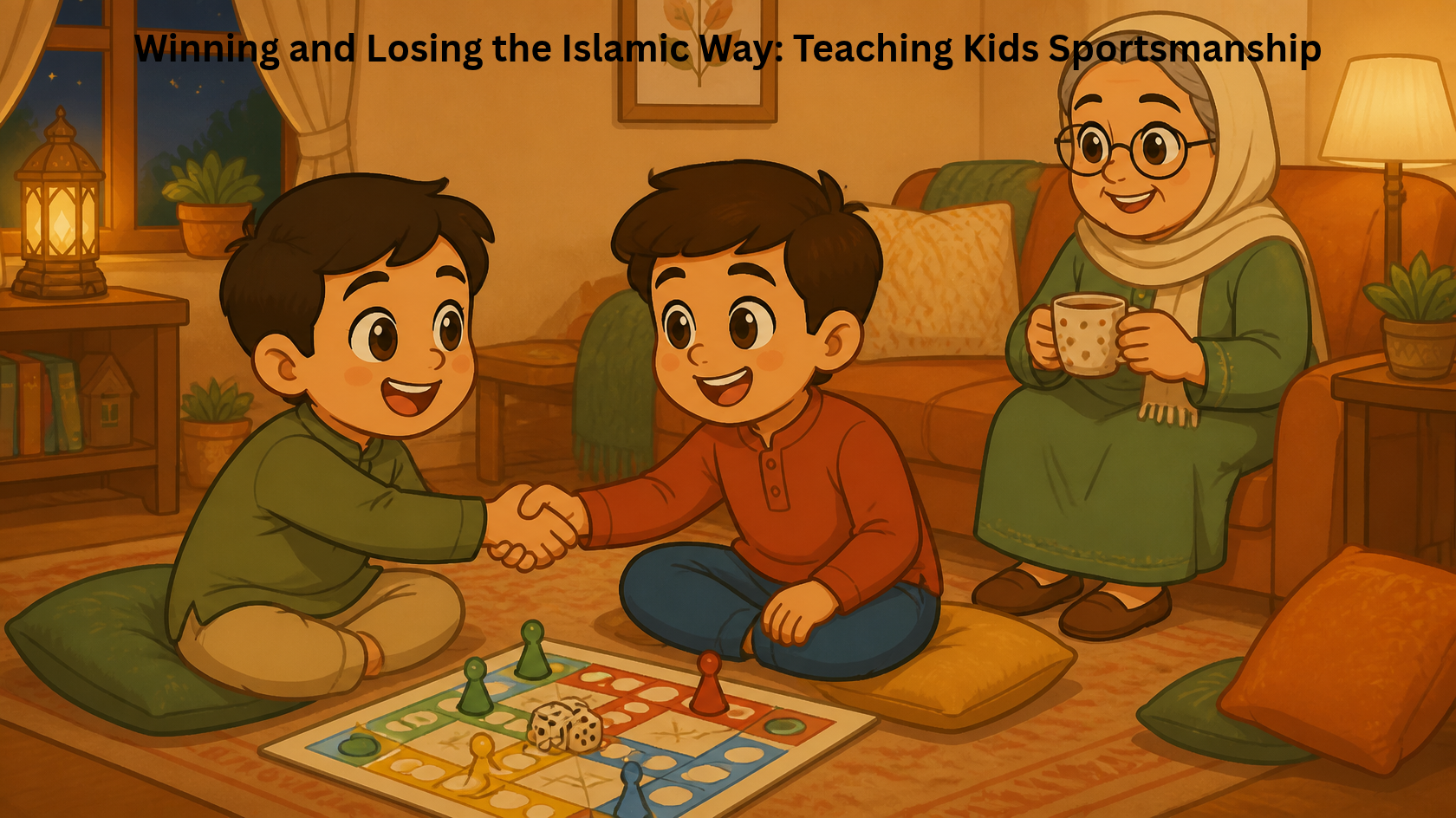
The Ludo board went flying. Actually flying, across the living room, little red and yellow pieces bouncing off the TV. My nephew Hamza, seven, had just been sent home by his cousin for the third time in one game and his face went from pink to purple in about a second. Then the board was in the air. Silence. Every adult in the room froze. His grandmother put her tea down very slowly. Hamza burst into tears and ran to the bathroom.
I've been that kid, honestly. Maybe not the flying board. But the hot face and the feeling that the whole world is unfair because of a dice.
The strong one
Later, when Hamza came out of the bathroom with his eyes all puffy, his grandfather sat him on his knee and told him something the Prophet Muhammad, peace be upon him, said. The strong person isn't the one who wins at wrestling, the strong one is the one who controls himself when he's angry. That's in Bukhari.
Hamza went quiet. Then: "So I lost twice." Lost the game, and lost the wrestling with his anger. His grandfather laughed and said yes, but there's always the next game.
That framing helped him so much. Losing your temper is the real loss. Losing a game is just a game.
The Prophet raced too
Kids are always delighted by this one. The Prophet raced his wife Aisha, may Allah be pleased with her, on a journey when she was young and light, and she won. Years later, when she'd put on a bit of weight, they raced again, and he won. And he said, laughing, this one is for that one. It's in Abu Dawud and graded authentic.
I love this story for kids for two reasons. One, the Prophet played. Games and competition aren't bad. Two, nobody sulked. She won, he lost, they both smiled. Then the other way round. Still smiling.
Winning well is a skill too
We talk a lot about losing, but winners can be awful. Hamza, on the days he wins, does a victory dance directly in front of whoever lost, sometimes with commentary.
His mum started a rule: the winner has to say "good game" first and help pack up. It felt like a punishment to him for about a week. Then he started saying "good game" in a fancy voice, like a news reader, which made everyone laugh, which made losing easier for the other kids. Funny how that worked out.
And no trash talk. Making fun of the losing team, calling people bad at it. That's just backbiting and mockery dressed up in sports clothes. Our post on backbiting and why words matter covers that side of it well.
Practising on purpose
Board games are the best training ground, because the stakes are tiny and the feelings are huge. Hamza's family now does game night every Thursday on purpose. Some weeks it's Ludo. Some weeks it's a screen game, and the Islamic Galaxy games are good for that since they're short and nobody gets too heated.
Before each game, they say what they'll do if they lose. Out loud. "If I lose I'll say good game and take a breath." Sounds silly. It works, because the plan is already in their head before the bad moment comes.
When they still melt down
They will. Seven year olds aren't robots. When Hamza gets that purple face now, his mum says one word, "sit," and he sits down right where he is. The Prophet told an angry person who was standing to sit down, and if the anger still didn't go, to lie down, and that's in Abu Dawud.
Changing position really does reset a kid. Some days he also goes and splashes cold water on his face. He comes back calmer, mostly.
Then they finish the game. That's important. Not quitting the minute you're losing.
Conclusion
Last Thursday Hamza lost at Ludo again, to the same cousin. His jaw went tight, I saw it. He looked at the board for a long second. Then he stuck out his hand and said "good game" in his news reader voice, and his cousin was so shocked she forgot to do her own victory dance.
His grandmother picked up her tea and smiled into it. For more videos, games and activities for family nights like that, you'll find everything at Islamic Galaxy.
FAQs
What does Islam say about winning and losing?
Competing is fine in Islam, the Prophet even raced his wife Aisha. What matters is how we act. The Prophet said the truly strong person controls their anger, so losing calmly and winning humbly both show real strength.
How do I teach my child to lose without a meltdown?
Practise with small games at home, and agree before you start what they'll do if they lose, like saying good game and taking a breath. If anger comes anyway, have them sit down like the Prophet advised, then come back and finish the game.
My child is a bad winner. What can I do?
Make the winner say good game first and help tidy up. No victory dances in someone's face and no teasing the loser. Explain that making fun of people is mockery, which Islam warns against, even if it's only about a game.