
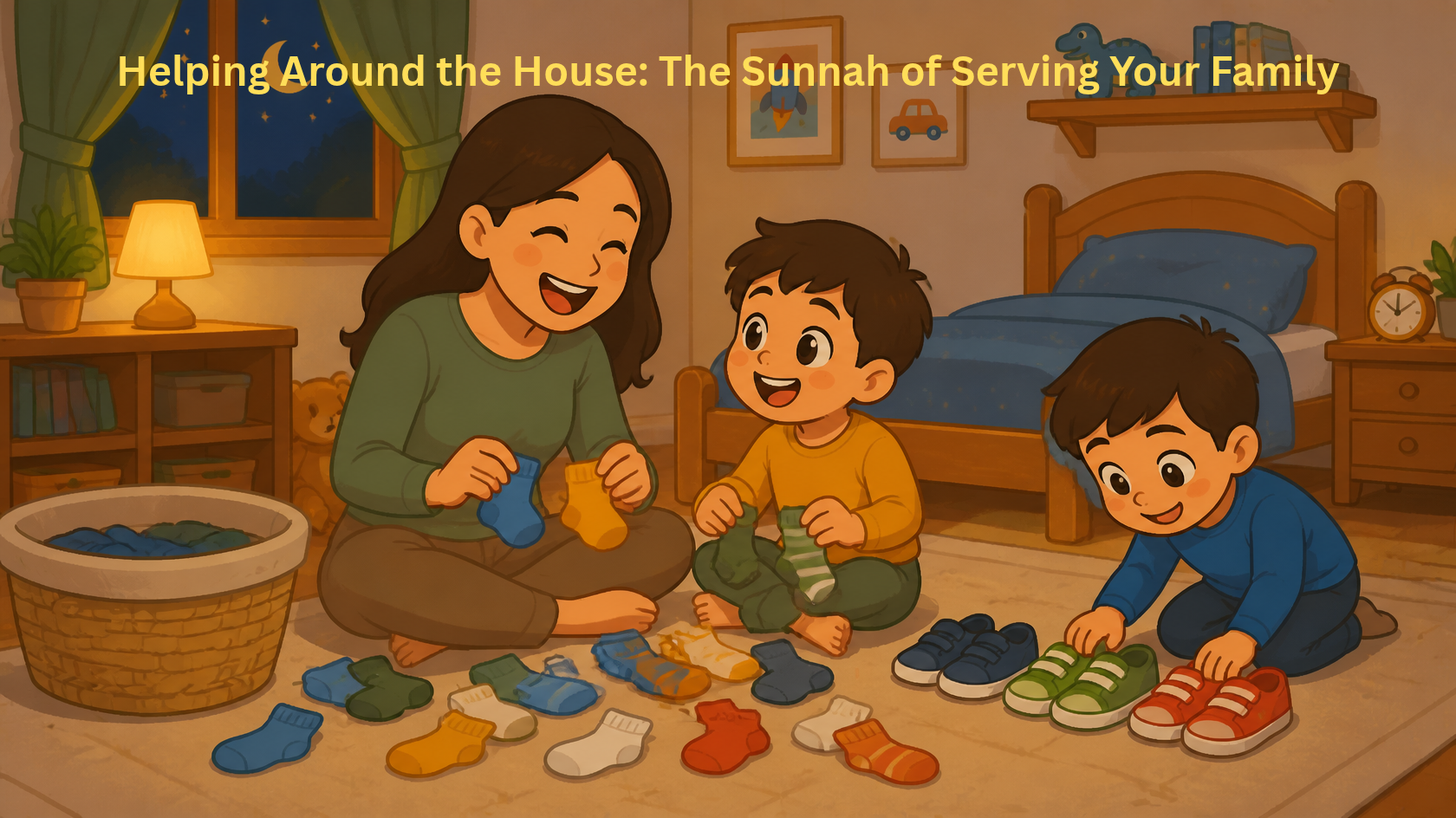
Sock mountain. That's what my friend Mona calls the pile on the chair in her kids' room. Every week it grows. Clean socks, dirty socks, a single glove from last winter, one of those tiny plastic dinosaurs. Her two boys, nine and six, walk past it like it's part of the furniture.
One evening she sat on the floor in front of it, exhausted, and just started crying. Not dramatic crying. The tired kind.
Her older son, Youssef, stood in the doorway for a while. Then he came over, sat down next to her, and started matching socks. Badly. He matched a blue one with a black one. She laughed through the tears and let him.
The Prophet did housework
This surprises kids every single time. Someone asked Aisha, may Allah be pleased with her, what the Prophet Muhammad, peace be upon him, used to do at home, and she said he was in the service of his family, and when the time for prayer came he went out to pray. That's in Bukhari.
In other reports she described him mending his own shoes, sewing his clothes, milking the goat. Imam Bukhari collected those in Adab al-Mufrad.
Youssef couldn't believe it. "He sewed? Like a needle?" Like a needle. The best of all people, sewing his own clothes and not making a fuss about it.
Why this matters more than clean floors
Here's what I think chores really teach. Not tidiness. Belonging.
A kid who helps cook dinner owns a bit of that dinner. A kid who folds the towels feels like part of the team that runs the house.
The Prophet said the best of you are those who are best to their families, which is in at-Tirmidhi, and helping at home is one of the most everyday ways to be good to them.
Also it takes a load off the person who does everything. Usually mum. Kids notice when someone's tired, if you let them help.
Jobs that actually work by age
Mona tried a chore chart. Lasted five days. What worked better was giving each boy one real job that was his.
The six year old, Ali, is in charge of the shoe rack. All the shoes, every evening, in pairs. He takes it very seriously and tells off guests who leave shoes in the wrong place.
Youssef got the bread run and setting the table. He also took over sock matching, permanently, by choice. He's much better at it now.
Little kids can water plants, put spoons in the drawer, carry their plate to the sink, feed the cat.
Older kids can make simple sandwiches, hang laundry, sweep. Real jobs, not pretend ones. Kids can tell when a job doesn't matter.
Making it less of a battle
Don't redo their work in front of them. Ever. If the towels are folded lumpy, leave them lumpy. Fix it later if you must, quietly.
Work together, at least at first. Ten minutes of "family tidy" with music on before dinner.
Everyone does something, including dad. Especially dad, honestly, because kids copy what they see.
Thank them. Out loud, specifically. "Thank you for doing the shoes, the hallway looks so good." Not over the top.
And sometimes help gets paid in fun. After a big Saturday clean, Mona lets the boys pick an activity, and the colouring pages from the Islamic Galaxy activities are a favourite reward because they can do them together on the clean floor.
When siblings fight over chores
"He didn't do his part." "That's not fair, I did more." Every house with more than one kid has heard this.
Mona's answer: swap jobs for a week. Suddenly each boy understood the other's job was harder than it looked. If the arguments turn into hurt feelings, our post on forgiveness for kids has some good stories to share afterwards.
Conclusion
The sock mountain is gone. Not forever, it comes back every so often, but smaller. The other night Mona came home late from work and found the table already set, slightly crooked, with a note on her plate in Youssef's handwriting that just said "we did dinner stuff." Ali had added a drawing of a shoe. For more videos, games and activities that help families grow together, you'll find everything at Islamic Galaxy.
FAQs
Did the Prophet help with housework?
Yes. Aisha said he was in the service of his family at home, and other reports describe him mending his shoes, sewing his clothes and milking the goat. Helping at home is a Sunnah, not something beneath anyone.
What chores can young Muslim kids do?
Little ones can water plants, put away spoons, carry their plate to the sink and line up shoes. Older kids can set the table, hang laundry, sweep and make simple snacks. Give each child one real job that's theirs.
How do I get my kids to help without nagging?
Work alongside them at first, keep it short, and put music on. Don't redo their work in front of them, and thank them specifically when they help. Telling them the Prophet helped at home makes chores feel meaningful, not like punishment.