

Of all the companion stories I've told my kids, this is the one that always gets a different reaction. No giggling, no interrupting to ask random questions. Just quiet. It's not an easy story to sit with, honestly. It's about someone treated horribly for believing something true, and who held onto that belief anyway, no matter what it cost him.
Who Was Bilal?
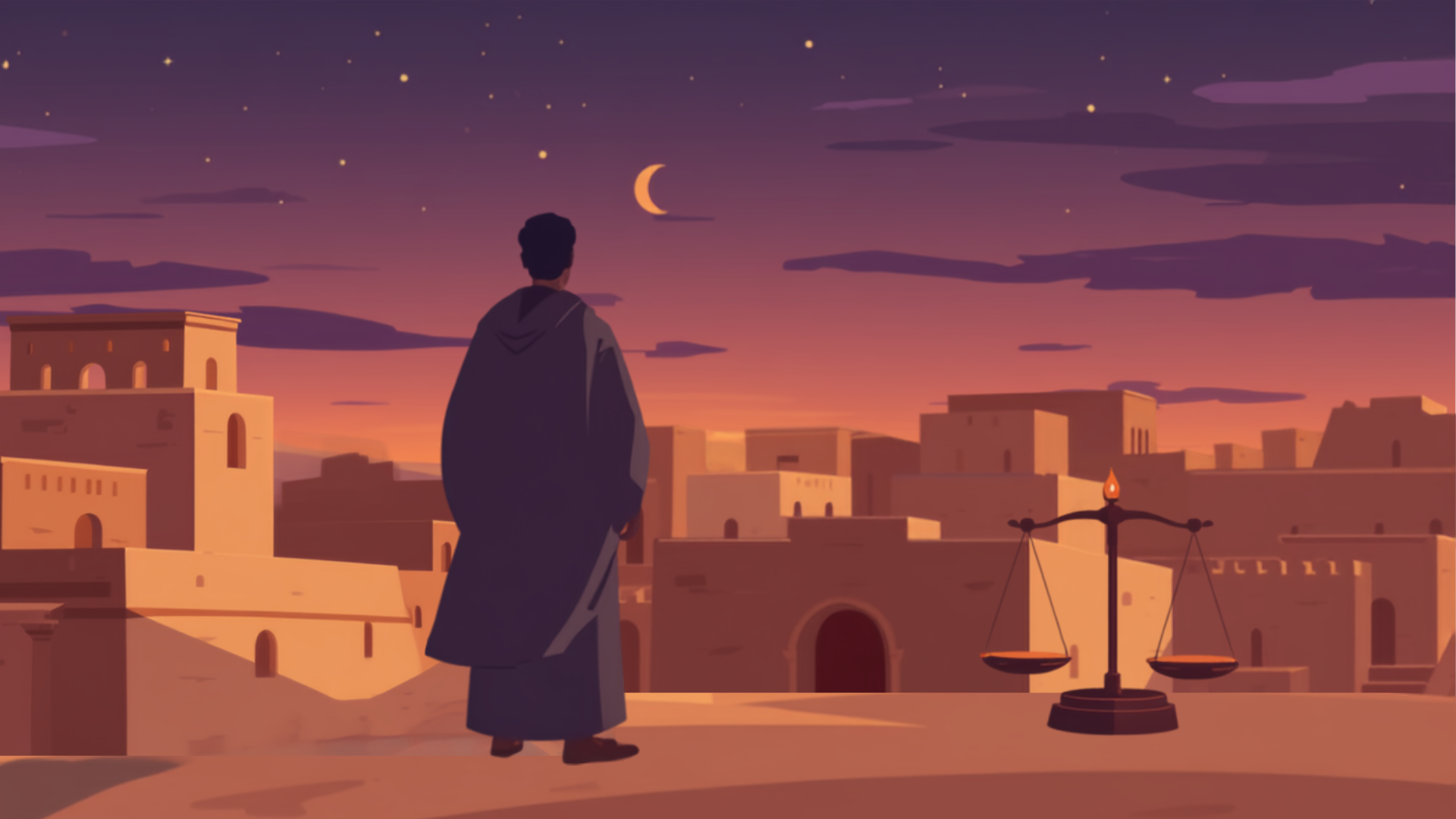
Bilal ibn Rabah was an enslaved man in Makkah, born to an Abyssinian mother. The moment he heard what Prophet Muhammad, peace be upon him, was teaching, he believed it — instantly, completely — even though he had no power, no wealth, nobody protecting him.
His enslaver, a man named Umayyah ibn Khalaf, hated the idea of Bilal becoming Muslim. Hated it enough to do something about it.
Tested in the Desert Sun
When Umayyah found out, he dragged Bilal into the open desert, in the worst heat of the day, and put a massive rock on his chest. Told him to give up his faith. Worship the idols instead, he said, or this doesn't stop.
Bilal's answer, over and over, through gritted teeth, crushed under that rock: "Ahad. Ahad." One. One. He was saying, again and again, that Allah is One — no matter what they did to try and force different words out of him.
Freedom Through Friendship
Word of what was happening reached Abu Bakr As-Siddiq, the Prophet's closest companion, and he went and paid Umayyah a steep price just to buy Bilal's freedom.
So Bilal walked out of that desert not only as a free man, but eventually as one of the most respected companions in the whole early Muslim community. What happened to him never broke his faith. And being free never made him forget where his strength had actually come from.
The First Voice of the Adhan
Later, once the Muslims had settled in Madinah, they needed some way to call people to prayer. The Prophet chose Bilal specifically — his voice was powerful, striking, the kind of voice that carries. So Bilal became the first muadhin in Islamic history, climbing to the highest point around and calling the adhan out over the whole city.
Every single call to prayer you hear anywhere in the world today traces back, in some sense, to that first call he made.
He stayed close to the Prophet for the rest of his life. Known for his loyalty, his recitation, and that quiet strength that got him through the worst days anyone could imagine.
What Kids Can Learn From Bilal
What I want kids to take from this one is pretty simple, even if the story itself isn't. Real courage doesn't always look dramatic. Sometimes it's just refusing to change your answer, over and over, even with a literal rock on your chest. And it teaches something about patience too — that Allah rewards steadfastness in ways nobody could've predicted, like turning an enslaved man into the very voice that still calls Muslims to prayer, everywhere, centuries later.
Conclusion
If Bilal's story moved your child, pair it next with Umar ibn Al-Khattab (RA) — a companion whose path to Islam looked almost nothing like Bilal's but was just as powerful in its own way.
Our guide to the companions of the Prophet is a good next stop too. Stories like Bilal's deserve to be told, and told often — that's basically why Islamic Galaxy exists. You'll find more true stories of courage and faith at islamicgalaxy.
FAQs
Why is Bilal ibn Rabah so important in Islamic history? He was the first muadhin, or caller to prayer, chosen personally by the Prophet, and his story is one of the most well-known examples of standing firm in faith despite severe persecution.
What does "Ahad, Ahad" mean? It means "One, One" in Arabic, referring to the Oneness of Allah, which Bilal repeated even while being tortured for his faith.
Is Bilal's story appropriate for young children? Yes, though the desert torture scene is intense, most parents find it works well for kids around six and up, especially with some guidance on the harder parts.
What happened to Bilal after the Prophet passed away? He remained a deeply respected figure in the Muslim community and is remembered for his loyalty, his beautiful voice, and his role in shaping the adhan we still hear today.