
So my daughter came home last year- this was maybe spring- and asked why some families "have a party for the Prophet's birthday," and we don't. And I froze a little, honestly. I didn't have a real answer. Not a good one anyway. So that night we just sat down and worked through it together, and this post is basically me writing down what I ended up telling her, plus some stuff I learned after actually looking into it properly, because half of what I said that night was a guess.
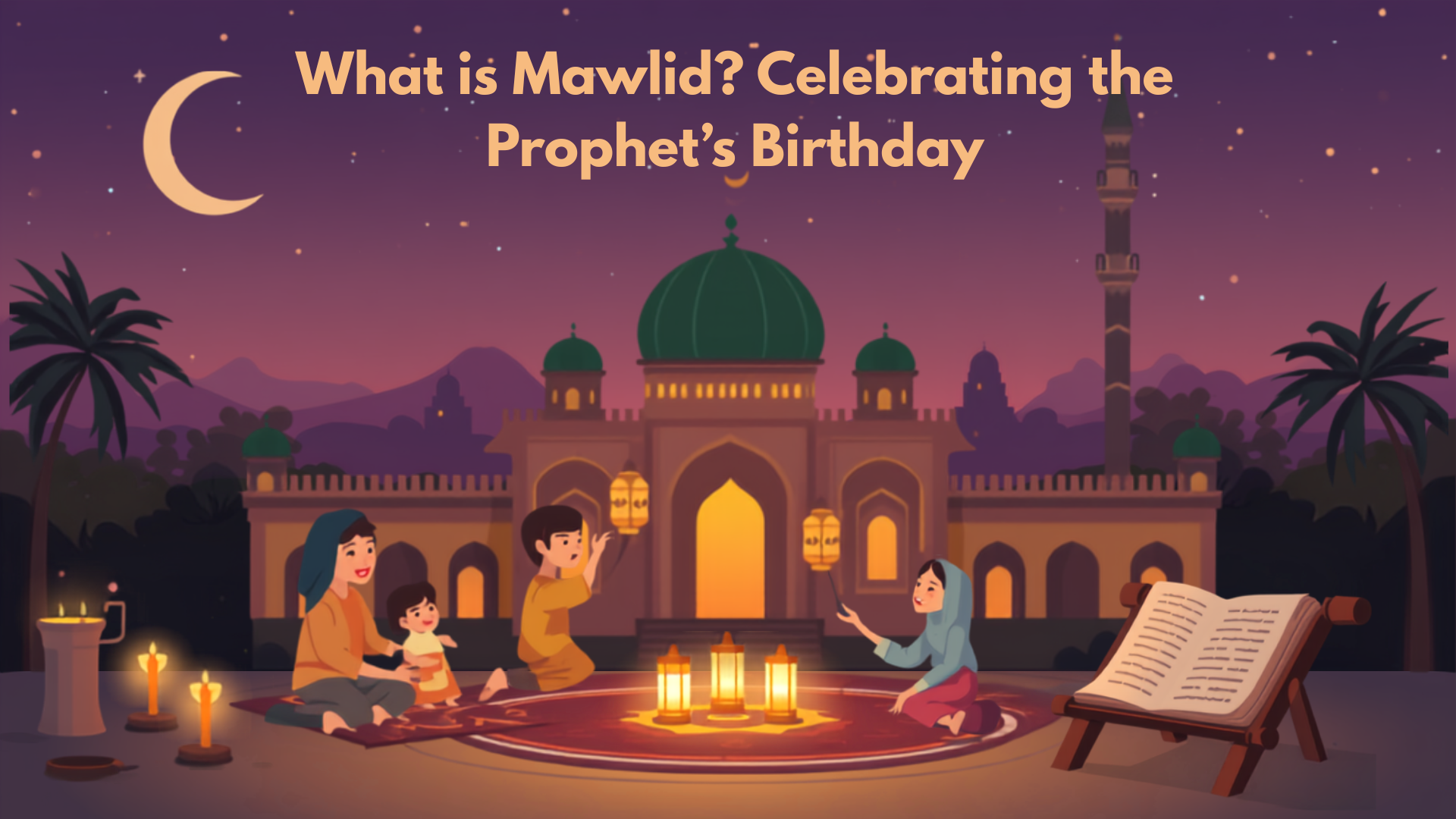
Okay so. Mawlid. Or Mawlid an-Nabi, that's the fuller name. It's the observance of the Prophet Muhammad's birthday, 12th of Rabi al-Awwal, Islamic calendar. Some families do a whole thing: gatherings, food, poems about his character, storytelling, charity. Some families do nothing. Not "a smaller version of something," nothing, zero, not even a mention some years. And that second group isn't doing that because they care less. That surprised me too, honestly. It's a real disagreement, an old one, goes back a long way, not two random opinions people made up last week.
Here's the thing I didn't get at first. Some scholars say the earliest Muslims, the ones who literally knew the Prophet, didn't mark his birthday as an annual thing, so not doing it now is actually the more faithful, more original approach. Other scholars say expressing love for the Prophet and reflecting on his life is good any day, and Mawlid's just a structured way of doing that on purpose instead of leaving it to chance. Neither side is doing this casually.
Both think they're honoring him correctly. That's really it; that's the whole disagreement, and somehow it still surprises people when I explain it that plainly.
So what do you tell an eight-year-old? I went with, more or less, "different Muslim families believe different things about this, and neither one is wrong." That's it. Kids notice when something doesn't add up way faster than we think, so pretending there's one single answer just means she gets confused later when a cousin does it completely differently and nobody explained why.
What both sides agree on, though, and I think this is honestly the actual point, is that learning who the Prophet was and what he stood for- that part matters. A lot. That's the real thing underneath all of it, whether or not a family calls it Mawlid or picks a date at all.
If you do celebrate, it usually looks like going through parts of his life story, his patience, his honesty, how he treated people who were awful to him. Sometimes charity too.
For kids, skip the dates and facts, go straight to story, because a five-year-old is not going to care about a timeline but will absolutely sit still for a good story about kindness. Worth pairing this with the companions who surrounded the Prophet too, honestly, since so much of who he was shows up in how those people around him acted.
If you don't celebrate, the day doesn't have to just pass by silently either, not necessarily. You can tell a favorite story that day without turning it into a party or calling it anything special. Kids don't need a cake to like a story. Mine definitely didn't.
Either way, and I keep coming back to this, the actual goal's the same on both sides. A kid who knows the Prophet as more than just a name she's heard a hundred times. That part isn't really up for debate, whichever side your family lands on.
More stories like this, and more about the people around him, over at islamicgalaxy, if you want to keep going.
FAQs
Is celebrating Mawlid required in Islam? No, not required. It's a scholarly and cultural difference, not an obligation either way. Some families celebrate warmly, others skip it completely; both are sincere, accepted positions.
What date does Mawlid fall on? 12th of Rabi al-Awwal, Islamic lunar calendar. Since it's moon-based, not sun-based, the date shifts every year compared to the regular Gregorian calendar most of us use daily.
How do I explain this kind of disagreement to my kid without confusing them more? Just say it plainly. Different families and scholars see this differently; that's normal in Islam, and it doesn't mean somebody's doing it the wrong way.