

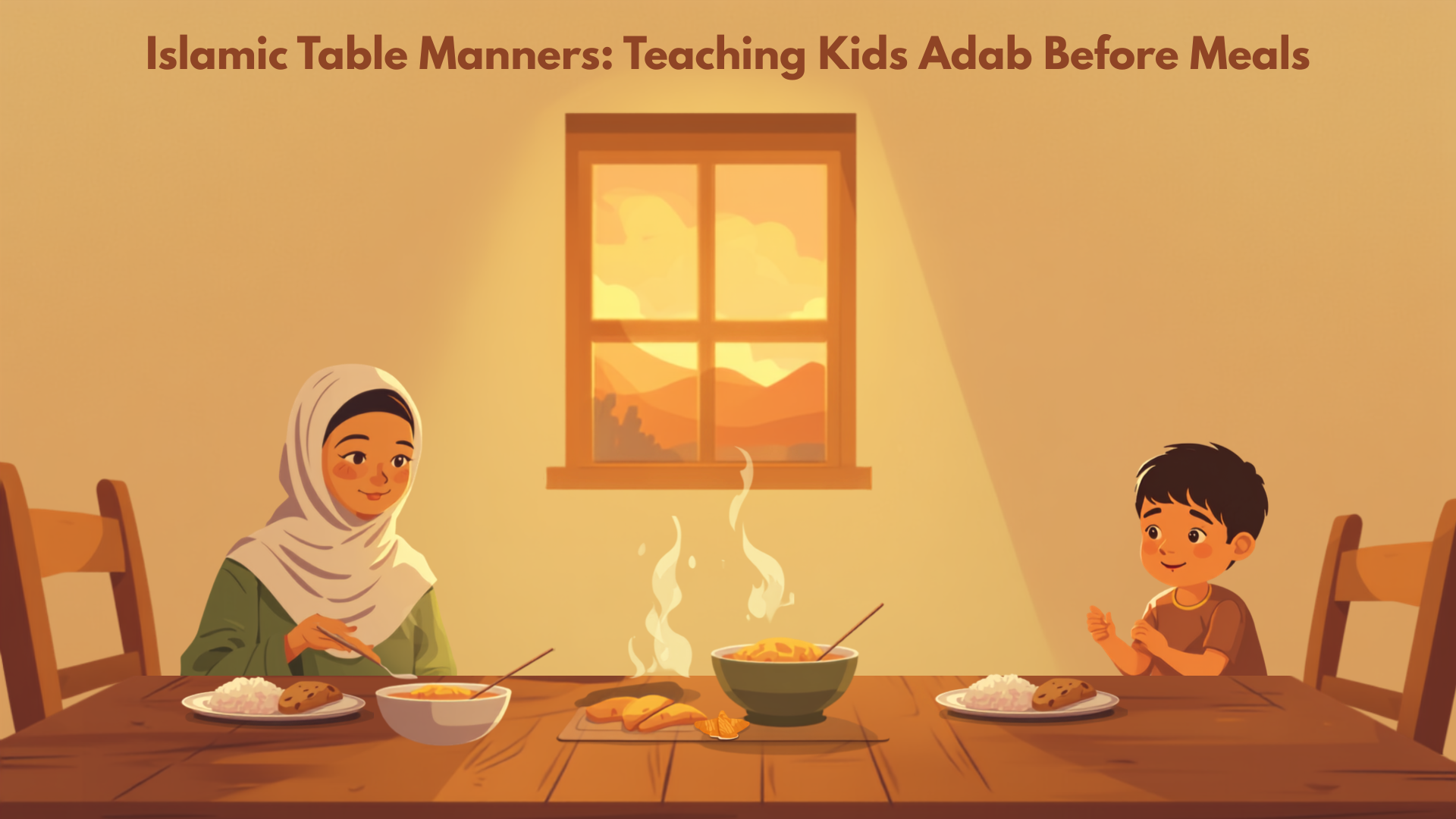
My son used to grab food the second it hit the table. No dua, no bismillah, nothing, just straight in, like the plate might run away if he didn't move fast enough.
For a while I just said "wait," over and over, which, in hindsight, taught him basically nothing except that waiting is annoying and Mom nags. What actually worked, eventually, was explaining why we wait. Not just that we do.
Islamic table manners, adab, whatever you want to call it, aren't really about etiquette for its own sake.
That's not the point, even though it can look that way from the outside. It's about taking something we do multiple times a day, something so routine it's basically autopilot, and turning it into a small repeated act of gratitude.
The Prophet Muhammad, peace be upon him, ate simply, mindfully, and a bunch of his habits around meals became things Muslim families still pass down generation after generation.
For kids, this is honestly one of the easier places to actually build real habits, mostly because meals happen constantly. Three, four times a day, every day, forever, which is a lot of reps to practice something small until it just sticks without anyone thinking about it anymore.
Start with Bismillah before eating. Out loud. Every time. Even when it feels repetitive, even when it's the fortieth time that week and everyone's hungry and cranky.
It's a short habit, but it anchors the whole meal in gratitude before a single bite happens, which matters more than it sounds like it should.
Eating with the right hand comes next. The Prophet taught this specifically, and honestly, practically speaking, it also just keeps things a little more organized at a table full of kids elbow to elbow.
Not wasting food is another one, and here's the thing: kids actually respond to this way better once they understand the reasoning instead of just being told to finish their plate like it's a punishment.
Frame it as respecting a gift, not cleaning your plate because Mom said so, and the whole tone of the conversation shifts.
Ending with Alhamdulillah closes the loop. Thanking Allah the same way the meal started. My son picked this one up the fastest of all of them, probably because it meant the meal was officially over and he could go play, which, fine, I'll take it, whatever gets the habit built.
What actually worked for us was modeling constantly, way more than correcting constantly. Saying my own Bismillah out loud, every single meal, no commentary, no reminder attached, did more than any nagging ever did. Kids notice repetition long before they respond to being told what to do, especially at the age where "why" comes before "okay" every single time.
It helps too if you connect this to other things your family's already working on. If you've been teaching your kid to make dua for their parents, mealtime dua slots right into that same rhythm, pausing to say thanks before moving on to whatever's next on a busy day.
They're going to forget. Constantly. Especially the younger ones, especially the hungry ones, especially right before a meltdown over the wrong colored plate.
A gentle nudge works way better than a lecture here; honestly, just saying Bismillah yourself instead of demanding they say it usually does the trick. Eventually the habit outlasts the reminders.
Takes longer than you'd think though, especially with a genuinely starving kid staring down a plate of food like it's the last one on earth.
These days my son says Bismillah probably half the time without being asked at all, which felt like a small miracle the first time it happened completely unprompted, no reminder, nothing, just automatic.
Small habits, repeated enough, just become how a kid does things eventually. For more everyday Islamic habits and gentle routines for your family, visit islamicgalaxy.
FAQs
What age should I start teaching table manners? As early as a toddler can hold food, even before they can say the full dua. Saying it for them consistently builds familiarity long before they're able to join in on their own.
Is it really important to eat with the right hand? Yes, it's specific to the Prophet's teaching, though for left-handed kids, gentle encouragement usually works better than strict enforcement, avoiding unnecessary frustration at mealtime.
What if my child refuses to say the dua before eating? Don't force a battle over it. Keep saying yours out loud, consistently, no pressure attached, and most kids eventually join in once it feels normal instead of required of them.