
Out of all the companion stories in our house, this one gets asked for the most. Mostly because my daughter loves this whole idea that a "best friend" could matter enough to change actual history. Not wrong, honestly. Abu Bakr's friendship with the Prophet is kind of the backbone of the whole thing, once you sit with it.
Abu Bakr was a merchant in Makkah. Respected, wealthy, known well before Islam even started for being honest and having good judgment, the kind of guy people trusted with things. When the Prophet Muhammad, peace be upon him, first shared his message, Abu Bakr believed him. Instantly.
No hesitation, no need for proof beyond just, well, knowing the guy's character for years already. First adult man to accept Islam. That kind of immediate trust, given with zero convincing needed, tells you a lot about what these two already meant to each other before any of this started.
His nickname, As-Siddiq, "the truthful one" or "the one who always believes." There's a specific story behind it, and it's a good one.
When the Prophet told people about his night journey to Jerusalem and beyond, a trip that should've been physically impossible in one night, a lot of people mocked it, doubted the whole thing outright. Abu Bakr's response, though.
Simple. If the Prophet said it happened, it happened. That's it. No demand for an explanation first. Just trust, given without conditions attached, and that's the moment the nickname stuck for the rest of his life.
He wasn't just believing from a safe distance either, and this is the part I want my daughter to really get. He put himself at real, actual risk, more than once, for this friendship and this faith. When the Prophet had to flee Makkah for Madinah, running from people who wanted him dead, Abu Bakr went with him.
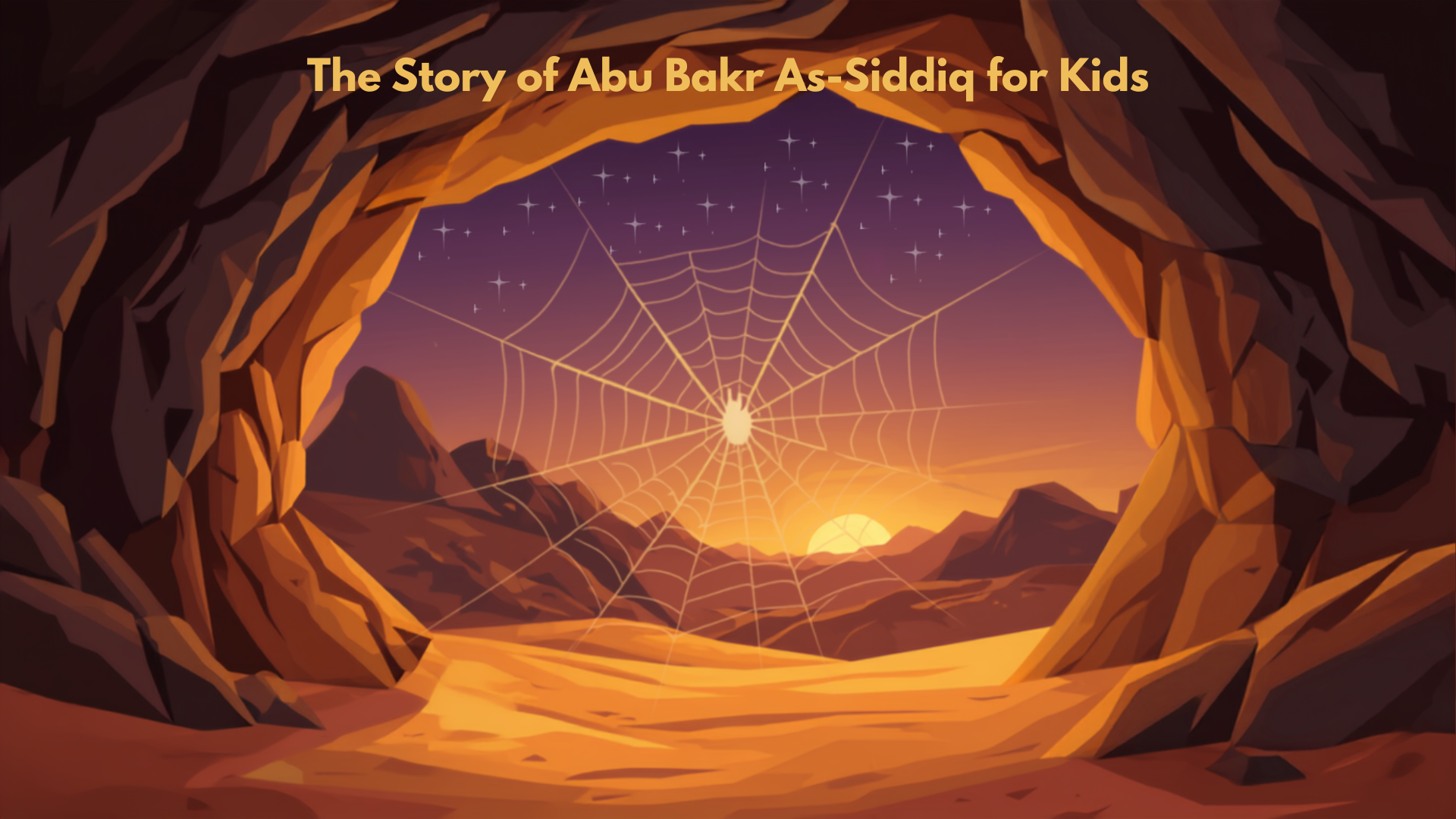
The two of them hid together in a cave while their enemies searched right outside, close enough to hear. According to the account most people know, a spider spun a web across the entrance, a bird nested nearby, and it all just looked untouched, undisturbed, which kept them hidden long enough.
He also spent a huge chunk of his own wealth freeing enslaved Muslims who were being tortured for their faith.
Including Bilal ibn Rabah, whose own story of courage under actual physical torture is one of the most powerful things in early Islamic history, full stop.
After the Prophet passed away, the Muslim community was in real crisis. Grief, tangled up with genuine uncertainty about what came next, what happens now.
Abu Bakr was chosen as the first caliph, the leader, and he stepped into it with the exact same steady, humble character he'd shown his whole life, nothing different, no ego shift. He told the people, famously, "if I do well, help me. If I do wrong, correct me."
Which tells you basically everything about how he understood leadership. Not power over people. Responsibility to them. Different thing entirely.
What I want my daughter to take from this, honestly, is that real friendship sometimes means believing someone even when it's hard to explain to anyone else why.
And that quiet loyalty, the unglamorous kind, matters just as much as the big bold moments do, maybe more. It also shows leadership isn't about volume, being the loudest person in the room. It's about being trustworthy enough that people actually want to follow you there.
If this one landed with your kid, pair it next with Umar ibn Al-Khattab's story, since Umar became the second caliph and carried forward a lot of what Abu Bakr started. Our guide to the companions of the Prophet is worth a look too, more names, more stories like this one.
What sticks with my daughter most isn't the cave, honestly, or even the caliphate part. It's the friendship. That someone believed in someone else completely, and stayed loyal through actual danger, not just the easy stretches. For more stories like this one, brought to life for kids, visit islamicgalaxy.
FAQs
Why is Abu Bakr called "As-Siddiq"? The nickname means "the truthful one," earned when he instantly believed the Prophet's account of the night journey, no doubt at all, even while many others mocked or dismissed the story completely.
What was Abu Bakr's role after the Prophet passed away? He became the first caliph of the Muslim community, guiding it through a hard transition with humility and steady leadership, always holding himself accountable to the people he led.
Is the cave story about Abu Bakr historically significant? Yes, it's referenced directly in the Quran, describing the Prophet and Abu Bakr hiding together while pursued, often used to illustrate trust and courage under real danger.