
My friend told me her daughter thought Arabic letters looked like fancy squiggles," the first time she saw them. Then one day, little Amina pointed at the letter ب and said, "Mom, that one looks like a boat!"
Arabic alphabet learning for kids doesn't have to be this serious, intimidating thing. Kids see letters differently from how we do. To them, it's all shapes and patterns and pictures.
Arabic is the language of the Qur'an, yes, and that's huge. But you know what? Your child doesn't need to feel the weight of that right away. They just need to think that learning is fun.
Maybe you're worried you don't know where to start, or you tried before, and your kid lost interest after two days. I get it. But here's what I've learned from parents who've done this: it really can be simple.
Short lessons. Games. Songs. Stuff that doesn't feel like school. This guide is going to walk you through it, no fancy terms, just real methods that work. Let's do this together.
Why Learning the Arabic Alphabet Matters for Kids
You are already running around like crazy; in between school pickups, training sessions, dinner, bedtime, and basically everything else, if you add "teach Arabic" to the list, it simply feels like... too much.
So what is the point of teaching your children the Arabic Alphabet? I mean, let them just learn it when they go to school, right? Not really, let me change your perspective on that because I've thought the same thing one day till I started teaching my own kid.
Because honestly, the benefits are worth it. Not in a "you should feel guilty if you don't" way. More like, "this actually makes a difference" way. Here's what I mean:
It Connects Them to Their Faith
Allah says in the Qur'an:
"Indeed, we have sent it down as an Arabic Qur'an that you might understand"
(Surah Yusuf 12:2).
Think about it: when your child can read even one word of the Qur'an on their own, they can be familiar with it! They're not just repeating sounds anymore. They're reading the actual words Allah revealed.
That's huge. And it doesn't need to be weighed down with all this heavy pressure. You're simply the one helping them to reveal a wonderful present, one letter at a time.
It's Actually Really Good for Their Brain
Here's the thing: when kids learn Arabic letters for children, their brains are doing some serious gymnastics. Reading right-to-left? That's different wiring from English.
Think of it as problem-solving when they figure out that the letter ب takes a different shape depending on whether it is at the beginning, middle, or end of a word.
According to the study, acquiring a new writing system enhances one's memory, attention, and the ability to recognize patterns. So Arabic for kids isn't just spiritual, it's literally making them sharper thinkers.
It Gives Them Roots
When your child starts recognising Arabic letters, they light up differently at the mosque. They can spot words in duas. Read signs. Feel like they belong to something bigger.
It connects them to their identity, their community, and millions of Muslims worldwide. And honestly? Being bilingual just gives kids this quiet confidence. They know they can do hard things. That sticks with them.
Ready to start this beautiful journey? Explore our Arabic Galaxy for Kids Learning Path. Alright, so you're convinced it matters. Now let's get practical. How many letters are there in the Arabic alphabet? (Spoiler: it's not as scary as it looks.)
How Many Letters Are There in the Arabic Alphabet?
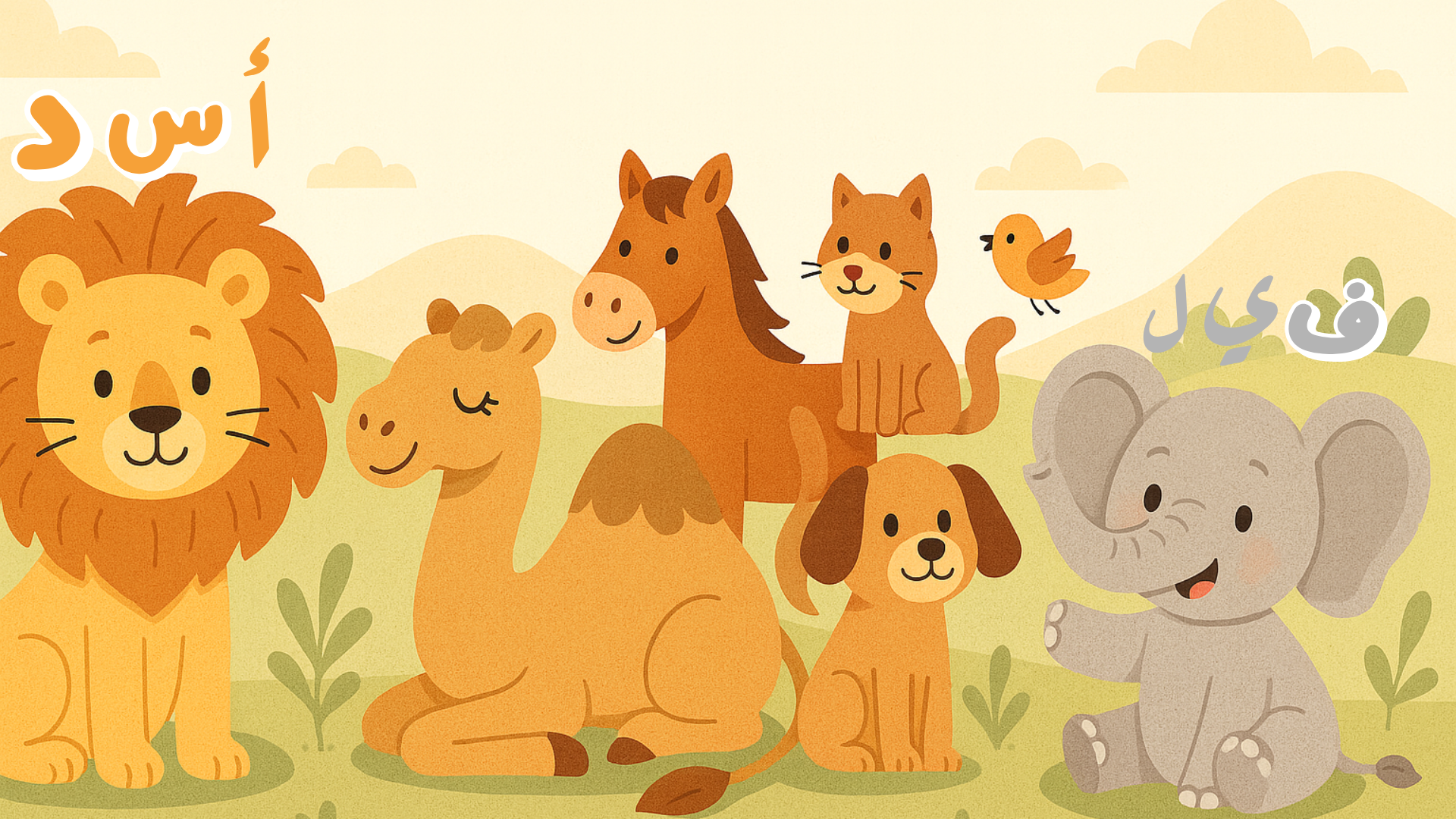
Alright, the Arabic alphabet has 28 letters. English has 26. So we're talking two extra letters, not exactly a massive difference, right?
This is the part that confuses people: a letter may have a different appearance depending on the position in the word it is written.
The letter can have up to 4 forms: isolated, beginning, middle, and end. I understand it sounds crazy, but try to imagine it this way: letters are connecting differently depending on the place they're in the row.
Take the letter ب (Ba):
- Standing alone: ب
- At the start: بـ (reaching forward)
- In the middle: ـبـ (holding hands on both sides)
- At the end: ـب (being held from behind)
Before you panic, kids actually get this faster than adults. They see patterns we overthink. And you don't need to teach all four forms right away. Just start with recognition.
Fun fact to share with your child: some Arabic alphabet letters for kids look like little pictures. ب is a boat, ح is a smile, م is a tiny hill. Makes it way less intimidating when they can picture it.
So is the Arabic alphabet hard to learn? Not really. It just looks unfamiliar at first. Once you know where to start, it clicks pretty fast.
Speaking of which, where do you actually start?
Arabic Alphabets Learning for Kids – Where to Start?
Okay, so you got it. What next? How do you even start without this turning into a giant fiasco?
The fact is that you are not required to have some intricate plan. Just carry out these straightforward steps, and the result will be as fast as it comes together.
Step 1: Letter Recognition (Weeks 1-2)
Forget everything else for now. Just help them recognise what the letters look like.
- Stick to isolated forms only (letters by themselves, not connected yet)
- Pick 3-5 letters at a time.
- Get some charts, flashcards, posters, or whatever's colourful and kid-friendly
- Turn it into a game: "Which one looks like a boat?" (Spoiler: ب does!)
Step 2: Letter Sounds (Weeks 3-4)
Now let's add the sounds. This is where it starts feeling real.
- Say each letter's sound out loud together
- Make it silly: "Let's say Ba! three times really loud Ba! Ba! Ba!"
- Link it to words they might know: "ب like in بَيْت (bayt), which means house"
Step 3: Writing Practice (Weeks 5-6)
Time to grab some crayons. Fair warning: this part gets messy.
- Start with tracing worksheets (the ones with dotted letters)
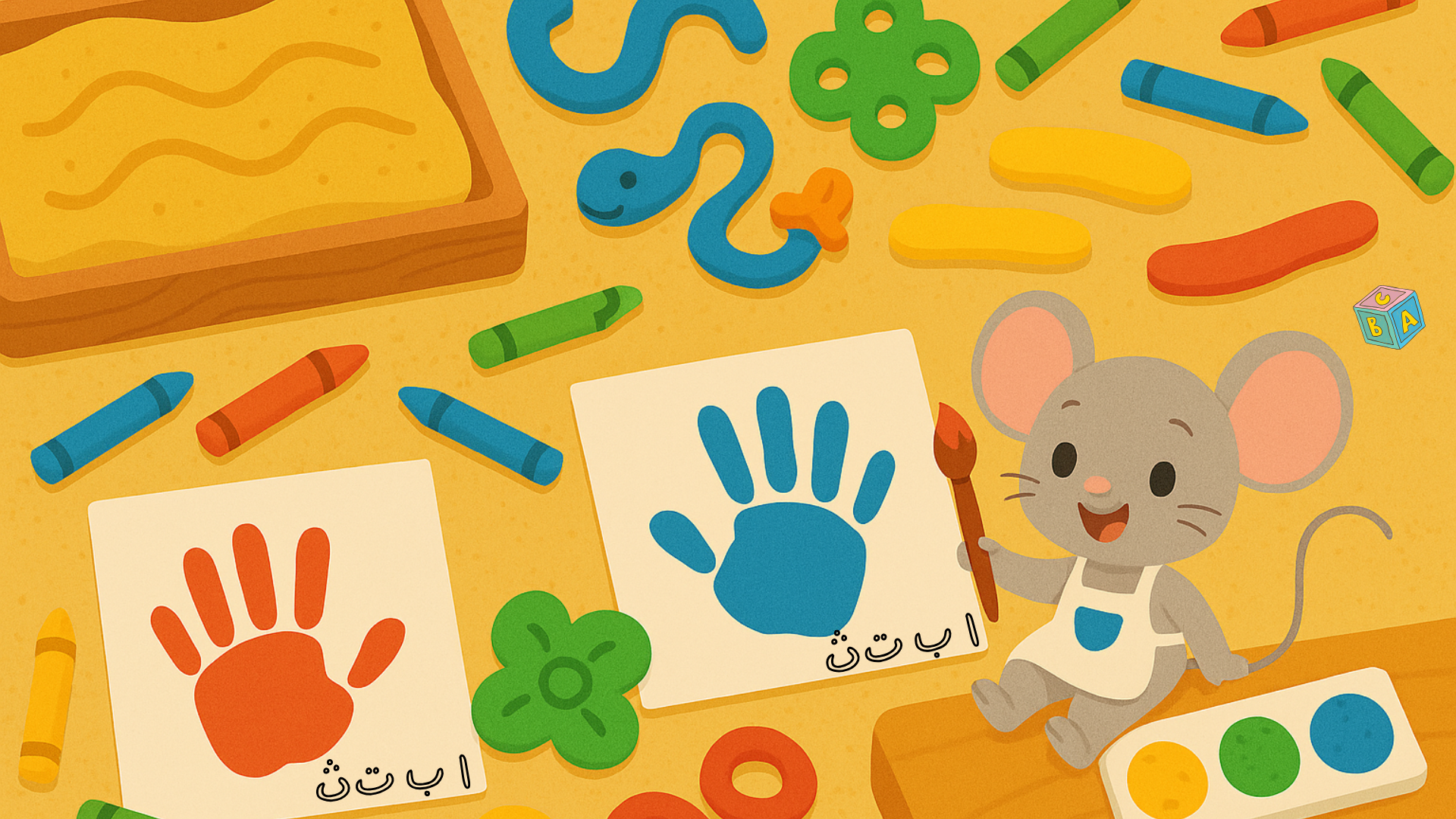
- Mix it up: let them trace in sand, shape letters with playdough, finger paint them
- Their first attempts will be wonky. That's normal. Celebrate anyway
- Seriously, don't stress about neat handwriting yet. They're learning
Step 4: Connecting Letters (Weeks 7-8)
This is when it clicks for most kids: letters aren't just letters; they make words.
- Show them how letters hold hands to form words
- Keep it simple: start with just 2 letters connecting
- Use words that matter to them: their name, or something like مَاء (maa - water)
The Most Important Thing:
Your kid's pace is the right pace. Full stop. Some kids fly through how to learn the Arabic alphabet for kids in 8 weeks. Others need twice that. Both are doing great. Just show up consistently, keep it light, and don't compare them to anyone else's kid.
Follow our structured Arabic Alphabet for Beginners, Video Lessons that guide you through each step. Okay, enough theory. Let's actually meet these letters. Time to walk through the Arabic alphabet from Alif to Ya, the friendly way.
Arabic Alphabet Alif to Ya – Letters Chart
We have to get familiar with the 28 characters of the alphabet in Arabic. These characters are like 28 new friends you are bringing to your child. Each of them has a unique personality, sound, and story.
Here's the full lineup:
| Letter | Name | What It Looks Like | Sound | Example Word |
| أ | Alif | Stands tall like the number 1 | 'a' in 'apple' | أَسَد (asad - lion) |
| ب | Ba | A little boat with one dot underneath | 'b' in 'ball' | بَيْت (bayt - house) |
| ت | Ta | Ba's twin, but with two dots! | 't' in 'top' | تُفَّاحَة (tuffaha - apple) |
| ث | Tha | Three dots—count them! | 'th' in 'think' | ثَعْلَب (tha'lab - fox) |
| ج | Jeem | A hook with a dot inside | 'j' in 'jump' | جَمَل (jamal - camel) |
| ح | Ha | A big smile shape | Strong 'h' from throat | حِصَان (hisan - horse) |
| خ | Kha | Ha's brother with a dot on top | 'kh' like clearing throat | خُبْز (khubz - bread) |
| د | Dal | A backwards 'c' shape | 'd' in 'dad' | دَجَاجَة (dajaja - chicken) |
| ذ | Dhal | Dal with a dot on top | 'th' in 'that' | ذِئْب (dhi'b - wolf) |
| ر | Ra | Looks like a little slide | Rolled 'r' | رُمَّان (rumman - pomegranate) |
| ز | Zay | Ra with a dot | 'z' in 'zoo' | زَهْرَة (zahra - flower) |
| س | Seen | Three little teeth | 's' in 'sun' | سَمَك (samak - fish) |
| ش | Sheen | Seen with three dots on top | 'sh' in 'shoe' | شَمْس (shams - sun) |
| ص | Sad | A loop with a tail | Emphatic 's' | صَبَاح (sabah - morning) |
| ض | Dad | Sad with a dot on top | Emphatic 'd' | ضِفْدَع (difda' - frog) |
| ط | Ta | An oval with a line | Emphatic 't' | طَائِر (ta'ir - bird) |
| ظ | Dha | Ta with a dot | Emphatic 'th' | ظَرْف (dharf - envelope) |
| ع | Ayn | Looks like a little '3' | Deep throat sound | عِنَب ('inab - grapes) |
| غ | Ghayn | Ayn with a dot | Like French 'r' | غُرَاب (ghurab - crow) |
| ف | Fa | A circle with a dot on top | 'f' in 'fun' | فِيل (feel - elephant) |
| ق | Qaf | Fa with two dots | Deep 'k' from throat | قِطَّة (qitta - cat) |
| ك | Kaf | Looks like a backwards 'L' | 'k' in 'key' | كَلْب (kalb - dog) |
| ل | Lam | A tall standing letter | 'l' in 'love' | لَيْمُون (laymun - lemon) |
| م | Meem | A little circle or loop | 'm' in 'mama' | مَاء (maa - water) |
| ن | Noon | A bowl with a dot on top | 'n' in 'no' | نَجْمَة (najma - star) |
| ه | Ha | Round with a tail | 'h' in 'hello' | هِلَال (hilal - crescent) |
| و | Waw | Looks like a little '9' | 'w' in 'water' or 'oo' | وَرْدَة (warda - rose) |
| ي | Ya | Two dots under a curve | 'y' in 'yes' or 'ee' | يَد (yad - hand) |
Quick Learning Tips:
See those dots? They're basically the secret code. Dots are what help us tell similar letters apart. Like ب has one dot, ت has two, and ث has three. Same basic shape, totally different letters.
Some letters are like siblings; they look almost identical except for their dots. We call them "sister letters." Once your kid spots the pattern, they'll start recognizing it way faster.
Please do not attempt to memorise the entirety of this chart at one time. This is absolutely too much for anyone to handle. Simply choose a couple of letters to begin with, get familiar with them and then gradually increase your letters...
Now here's something really important: teaching letters alone is fine, but teaching them WITH words? That's where the magic happens. Let me explain why...
Why You Should Teach the Arabic Alphabet Using Words
Here's something most parents don't realise at first: teaching letters by themselves is only half the job.
The Problem with Letters Alone
You drill the letters. Your kid memorises them. Then you ask them to read a simple word and... blank stare. Sound familiar?
That's because abstract sounds floating around don't really stick. Kids memorise ب makes a "ba" sound, but so what? Up until now, they have not been able to do anything with that. Usually, when learners are not able to relate what they are studying to their real life, they become angry very quickly. They begin asking themselves what the point of studying is.
The Word-Based Solution
Now imagine this instead: every time your child learns a letter, they also learn a word that starts with it. Something they can picture. Something that means something.
1. Meaning Creates Memory
- أ = أَسَد (asad - lion) → "Alif is the lion letter! Roar!"
- ب = بَيْت (bayt - house) → "Ba builds houses!"
- م = مَسْجِد (masjid - mosque) → "Meem is the mosque letter!"
See the difference? Now the letter has a story. Kids don't just remember the shape, they remember the lion, the house, the mosque. That sticks way better than "this letter says 'ba.'"
2. Vocabulary Grows Naturally
By the time your child knows all 28 letters, guess what? They also know 28+ actual Arabic words. Words they can use. Words about animals, family, food, and objects they see every day.
They're not just learning an alphabet, they're building a vocabulary without even realising it.
3. Confidence Building
There's this moment that happens when kids realise, "Wait, I can read REAL Arabic words!" Not just recite letters, actually read something meaningful. That's huge for their confidence. Suddenly, they're motivated to keep going because they see the point.
4. Easier Transition to Reading
When they start reading the Qur'an or simple Arabic books, they'll recognise words they already know. Or seeing their example words pop up in Islamic stories. It makes the leap from letters to reading so much smoother.
How to Actually Do This
It's simple:
- Introduce the letter with its word-picture pair right from the start
- Practice saying both: "This is ب, and ب is in بَيْت house!"
- Use flashcards that show the letter, the word, AND a picture
- Play matching games: letter → word → picture. Make it a game, not a quiz
Teach Arabic alphabet using words, and you're giving your kid context. You're making it useful from day one. That's the difference between memorising and actually learning.
Discover our Arabic Word Games for Kids, where every letter comes with a fun, meaningful word to remember!
Alright, now let's get into the really fun stuff. Here are 5 ways to make learning the Arabic alphabet something your kid actually looks forward to.
5 Fun and Effective Ways for Kids to Learn the Arabic Alphabet
Look, if learning feels like a chore, your kid's going to resist it. But if it feels like playtime? They'll ask for more. Here are five methods you can literally start today—no fancy prep required.
1. Alphabet Songs & Nasheeds
Kids remember songs. It is just the way their brains are functioning. Find a catchy "Alif Ba Ta" song on YouTube (there are numerous), and let it be played during breakfast, in the car, while they're getting dressed.
Turn it into an activity, move around, clap to the rhythm, march in your spot. The more ridiculous, the better. Music to the memory centres of the brain in a very different way from one simple repetition. Before you know it, they will be singing the alphabet without even trying.
2. Matching & Memory Games
Grab some index cards. Draw or print letters on some, pictures on others (like ب with a picture of a house). Flip them face down and play classic memory match.
Start small, just 5 letter pairs. Once they're nailing it, add more. Why does this work?
Active recall. Their brain has to work to remember where the cards are, and that effort is what makes it stick. Plus, it's actually fun. No kid complains about playing games.
3. Colouring Worksheets
Print out big, bold Arabic letters, one per page. Hand your kid some crayons and let them go wild. Add stickers, draw flowers around it, whatever they want. Then stick that masterpiece on the fridge.
This isn't just arts and crafts. While they're colouring, they're staring at that letter shape for 10 minutes straight. Visual memory at work. And they're building fine motor skills at the same time. Win-win.
4. Tracing Practice
Dotted-line worksheets are your friend here. Your child traces the letter, following the dots. Simple. But don't just stick to pencils—switch it up. Let them trace with markers one day, finger paint the next, and sidewalk chalk outside.
And here's the key: celebrate messy attempts. Their first ب might look wonky. That's alright. Relearning an old skill through the muscles in your hand takes time. Perfection is not the aim; it's repetition. The more they copy, the more the figure becomes natural.
5. Interactive Videos & Apps
Screen time gets a bad rap, but honestly? When it's educational and limited, it's a lifesaver. Look for platforms that have:
- Native Arabic speakers (so they hear correct pronunciation)
- Gamified learning, points, badges, and levels that keep them motivated
- Short lessons (5-10 minutes max for younger kids)
- Progress reports so you can see what they're actually learning
Why does this work? It's multisensory. They're seeing the letter, hearing it, and interacting with it all at once. That triple combo is powerful for fun ways to learn the Arabic alphabet for kids.
The Real Secret?
Mix it up. Monday, do a song. Tuesday, colouring. Wednesday, tracing. It's a must to keep it interesting. Also, make sure that sessions are short, 15 minutes of fun and focused is better than an hour of forced learning every time. Also, read to your kid. If they're over it, stop. You're building positive associations with Arabic, not resentment.
Try all 5 methods inside our membership! Access Arabic alphabet games, worksheets, videos, and more, all in one place.
Now, let's talk about the part that intimidates a lot of parents: pronunciation. Because those Arabic sounds? Some of them are... different. But don't worry, it's way easier than you think.
How to Make Arabic Alphabet Pronunciation Easy for Kids
Alright, let's talk about the part that freaks most parents out: those Arabic sounds that don't exist in English.
The Challenge
You know the ones. ع، ح، خ، ق، غ، ص. They come from somewhere deep in your throat, and if you didn't grow up speaking Arabic, they feel... impossible. Your kid tries once, makes a weird face, and goes, "I can't do it."
And if you're sitting there thinking, "I can barely say it myself, how am I supposed to teach this?" yeah, I get it. That's a real thing.
The Good News
But here's what saved me when I was stressing about this: kids are shockingly good at picking up sounds. Like, way better than us. Their brains haven't been hardwired to English yet. They just hear it, try it, and somehow... they get it. Not always on the first try, but faster than you'd think.
And you don't need to be fluent to help them. You really don't. You just need to show up consistently and use the right tools.
Here's What Actually Works
1. Model & Repeat
Find a video of a native speaker saying the letter. Play it three times. Have your kid repeat it three times. That's it. Don't overthink it.
Make it a little competition: "Can you sound exactly like the person in the video?" Kids love that. It stops being a boring lesson and becomes a fun challenge.
2. Practice with Fatha, Kasra, Damma
Once they've got the basic letter sound down, practice it with the vowels:
- بَ (ba)
- بِ (bi)
- بُ (bu)
Add hand motions: point down for fatha, sideways for kasra, up for damma. I know it sounds extra, but it helps. Multiple ways to remember = better chance it sticks.
3. Make It Silly
This is my favourite trick. Make the sounds ridiculous.
"Okay, let's pretend we're a growling bear when we say غ!" Or "Shhh, the ح sound is a secret whisper, it's really quiet."
The more you ham it up, the more they'll remember. Plus, if you're both laughing, nobody's stressed about getting it perfect.
4. Don't Rush the Hard Ones
Those tricky letters ح، ع، ق don't try to conquer them all at once. Pick one. Spend a whole week on just that one. Let your kid get comfortable with it. Not perfect. Just comfortable.
Then move on. Trying to speed through just ends in frustration for everyone.
5. Let Them Listen First
Here's something that really helped us: play Arabic in the background. Sure , with the Qur'an or whatever, just put on the Qur'an recitation or the cartoons in Arabic, you name it. Don't ask them to repeat anything, just let them hear the sounds. One day, out of the blue, they'll get the pronunciation right, and you'll understand, wow, they've been taking this all along.
Real Talk for Parents
Your kid doesn't need to sound like a native speaker right now. That's not the goal. The goal is trying. The goal is to recognise the sounds. The goal is not to be scared of them. Perfection? That's years down the road. And honestly, some of us never get there, and that's okay, too.
If your own Arabic alphabet pronunciation for kids isn't great, use videos. Let native speakers handle it. Let native Arabic speakers guide your child to explore our pronunciation video library with clear, kid-friendly demonstrations.
Conclusion
Look, I know this whole Arabic thing can feel like a lot. But here's what I want you to remember: You're not just teaching letters. You're giving your child a way to connect with the Qur'an. With their faith. With something bigger than all of us.
And when you keep it light and fun? These kids would be playing a game and wouldn't even realise that they are learning. That's the sweet spot. Let's make this easier for you.
Here's What Matters
Arabic alphabet learning for kids is effective when the learning is easy, attractive, and the kids don't feel like they are going to school. After that, these 28 letters will be the key to everything. Reading Qur'an. Understanding prayers. Feeling connected to their heritage.
Join IslamicGalaxy and get games your kids will actually want to play, videos that explain everything, worksheets you can print, and other parents who get exactly what you're going through. Start Today
Where are you guys at right now? Just starting? Already on letter 10? Let us know below!
FAQs
Q1: Is the Arabic alphabet hard for kids to learn?
A: Not at all! While Arabic looks different from English, kids actually find it fun because the letters look like pictures. With playful methods, songs, games, and consistent practice, most children pick up the alphabet in 2-6 months. The key is keeping lessons short (10-15 minutes), engaging, and pressure-free.
Q2: How long does it take to learn the Arabic alphabet?
A: It varies by age and consistency:
- Ages 4-5: 4-6 months with 10-15 minutes daily
- Ages 6-8: 2-4 months with regular practice
- Ages 9+: 1-2 months with focused lessons
Remember: Learning the alphabet is just step one, reading fluently comes with continued practice!
Q3: What are the best tools for teaching the Arabic alphabet to kids?
A: A mix works best:
- Visual: Alphabet charts, flashcards, picture books
- Hands-on: Tracing worksheets, magnetic letters, playdough
- Auditory: Songs, videos with native speakers, Qur'an recitation
- Interactive: Educational apps and games (age-appropriate, screen-time limited)
The tool matters less than the consistency; even 10 minutes daily beats 1 hour once a week!
Q4: Can kids learn the Arabic alphabet online?
A: Absolutely! Online platforms offer:
- Native pronunciation models
- Interactive games that keep kids engaged
- Progress tracking for parents
- Flexibility to learn anytime, anywhere
Just ensure the platform is:
- Ad-free and child-safe
- Designed by educators
- Balanced with offline activities