
Dina rang me at ten at night. Ten! Her daughter's twelve, and she'd just found out the girl was in a group chat with forty other kids. Forty. This is a woman who'd banned tablets at the table, put filters on everything, read the manuals. And there it was anyway, a second school living in her kid's pocket, with its own rules and its own fights, running all night. "Where do I even start," she said, half laughing, half not.
I said manners. She said what? I said manners, Dina, the same ones we already have.
It's just another room
That's the idea that clicked for her, I think. The internet isn't some separate planet where Islam stops. It's a room. People are in it. So whatever we're taught about how to talk to people, tell the truth, be kind, keep private things private, that all walks in with you when you pick up the phone.
Give kids one test. Would you say this to your grandmother's face? No? Then don't type it. Not perfect, but a nine-year-old can hold onto it.
Before you hit send
The Prophet Muhammad, peace be upon him, said whoever believes in Allah and the Last Day should speak good or stay silent. Online, staying silent means you don't send it. You don't pile on. You don't reply while you're furious, which for a twelve-year-old is most of the day.
And the thing about the internet is it never quite forgets. Someone screenshots, and your mean little message is traveling around a school three weeks after you stopped caring. Ten seconds before sending. Just ten.
Jokes at somebody's expense in a private chat count too. Especially there, I'd say, since that's where it feels safe to be cruel.
Forwarding
There's a hadith saying it's enough lying for a person to repeat everything they hear. Kids forward everything. The scary video (probably fake). The rumor about the science teacher. "Send this to ten people or something bad happens."
What I told Dina to teach: is it true, is it kind, does anybody actually need it. A no to any one means it stays in drafts. Same with photos, don't post a friend's face unless she said yes.
What not to share
Modesty is more than clothes, it's also how much of yourself you hand out. A kid posting the whole day, where the house is, what time they leave school, it feels fun and it isn't harmless.
So: no address, no school name, no routines to strangers. No private photos to anyone, ever, even someone you "know". Passwords stay with parents. And if anyone online says keep this from your parents, the child tells a parent that day. No trouble, no punishment, promise them that. Our post on helping kids handle bullying talks about speaking up, and it all applies online.
Screen time
The internet isn't haram and it isn't a treasure chest. A tool. So who's using who.
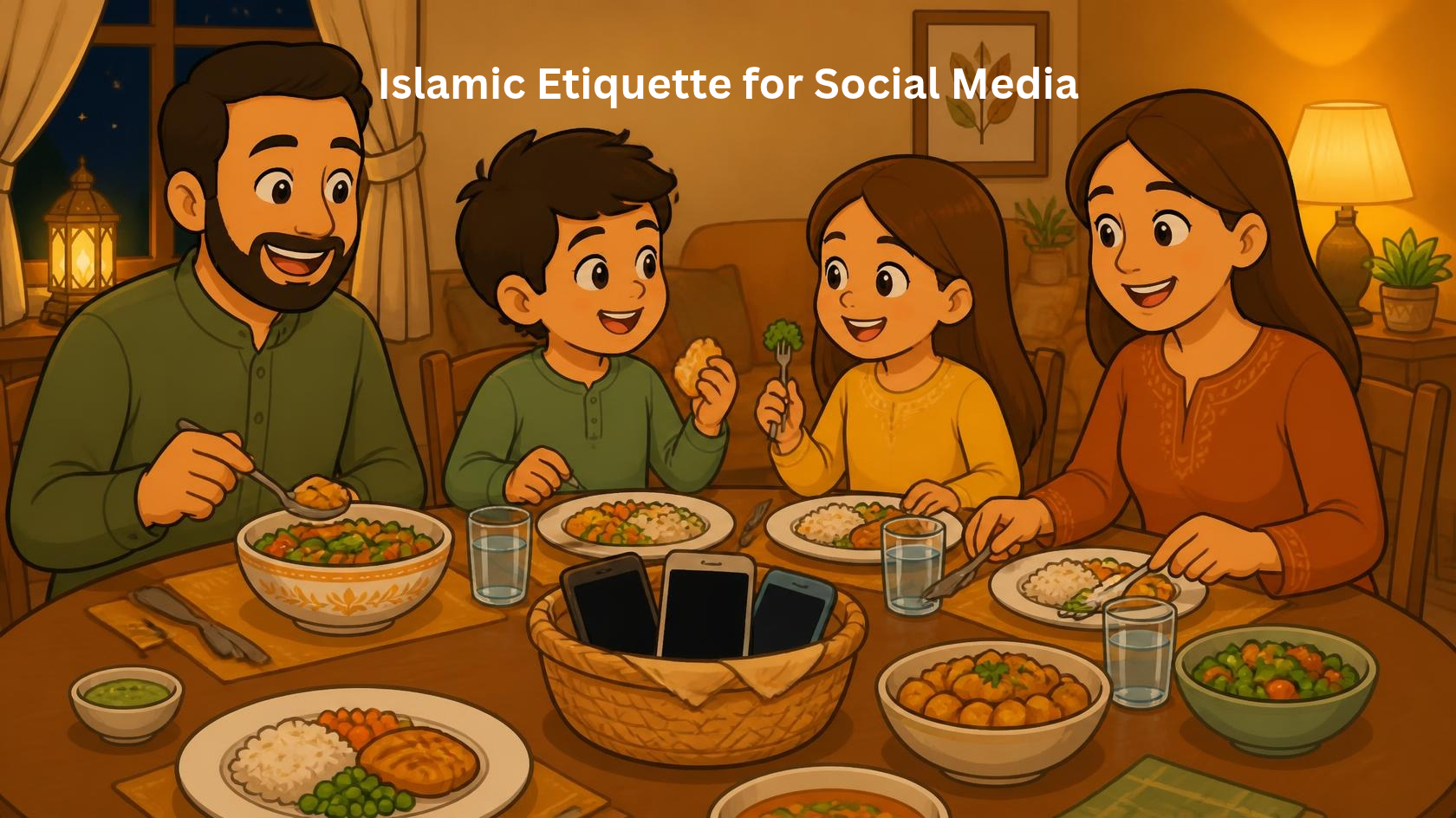
Dina's family picked screen-free times, meals, salah, bedtime, and the phones now sleep in the kitchen. Everyone, including her husband, which was the hard bit. If you want something for those free minutes, our games for kids are screen time that's actually fun and teaches a little.
Parents, a few words
You don't need to understand every app. Ask. Ask them to show you, ask what's funny this week. Kids talk when they're not waiting for a lecture.
And keep the door open. A child who knows they won't get punished for telling you something scary tells you sooner. That, more than any filter, is what protects them.
Conclusion
Dina and her daughter wrote the chat rules together in the end, on a piece of paper stuck to the fridge. Kind words only. Don't forward unless it's true. Phones off at dinner. Her daughter added "no forty-person chats" at the bottom, and Dina nearly cried.
The internet's part of our kids' lives now, whether we like it or not, and manners are still the best thing we've got to send along with them. For more videos, games, and activities that help families raise thoughtful kids, explore everything at Islamic Galaxy.
FAQs
Is social media haram for Muslim kids? Social media is a tool, not haram in itself. What matters is the content, time spent, and conduct. Parents should set age-appropriate limits, guide choices, and teach Islamic manners like honesty, kindness, and modesty online.
How do I teach my child Islamic manners online? Explain that the same values apply on screen: speak good or stay silent, do not spread rumors, respect privacy, and never share personal details with strangers. Practice together and keep conversations open.
What should my child do if something upsetting happens online? Teach them to close the page, not reply, and tell a trusted adult right away. Reassure them they will not be punished for telling you, since open communication is the strongest online safety tool there is.