
Mr. Hassan next door used to put his bins out three days early, and my mother had Opinions about it. She'd mutter at the kitchen window. Then one winter he was in hospital for a week, and she turned up at his door every night with a pot of soup, handed it to his wife, and never said a word about the bins. I was nine. I remember thinking, oh, so that's how it works. You can be annoyed and still show up.
Why neighbors matter this much
There's a hadith where the Prophet Muhammad, peace be upon him, says Jibreel kept advising him about the neighbor so much that he thought the neighbor would be made an heir. That's how often it came up.
Another is sharper. A person isn't a true believer if their neighbor isn't safe from their harm. Harm could be noise, mess, rudeness, anything that makes life harder on the other side of the wall.
Kids get it quickly if you say: the people next door are part of your family's world even though they're not family. You probably see them more than most of your cousins.
Who counts
Not only the house with the shared wall. Scholars talk about different distances, but the simple version works for kids. People on your street, in your building, across the hall. The older lady downstairs. The new kid on the second floor.
They don't need to be Muslim either. Islam says treat neighbors well, full stop. Worth telling children early, since kids sometimes assume kindness is just for people who look and pray like us.
What good neighbors actually do
Keep it concrete. Kids need things they can picture.
A smile and a salaam in the hallway. Costs nothing, changes a building. Keeping the noise down in the evening and early Friday morning, walking softly instead of slamming the door.
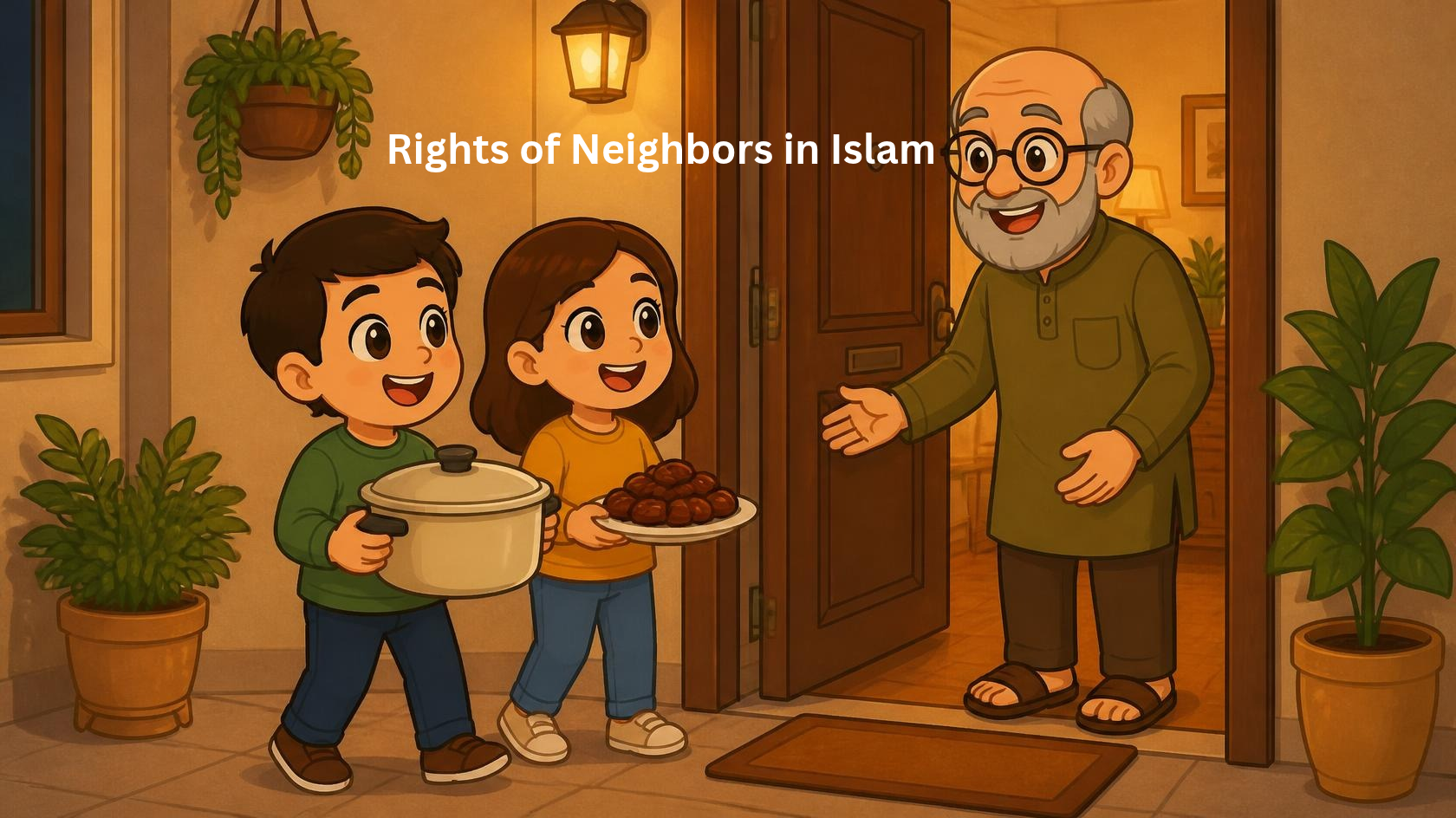
Sharing food. The Prophet told Abu Dharr that when he cooks stew he should add more water and share some with his neighbors. It doesn't have to be fancy. A plate of dates, half a cake, whatever's in the kitchen.
Helping out, carrying groceries, keeping an eye on a parcel, checking in if the lights have been off for days.
And respecting their space. No peeking, no gossip. If your kids get tempted, our post on backbiting for kids is worth reading together.
Make it a family habit
Pick one neighbor each week. Just one. Make a card, bake something, wave and ask how their week is going. Let your child do the knocking, kids at the door melt everybody.
Eid, Ramadan, a rainy Tuesday, send something over. Someone moves in, welcome them. Someone's sick, do what my mother did.
For something hands-on, our activities for kids have project ideas that build good manners, and some fit nicely into a weekend with the neighbors.
When the neighbor is hard to like
It happens. Loud music, bins on the wrong day, a dog that barks at dawn. The first move is patience and a polite word, not complaining behind their back.
If it's a real problem, like safety, bring in a parent. Kids shouldn't handle conflict alone.
And remind them people have stories we don't know. Mr. Hassan, it turned out, had been alone a lot since his wife's surgery. The bins were only the tip of it.
Conclusion
Mr. Hassan put his bins out the day he came home from hospital, same as ever. My mother wheeled them back in without a word.
Funny how the thing that annoyed her for years turned into part of the street's furniture. Being a good neighbor is mostly that, small kindnesses repeated until you're woven into each other's lives.
For more videos, games and activities that help kids grow into caring people, explore everything at Islamic Galaxy.
FAQs
Do the rights of neighbors apply to non-Muslim neighbors? Yes. Islam asks Muslims to be kind and considerate to all neighbors regardless of faith. Teaching children this early helps them see kindness as part of character, not just something for people like them.
What is a simple way for kids to be good to neighbors? Greeting them warmly, keeping noise down, sharing a bit of food, and helping when they are sick or busy. Even small, regular acts like a smile in the hallway build real neighborly trust over the years.
What should a child do if a neighbor is unkind? Respond with patience and politeness, avoid gossiping about them, and tell a parent if the problem is serious or feels unsafe. Adults should handle real conflicts so the child is not left alone with it.