
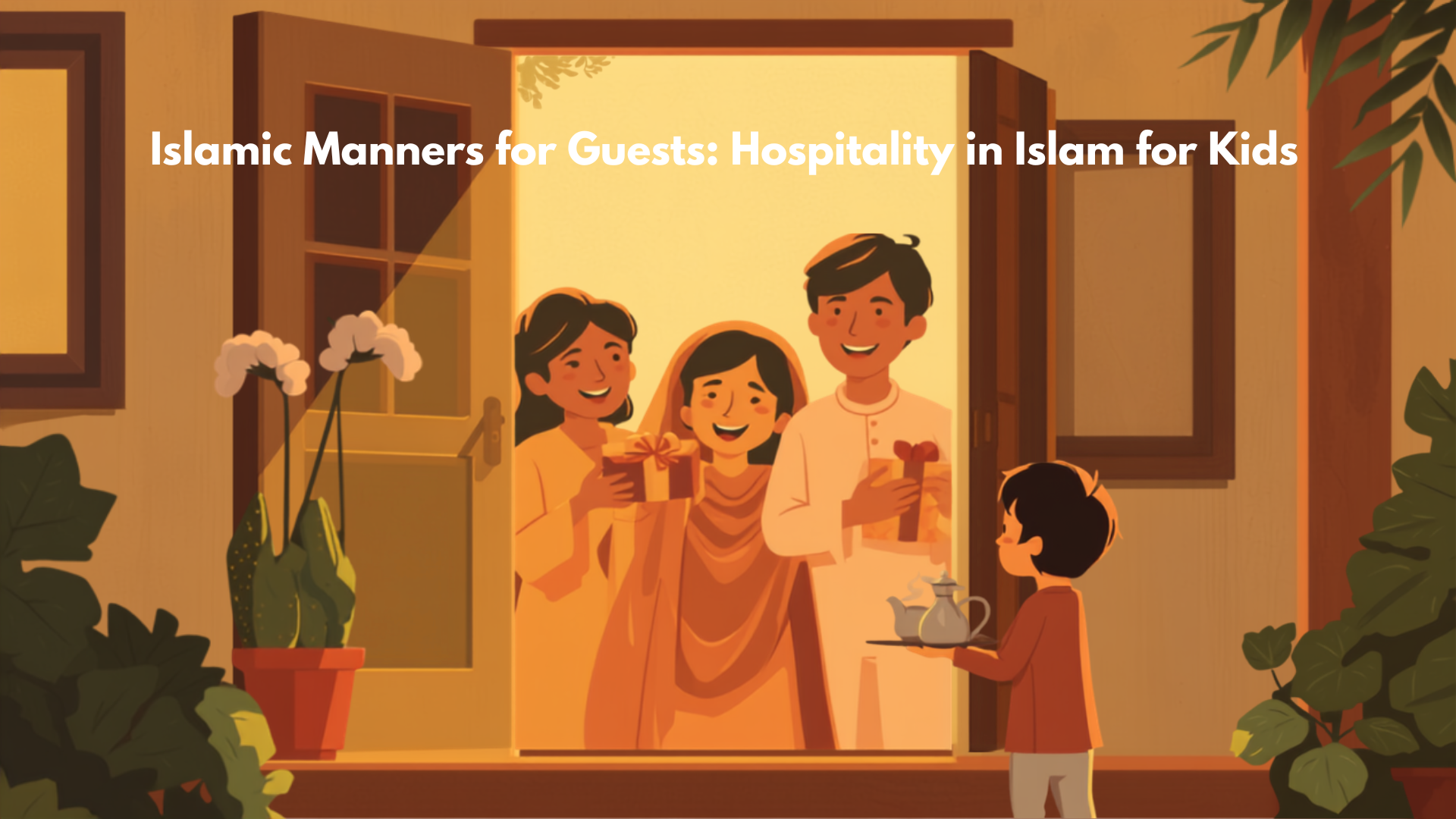
We had family visiting a few months back, and my daughter, completely unprompted, ran off to grab the guest her favorite blanket and asked if she wanted tea. I hadn't taught her that exact thing. Not that specific gesture. But something I'd been teaching, apparently, stuck in a way I didn't fully expect until I watched it happen.
Why Hospitality Holds Such a High Place in Islam
Hospitality, ikram ad-dayf, gets taken seriously in Islamic teaching. More seriously than a lot of people realize until they actually dig into it themselves. The Prophet Muhammad, peace be upon him, taught that honoring guests connects directly to belief itself, saying whoever believes in Allah and the Last Day should honor their guest. Strong statement. Ties something as everyday, as mundane really, as how you treat a visitor to the actual core of someone's faith.
Traditionally, hospitality is described as owed to a guest for three days. A host offers a generous, unquestioning welcome during that stretch without expecting anything back. Not even a thank you, technically.
What Good Hospitality Actually Looks Like
Good hospitality isn't about elaborate meals or a spotless house, even though that's usually what adults stress over the most. At its core, it's just making someone feel genuinely welcome. Something to eat or drink, a comfortable place to sit, treating their presence like a gift instead of an inconvenience you're tolerating.
For kids, this turns into simple, learnable habits pretty fast.
Greeting guests warmly. Offering to help with their things. Sharing food and toys without needing to be asked twice, or three times, or with an attitude attached. None of this requires a kid to understand hadith or theology first. Just modeling, and repetition, over and over.
Teaching Kids to Be Good Hosts
What's worked here is talking it through before guests arrive, not during, when everyone's distracted, and manners tend to slip anyway. A quick "remember, our guest is tired from the trip, let's make her comfortable" beforehand does way more than correcting behavior mid-visit, in front of company, which nobody enjoys.
This connects naturally with Islamic table manners, since so much hospitality plays out around food specifically. A kid who's already practiced good table adab tends to extend that same instinct naturally the moment there's a guest at the table too, almost without thinking about it.
Teaching Kids to Be Good Guests Too
Hospitality goes both directions, worth remembering. Teach kids how to be a gracious guest, not just a gracious host. Accepting what's offered with real gratitude. Not complaining about food or activities at someone else's home, even if it's not their favorite. Being easy, pleasant, low-maintenance to have around. Smaller lesson, sure, but it matters just as much as the hosting side does.
My daughter's unprompted blanket-and-tea moment reminded me kids absorb more of this than we give them credit for. Often long before they could even explain why it matters to anyone who asked. For more character lessons and Islamic guidance made for families, visit islamicgalaxy.
FAQs
How long does Islamic tradition say hospitality should be shown? Traditional teaching describes three days as the period of generous, expected hospitality toward a guest, after which continued kindness is still encouraged but framed more as ongoing charity.
How can I teach a shy child to welcome guests confidently? Give them a specific small job, like handing out drinks or showing a guest where to sit. A concrete task often helps shy kids engage more comfortably than open-ended socializing does.
Is hospitality only about religious obligation, or is there more to it? It's both. While it's rooted in religious teaching, hospitality also builds real social and emotional skills in kids, like empathy, generosity, and comfort with people outside their immediate family.