

Our cat is objectively spoiled, and my son will absolutely tell you it's "because the Prophet loved cats too." Which is a slightly exaggerated, not entirely wrong takeaway from a conversation we had months back about kindness to animals in Islam. He's not making it up exactly. Just stretching it a little.
A Faith That Takes Animal Welfare Seriously
Islam has a lot to say about how we treat animals. More than most kids realize, honestly more than most adults realize either, until they actually look into it properly. The Prophet Muhammad, peace be upon him, taught that kindness to animals connects directly to a person's faith. Not some separate, optional nice-to-have on the side.
Several hadith describe him correcting people, real people, for treating animals harshly, whether that meant overworking them, hurting them for no reason, or just neglecting basic needs like food and water.
This wasn't abstract teaching either, floating somewhere in theory. There are specific stories attached to it, vivid enough that a kid actually remembers them, instead of just hearing "be nice to animals" as one more vague rule to forget by next week.
The Story of the Thirsty Dog
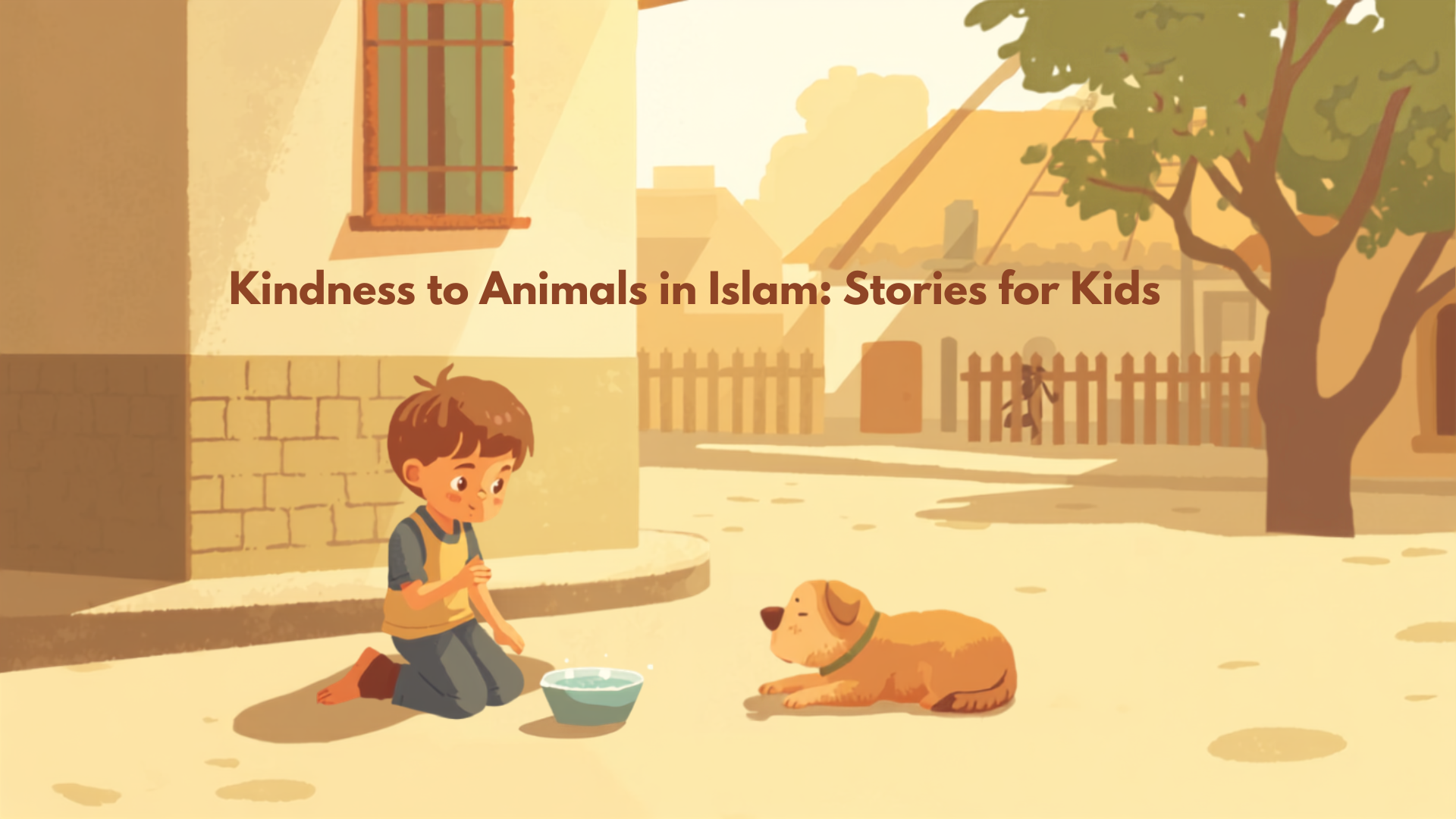
One of the most well-known hadith describes a man who found a dog digging desperately at the ground, trying to reach water, clearly dying of thirst out there. The man climbed down a well, filled his own shoe with water, climbed back up holding it in his mouth, and gave it to the dog. That's it. The Prophet taught that Allah forgave this man's sins because of that one act of mercy toward a suffering animal that couldn't even thank him properly.
Kids love this story, genuinely, because it's so specific and physical. A shoe. A well. Real effort spent on an animal with nothing to give back. That detail matters more than it seems. The reward wasn't for kindness toward someone who'd remember and repay it. It was kindness given expecting absolutely nothing in return.
The Woman and the Cat
There's another account, a warning this time rather than a reward, about a woman punished for locking up a cat and letting it starve. Didn't feed it herself, wouldn't let it go free to find food either. Just left it. It's a hard story to tell honestly, but an important one, showing that cruelty toward animals, even through neglect and not direct harm, gets taken seriously.
Teaching This to Kids in a Way That Sticks
What's worked in our house is tying these stories to something immediate. Our own pets, animals we actually see day to day, not abstract examples from far away. When my son spots a stray cat now, he genuinely thinks about the thirsty dog story before deciding how to act. Which is honestly more than I expected out of one hadith told once, at dinner, years ago.
This connects naturally too with broader lessons about honesty and good character, since kindness to animals is really just one expression of the same character the Prophet taught across every part of daily life. Not some separate category off to the side.
Our cat, for the record, has zero idea how much Islamic scholarship has gone into justifying her extra treats lately. But here we are. For more Islamic stories and character lessons made for kids, visit islamicgalaxy.
FAQs
Does Islam teach that all animals deserve kindness, not just pets? Yes, the teachings cover working animals, strays, and wildlife too, not just animals kept as pets. Cruelty or neglect toward any creature counts as a serious moral failing.
Why is the story of the thirsty dog important for kids to hear? It shows even a small act of mercy toward a suffering creature, expecting nothing back, carries real spiritual weight according to the Prophet's teachings, regardless of who the recipient was.
Are there Islamic guidelines about caring for pets specifically? Yes, scholars generally agree that owning a pet comes with real responsibility for its food, water, and shelter, treating neglect as genuine harm, not a minor oversight to shrug off.