
Six blankets. I counted. My nephew Ziad, ten, sleeps under six blankets from November to March, including one with cartoon cars on it that he's definitely too old for and will never give up. Waking him for Fajr in winter is like trying to dig someone out of a snowdrift.
My sister used to just pull the covers off. Cold air, yelling, slammed doors. Ziad would stomp to the bathroom, do the fastest wudu in history, pray half asleep and fall straight back into bed.
Every single morning ended with both of them annoyed before the sun was even up.
Something had to change. Not the time of Fajr, obviously.
Why Fajr is worth the cold
This was the first thing my sister actually explained, instead of just insisting. The Prophet Muhammad, peace be upon him, said the two rak'ahs before Fajr are better than this world and everything in it. That's in Sahih Muslim.
Ziad thought about that one. "Better than a PlayStation?" Better than every PlayStation ever made. He was not totally convinced, but he was interested.
There's also a hadith that whoever prays Fajr is under Allah's protection for that day, again in Muslim. That one Ziad liked more. Starting the day covered, like a bodyguard.
The three knots
Kids love this story, it's a little bit spooky but in a good way. The Prophet said that when a person sleeps, Shaytan ties three knots at the back of their head. When they wake and remember Allah, one knot comes undone.
When they make wudu, the second. When they pray, the third, and they start the day full of energy. That's in Bukhari.
Now when Ziad sits up in bed he says "knot one" out loud. In the bathroom, "knot two." My sister thinks it's ridiculous. It works.
What changed in the mornings
Warmth first. My sister put a small heater in the bathroom on a timer, so the room is warm before anyone walks in. Warm water for wudu. It sounds like a tiny thing. It's not. Cold tiles at half five are a big enemy.
Gentle waking. Lights on slowly, a soft voice, a hand on the shoulder. She says the waking dua near him, Alhamdulillah who gave us life after He made us die, and to Him is the return, which is in Bukhari. Then she leaves and comes back in two minutes. Most kids need two goes. That's fine.
Bed earlier. This was the boring one, and the one that made the biggest difference. Fajr is early in winter but not that early, and a ten year old who goes to sleep at ten is not going to be a happy person at five thirty.
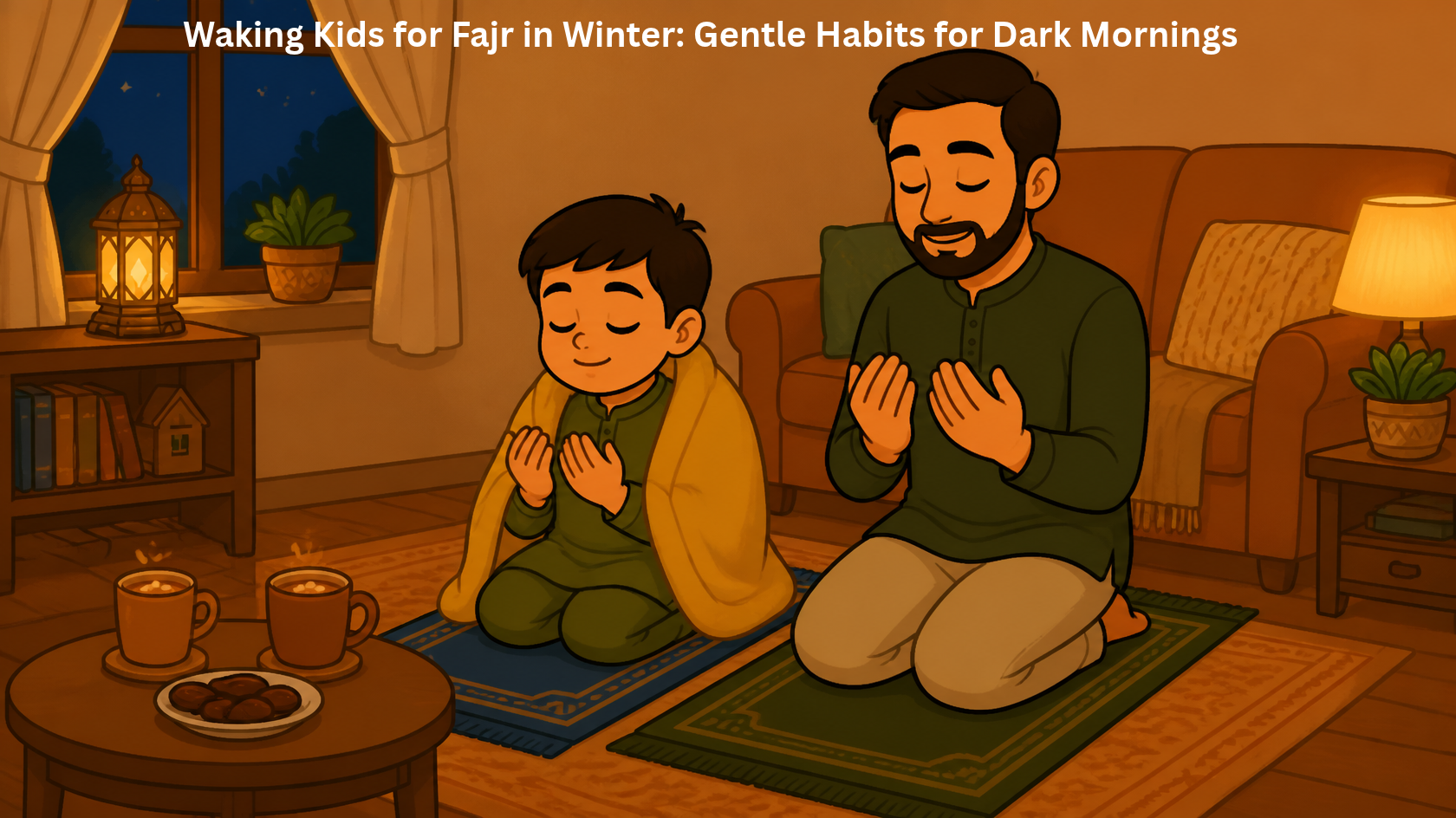
Praying together. Ziad prays with his dad now, side by side on the living room rug. He doesn't want to be the one who skipped. Some mornings they walk to the mosque, which Ziad loves, because it's dark and quiet and feels like a secret. If you're taking little ones along, our post on the adab of the mosque is a good read first.
What age, and how hard to push
The Prophet told parents to teach children to pray at seven, in Abu Dawud. That's teaching, building the habit, not forcing.
So for little ones, maybe Fajr on weekends only, or when they happen to wake. For seven to ten, gentle and steady, most days. Never shaming them for missing one. A kid who's made to feel terrible about Fajr starts to hate Fajr, and that's the opposite of what we want.
After the prayer
Here's the trick my sister stumbled on. She made the ten minutes after Fajr special. Hot chocolate, a few dates, a short story, or one episode of something calm.
Some mornings it's one of the Islamic Galaxy videos under a blanket before Ziad goes back to bed for an hour.
Fajr stopped being the cold, angry moment of the day. It became the cosy one.
Conclusion
Last week my sister overslept. Her alarm didn't go off. She woke up at quarter to six in a panic and ran to Ziad's room, and he wasn't there. He was in the living room, prayer mat out, praying alone, with three of his six blankets wrapped around him like a cape.
When he finished, he looked up and said, "you were the knot this time." For more videos, games and activities for your family's routines, you'll find everything at Islamic Galaxy.
FAQs
At what age should kids start praying Fajr?
The Prophet said to teach children to pray at seven. Before that, let them join when they wake. From seven, build the habit gently and steadily. Avoid forcing or shaming, since you want them to love Fajr, not dread it.
How do I wake my child for Fajr in winter?
Warm the bathroom, use warm water for wudu, wake them softly with lights and a gentle voice, and come back after a couple of minutes. An earlier bedtime helps the most. Praying together and something cosy afterwards makes it easier.
What if my child misses Fajr?
Don't shame them. Let them pray it as soon as they wake, and look at why it happened, usually a late night. Encourage them, keep the routine gentle, and celebrate the mornings they manage it. Consistency grows slowly.